Is your air conditioner suddenly not working? You’re not alone—and before you panic or call for expensive repairs, there are simple steps you can take to troubleshoot the problem yourself.
Your comfort depends on a properly running AC, especially during hot days, so knowing what to check first can save you time, money, and stress. In this guide, you’ll discover easy, clear ways to identify common issues like thermostat glitches, clogged filters, or power problems.
You’ll also learn when it’s time to call a professional to handle more complex repairs. Keep reading to regain control of your cooling system and beat the heat without hassle.

Credit: www.topflightautomotive.com
Basic Ac Checks
Basic AC checks help find simple problems fast. These checks save time and money. Anyone can do them with little effort. Start with easy steps before calling a technician.
Look at the thermostat, power supply, air filter, airflow, and outdoor unit. Each part affects AC performance. Fixing small issues often restores cooling quickly.
Thermostat Settings
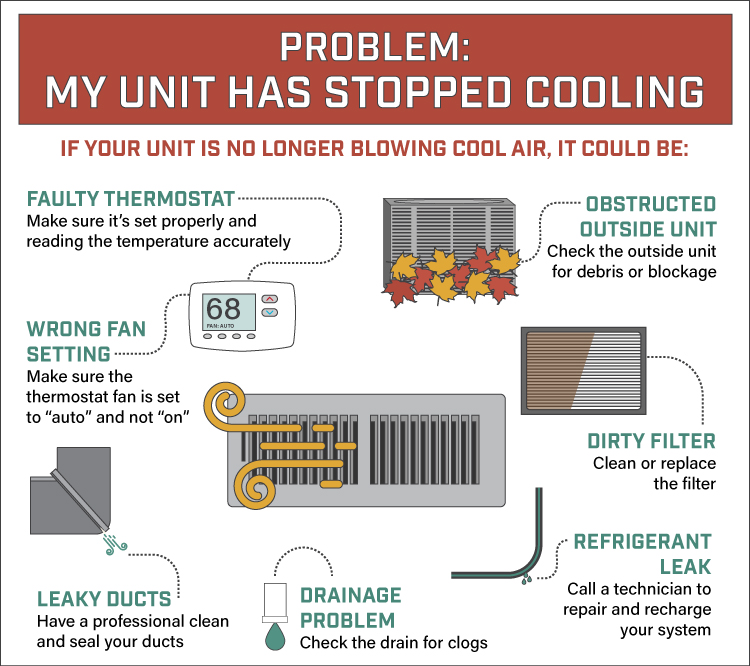
Check the thermostat mode. It should be set to “Cool.” The fan setting must be on “Auto.” Make sure the temperature is lower than the room’s current heat. Replace old batteries if the display is dim or unresponsive.
Power Supply And Breakers
Inspect the electrical panel for tripped breakers. Reset any that are off. Find the outdoor disconnect switch near the unit. Ensure it is switched on. Power interruptions stop the AC from running.
Air Filter Condition
Look inside the AC for the air filter. A dirty filter blocks airflow. It causes the system to work harder and cool less. Replace the filter if it looks gray or clogged. Clean filters improve air quality and efficiency.
Airflow And Vent Clearance
Check that supply vents are open and not blocked by furniture or curtains. Clear any obstructions from return vents. Good airflow helps the AC cool rooms evenly. Poor airflow can cause the unit to freeze or shut down.
Outdoor Unit Cleaning
Remove leaves, dirt, and debris around the outdoor unit. Clean the fins gently with a soft brush or garden hose. Keep plants and grass at least two feet away. A clean outdoor unit runs better and lasts longer.
Resetting The Ac
Resetting the air conditioner can often fix simple issues causing it to stop working. This process helps the system clear minor faults and restart fresh. Many AC units have built-in reset functions to help restore normal operation. The reset process involves turning off power, pressing a reset button, and turning power back on. Follow these steps carefully for a safe and effective reset.
Turning Off The Circuit Breaker
Locate the circuit breaker panel in your home. Find the breaker switch labeled for the AC unit. Flip the breaker to the “off” position to cut power to the air conditioner. Wait about one minute to allow the system to fully shut down. Turning off the breaker prevents electrical hazards during reset.
Using The Reset Button
Locate the reset button on the outdoor AC unit. It is usually a small red or black button on the control box. Press and hold the reset button for three to five seconds. Release the button after holding it. This action tells the AC system to clear error codes and reset its controls.
Restoring Power And Adjusting Thermostat
Go back to the circuit breaker panel. Flip the breaker switch back to the “on” position to restore power. Return indoors and set your thermostat to the “cool” mode. Adjust the temperature to a few degrees lower than the current room temperature. This signals the AC to start cooling again.
Intermediate Troubleshooting
Intermediate troubleshooting helps fix common AC problems beyond basic checks. This stage requires a closer look at specific components inside your air conditioner. Some issues need simple fixes, while others might need professional help. Understanding these problems can save time and money.
Start by inspecting parts that often cause AC to stop working or cool poorly. These include the evaporator coil, condensate drain line, and strange sounds coming from the unit. Each can signal different problems and solutions.
Frozen Evaporator Coil
The evaporator coil cools the air passing through your AC. It can freeze due to low refrigerant, poor airflow, or dirty filters. A frozen coil stops proper cooling and can damage the system.
Turn off the AC and let the coil thaw completely. Replace or clean air filters and check for blocked vents. If the coil freezes again, call a technician to check refrigerant levels and system pressure.
Clogged Condensate Drain Line
The condensate drain line removes moisture from the AC system. It can clog with dirt, algae, or mold. Water then backs up, causing leaks or shutting down the unit.
Clear the drain line using a wet/dry vacuum or a pipe cleaner. Pour a small amount of vinegar or bleach solution to kill algae. Regular cleaning helps prevent future clogs and keeps your AC running smoothly.
Unusual Noises And Their Causes
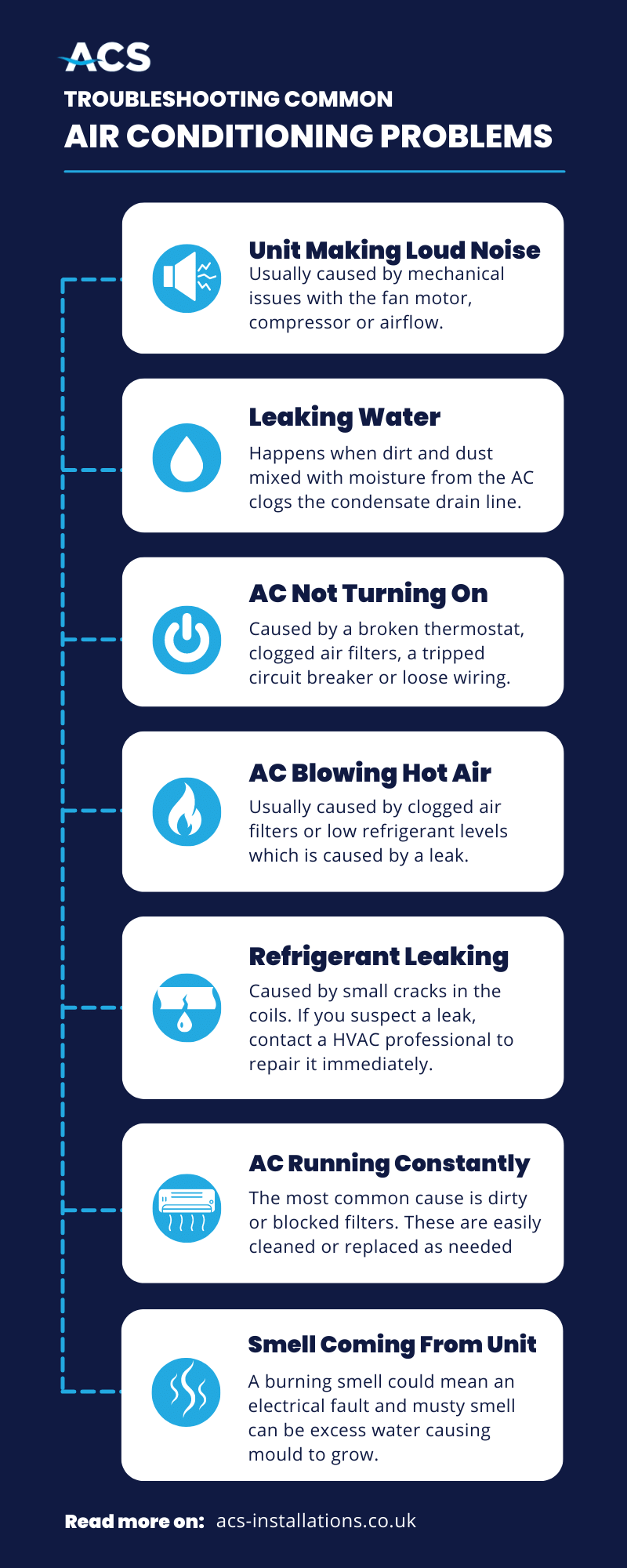
Strange sounds often indicate mechanical or electrical problems. Rattling may mean loose parts or debris inside. Squealing can signal a worn belt or motor issue. Grinding might come from failing bearings.
Turn off the AC and inspect visible parts for loose screws or debris. Tighten any loose components carefully. Persistent noises require professional diagnosis to avoid serious damage.
When To Call A Technician
Sometimes, an air conditioner stops working due to problems beyond simple fixes. At this point, calling a technician is necessary. Professionals have the tools and skills to diagnose and repair complex issues safely. Knowing when to seek expert help can save time and prevent further damage to your AC unit.
Low Refrigerant And Leaks
Refrigerant is essential for cooling your home. Low refrigerant levels or leaks reduce the AC’s ability to cool. Detecting and fixing leaks requires special equipment and knowledge. A technician can safely locate leaks and recharge the refrigerant to proper levels.
Faulty Capacitor Or Motor
The capacitor and motor help start and run the AC’s compressor and fan. If they fail, the unit may not turn on or may stop suddenly. Testing and replacing these parts requires electrical skills and safety precautions. Let a technician handle these repairs.
Compressor Issues
The compressor is the heart of your air conditioner. It compresses refrigerant and circulates it through the system. A faulty compressor causes the AC to stop cooling or produce strange noises. Repairing or replacing compressors is complex and needs professional tools.
Complex Electrical Problems
Electrical problems like wiring faults, tripped breakers, or damaged control boards can stop your AC from working. Diagnosing electrical issues involves handling live wires and circuit components. A trained technician can safely troubleshoot and fix these problems to restore your AC.
Preventive Tips
Preventive care keeps your AC running smoothly and avoids sudden breakdowns. Simple steps protect your unit from damage and extend its life. Small efforts now save time and money later.
Regular Filter Replacement
Change your AC filter every 1 to 3 months. Dirty filters block airflow and reduce cooling. Clean filters improve air quality and efficiency. Regular replacement prevents dust buildup and system strain.
Keeping Outdoor Unit Clear
Remove leaves, dirt, and debris around the outdoor unit. Keep plants and grass trimmed at least two feet away. Blockages cause poor airflow and overheating. Clear space helps your AC work better and last longer.
Scheduled Professional Maintenance
Hire a technician to inspect your AC yearly. Professionals check refrigerant levels, clean coils, and test electrical parts. Early problem detection avoids costly repairs. Regular service maintains peak performance and energy savings.
Credit: www.curaresaude.com.br
Credit: acs-installations.co.uk
Frequently Asked Questions
What Would Cause Ac To Suddenly Stop Working?
AC may suddenly stop working due to tripped breakers, clogged filters, frozen coils, or blocked drain lines. Power issues or thermostat missettings also cause failures. Mechanical problems like bad capacitors, compressor faults, or refrigerant leaks require professional repair. Clear debris and check settings first for quick fixes.
What Is The 3 Minute Rule For Ac?
The 3-minute rule for AC means waiting three minutes before restarting the unit after turning it off. This prevents compressor damage and protects the system.
What Is The First Thing To Check When The Ac Stops Working?
First, check the thermostat settings and confirm the AC has power by inspecting the circuit breaker. Then, examine the air filter for clogs and ensure outdoor unit vents are clear of debris. These steps often resolve common AC stoppages quickly.
How Do You Reset The Ac When It Is Not Cooling?
Turn off the AC’s circuit breaker. Hold the reset button for 3-5 seconds. Restore power and set the thermostat to “cool” below room temperature. Check filters and clear debris if needed. Call a professional for persistent issues.
Why Is My Ac Not Cooling The Room Properly?
A dirty air filter or blocked vents can reduce cooling. Check and clean filters and vents regularly. Low refrigerant or frozen coils may also cause poor cooling.
Conclusion
Troubleshooting your AC can save time and money. Start with simple checks like thermostat settings and power supply. Clean or replace dirty filters and clear debris around the outdoor unit. Watch for signs like frozen coils or strange noises. Some problems need expert help, such as refrigerant leaks or compressor issues.
Regular maintenance helps keep your AC running smoothly. Stay calm and follow each step carefully. Your home will stay cool again soon.