Is your car acting up with strange electrical issues? Maybe your headlights flicker unexpectedly, or your power windows respond sluggishly.
You’re not alone—car electrical problems are common and can be tricky to pinpoint. But here’s the good news: understanding the basics of car electrical troubleshooting can save you time, money, and frustration. Whether it’s a dead battery, faulty starter, or wiring glitch, knowing what to look for and how to diagnose the problem puts you back in control.
Stick with me, and you’ll learn simple, effective steps to identify and fix your car’s electrical troubles before they turn into costly repairs. Ready to get your car’s electrical system running smoothly again? Let’s dive in!

Credit: www.aa1car.com
Common Electrical Issues
Car electrical problems are common and can cause many issues. Knowing the signs helps you find the problem faster. Electrical issues affect your car’s starting, lighting, and other functions. Diagnosing these issues early can save time and money.
Dead Battery Symptoms
A dead battery is the most common electrical problem. Your car may not start or make a clicking sound. Lights may be dim or not work at all. You might see a battery warning light on the dashboard. Frequent jump-starts are a clear sign the battery is weak.
Alternator Failures
The alternator charges the battery while driving. If it fails, the battery drains quickly. Symptoms include flickering dashboard lights and dim headlights. You may hear strange noises from the engine area. The car may stall or have trouble starting.
Starter Motor Problems
The starter motor turns the engine on. When it fails, the engine won’t crank. You may hear a grinding or clicking noise. Sometimes the car starts only after several tries. A faulty starter can cause slow or no response when turning the key.
Faulty Wiring Signs
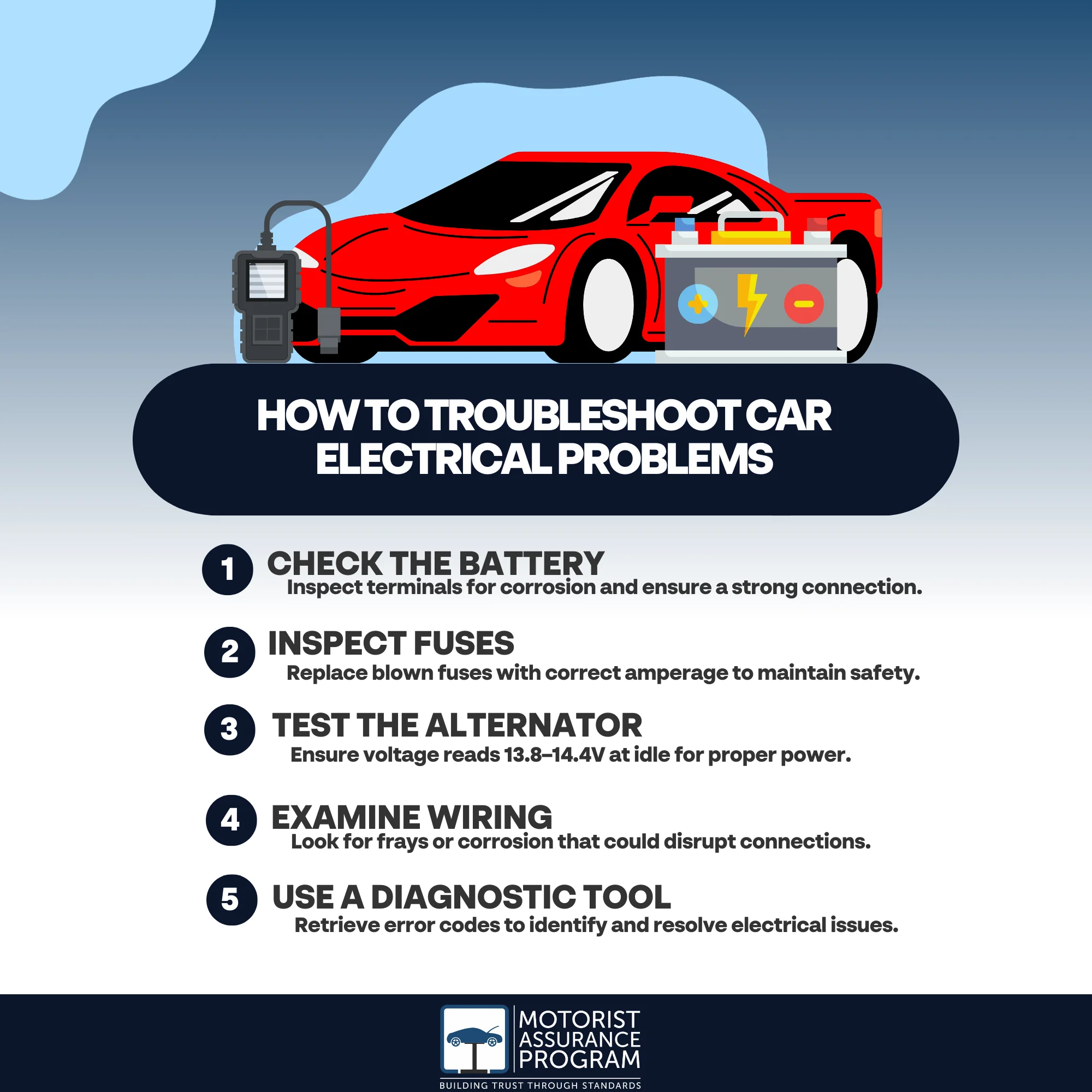
Wiring issues cause many electrical faults in cars. Look for flickering lights or sudden electrical failures. Burning smells or melted insulation are serious warning signs. Loose or corroded connections can cause intermittent problems. Rodent damage to wires is common and needs immediate repair.
Credit: motorist.org
Tools For Troubleshooting
Car electrical problems need the right tools for quick and accurate diagnosis. Using proper tools saves time and prevents further damage. Each tool has a specific role in finding issues in a vehicle’s electrical system.
These tools help check voltage, current, and continuity. They also read error codes from the car’s computer. Knowing how to use these tools can make troubleshooting easier and more effective.
Using A Multimeter
A multimeter measures voltage, current, and resistance in electrical circuits. It helps find broken wires, bad fuses, and faulty components. Set it to the right mode before testing. Touch the probes to the circuit points to get readings. It is essential for basic electrical checks.
Test Light Applications
A test light is a simple tool to check power presence in circuits. Connect its clip to a ground point and touch the probe to the wire or fuse. If the light turns on, power flows correctly. It is quick for testing fuses, switches, and wires.
Battery Load Tester
This tool checks a battery’s ability to hold and deliver power under load. It simulates the demand of starting the engine. The tester shows if the battery is weak or failing. Regular testing helps avoid unexpected battery failures.
Scan Tools And Code Readers
Scan tools connect to the car’s computer system to read diagnostic trouble codes. These codes point to specific problems in sensors or circuits. Code readers provide basic error codes, while advanced scan tools offer live data and reset functions. They are vital for modern car troubleshooting.
Step-by-step Diagnosis
Car electrical problems can be tricky and confusing. A step-by-step diagnosis helps find the exact issue. This approach saves time and money by focusing on the real problem.
Start with simple checks and move to complex ones. Each step reveals clues about the health of your car’s electrical system. Follow these clear steps to troubleshoot effectively.
Checking Battery Health
Begin with the battery. A weak or dead battery often causes electrical problems. Use a multimeter to check battery voltage. A fully charged battery reads about 12.6 volts. If below 12 volts, the battery may need charging or replacement.
Inspect battery terminals for corrosion. Clean dirty terminals to ensure good contact. Loose connections can cause starting issues and flickering lights.
Inspecting Fuses And Relays
Next, check fuses and relays. These protect circuits and control electrical functions. Locate the fuse box and inspect each fuse. Replace any blown fuse with one of the same rating.
Test relays by swapping with a similar one if available. Faulty relays can cause components like headlights or fuel pumps to fail.
Tracing Wiring Faults
Wiring faults cause intermittent or total electrical failures. Look for damaged wires, loose connectors, or signs of corrosion. Use a wiring diagram to identify circuit paths.
Use a test light or multimeter to check for power at different points. Repair or replace damaged wiring to restore proper function.
Testing Alternator Output
The alternator charges the battery and powers electrical systems while running. Test its output with a multimeter at the battery terminals. It should read between 13.5 and 14.5 volts when the engine runs.
Low output means a failing alternator or belt issue. High output can damage the battery and electrical parts. Replace or repair as needed to maintain system health.
Quick Fixes To Try
Car electrical problems can often feel frustrating and confusing. Many issues have simple fixes that anyone can try. These quick fixes save time and money before seeking professional help.
Start with basic checks to spot common causes. Small steps can restore your car’s electrical system fast. Keep tools like a fuse puller, wire brush, and multimeter handy. Follow these easy solutions to get your car running smoothly again.
Replacing Blown Fuses
Fuses protect your car’s electrical circuits from damage. A blown fuse stops the current and causes component failure. Locate the fuse box under the dashboard or hood. Use the car manual to find the right fuse. Remove the damaged fuse and replace it with the same type. Never use a fuse with a higher rating. Check if the electrical issue resolves after replacement.
Cleaning Corroded Terminals
Corrosion blocks electrical flow and causes weak connections. Battery terminals and cable ends often corrode. Remove the battery cables carefully. Use a wire brush or baking soda paste to clean the terminals. Rinse with water and dry completely. Reattach cables tightly. This simple cleaning improves power delivery instantly.
Securing Loose Connections
Loose wires cause flickering lights or intermittent failures. Inspect wiring under the dashboard and engine bay. Look for loose, broken, or disconnected wires. Tighten loose connectors and push wires fully into plugs. Use electrical tape or zip ties to secure cables. Firm connections ensure stable electrical flow and reduce faults.
Resetting Control Modules
Modern cars rely on control modules to manage electrical systems. Sometimes these modules need a reset to clear errors. Disconnect the car battery for about 10 minutes. Reconnect the battery and start the engine. This process resets the modules and can fix glitches. If problems persist, professional diagnostics may be necessary.
Cost Factors For Repairs
Understanding the cost factors for car electrical repairs helps in budgeting. Repair costs vary widely based on several key elements. Knowing these factors makes it easier to anticipate expenses. Below are the main aspects that influence repair prices.
Labor Rates Variations
Labor costs differ by location and shop type. Urban areas often have higher rates than rural ones. Dealerships usually charge more than independent mechanics. The skill level of the technician also affects the price. Complex electrical issues require more time and expertise.
Vehicle Complexity Impact
Modern cars have advanced electrical systems. Luxury vehicles often include extra electronic features. More complex vehicles take longer to diagnose and fix. This increases the overall labor cost. Simpler cars usually have lower repair fees.
Part Quality Differences
Original Equipment Manufacturer (OEM) parts cost more than aftermarket options. OEM parts fit better and last longer. Aftermarket parts are cheaper but may vary in quality. Choosing part quality affects the total repair bill. Some repairs may only need basic parts.
Extent Of Damage Effects
Minor electrical problems cost less to repair. Small wiring issues or blown fuses are cheap fixes. Severe damage, like corroded wires or control module failure, raises costs. Rodent damage or water intrusion adds complexity. Extensive repairs require more parts and labor.
Preventive Tips
Preventive care helps avoid car electrical problems. Small efforts save time and money. Regular checks keep your vehicle running smoothly. Follow simple steps for better performance and safety.
Regular Battery Maintenance
Check the battery terminals for corrosion. Clean terminals with a baking soda solution. Tighten loose battery connections to ensure proper contact. Test battery voltage monthly using a multimeter. Replace the battery every 3 to 5 years. This prevents unexpected starting problems.
Protecting Wiring From Damage
Inspect wiring for cracks or frays often. Secure loose wires to avoid rubbing against metal. Keep wiring away from heat sources. Use protective sleeves on exposed wires. Rodents can chew wires, so park in safe areas. Fix any damaged wiring promptly to prevent shorts.
Routine Electrical System Checks
Test lights, signals, and dashboard indicators regularly. Listen for unusual sounds from relays or fuses. Check the alternator output with a voltmeter. Replace faulty fuses to avoid electrical failures. Have a professional inspect complex systems yearly. Early detection stops bigger problems.
Upgrading To Quality Parts
Choose OEM or high-quality aftermarket parts. Cheap parts may fail quickly and cause damage. Quality parts last longer and fit better. They protect your car’s electrical system. Always buy from trusted sellers or dealers. Proper parts reduce repair costs over time.

Credit: phoenixautoshop.com
Frequently Asked Questions
How Do I Find Out What Electrical Problems My Car Has?
Use an OBD-II scanner or multimeter to detect faults. Check battery, alternator, fuses, wiring, and connectors. Observe symptoms like dim lights or slow starts. Consult a professional mechanic for accurate diagnostics and repairs.
What Is The Most Common Electrical Problem In A Car?
The most common electrical problem in a car is a dead battery. It causes dim lights and starting issues.
How To Trace Electrical Problems In A Car?
Use a multimeter to check fuses, battery, and wiring for continuity. Inspect connections and test components systematically. Follow wiring diagrams for accuracy.
How To Diagnose A Wiring Issue In A Car?
Use a multimeter to check voltage and continuity in wires. Inspect fuses, connectors, and look for damaged or corroded wiring. Test circuits step-by-step to isolate faults.
What Are Common Signs Of Car Electrical Problems?
Common signs include dim lights, dead battery, and blown fuses. You might also notice strange sounds or malfunctioning accessories.
Conclusion
Car electrical troubleshooting helps keep your vehicle running smoothly. Identifying issues early can save time and money. Simple checks, like testing fuses and batteries, often fix common problems. More complex issues may need professional help. Always use a proper diagnostic to find the root cause.
Understanding basic electrical faults makes repairs easier. Stay safe by disconnecting the battery before working on wiring. Regular maintenance prevents unexpected breakdowns on the road. Trust your instincts if something feels wrong with your car’s electrical system. Taking quick action protects your vehicle and your safety.