Is your food waste disposer making a strange humming noise or refusing to turn on? You’re not alone—many homeowners face this frustrating issue.
But before you call a plumber or consider replacing the whole unit, there are simple troubleshooting steps you can try yourself. In this guide, you’ll learn easy and safe ways to get your disposer back to working smoothly. From clearing jams to resetting the motor, these tips will save you time and money.
Keep reading to take control of your food waste disposer and say goodbye to kitchen headaches for good.
Common Disposal Issues
Food waste disposers are handy kitchen tools, but they can face issues over time. Knowing common disposal problems helps you fix them quickly. This section covers frequent troubles and easy ways to identify them.
Power Failures
Sometimes the disposer does not turn on at all. This may happen due to a tripped circuit breaker or a blown fuse. Check the power switch and reset button located under the unit. Unplugging and plugging back can also help reset the device.
Strange Noises
Unusual sounds like grinding, rattling, or humming often mean something is stuck inside. Turn off the power before looking inside. Use a wrench in the hex hole at the bottom to rotate the blades manually. Remove any objects causing the noise carefully.
Clogs And Jams
Food scraps or foreign items can block the disposal. Slow draining or no draining are signs of a clog. Use a plunger or a plumbing snake to clear the blockage. Avoid putting fibrous or hard materials to prevent jams.
Foul Odors
Bad smells come from food stuck inside the disposer or pipes. Clean the unit by grinding citrus peels or ice cubes. Pour baking soda followed by vinegar to neutralize odors. Regular cleaning keeps the disposal fresh and odor-free.
Leaks And Drips
Leaks usually happen from loose connections or worn seals. Check under the sink for water dripping from the unit or pipes. Tighten any loose fittings and replace damaged seals. Early repair prevents water damage in your kitchen.
Credit: www.youtube.com
Safety First
Safety is the top priority when troubleshooting a food waste disposer. These devices have sharp blades and use electricity. Careless handling can cause serious injury or damage. Follow safety steps to protect yourself and your home.
Never try to fix the disposer while it is powered on. Always make sure the unit is completely off before starting any work. Use the right tools safely to avoid accidents. Taking these precautions helps prevent harm and keeps the repair process smooth.
Turning Off Power
Switch off the disposer at the wall switch. If there is no switch, turn off the circuit breaker that controls the unit. This stops electricity from flowing to the disposer. Check twice to be sure the power is off before touching the unit.
Unplugging The Unit
Unplug the disposer from the electrical outlet if possible. This adds another safety layer by cutting all power sources. If the unit is hardwired, confirm the breaker is off. Never work on the disposer while it remains connected to electricity.
Using Tools Safely
Use the correct tools for the job, such as an Allen wrench for jams. Insert tools carefully to avoid damage or injury. Do not use your fingers or hands to clear blockages. Keep your hands dry and use a broom handle or pliers if needed.
Fixing A Humming Disposal
A humming disposal often signals a jam inside the unit. The motor runs but the blades do not turn. Fixing this requires careful steps to avoid damage or injury. Follow a simple process to get your disposal running again.
Start by ensuring the power is off. Never work on the disposal with the power on. Use an Allen wrench, remove any debris, press the reset button, and test the unit afterward.
Locating The Hex Hole
Look under the disposal unit for a small hex-shaped hole. It usually sits in the center bottom. This hole allows manual turning of the blades to free jams. Use a flashlight if needed to see it clearly.
Using An Allen Wrench
Insert the correct size Allen wrench into the hex hole. Turn the wrench clockwise and counterclockwise slowly. This motion helps dislodge stuck debris inside. Avoid forcing the wrench to prevent damage.
Removing Visible Debris
Check inside the disposal mouth for trapped objects. Use tongs or pliers to pull out any visible debris. Never put your hand inside the disposal. Removing blockages clears the way for smooth blade movement.
Pressing The Reset Button
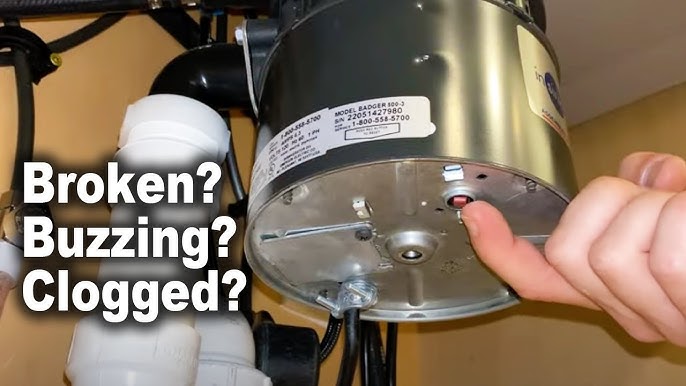
Find the red reset button at the bottom or side of the unit. Press it firmly to reset the motor. This button helps protect the disposal from electrical overload. It often restores function after clearing jams.
Testing The Unit
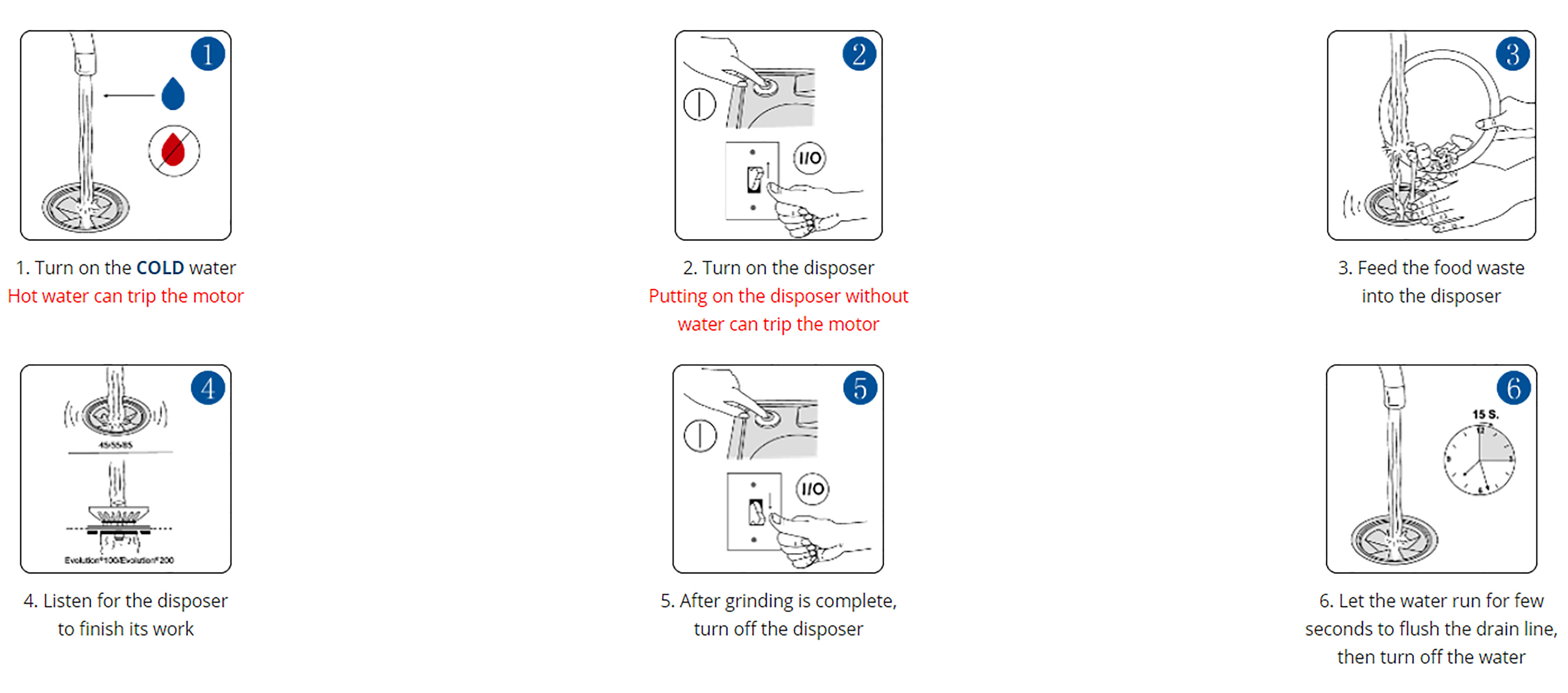
Turn the power back on at the switch or breaker. Run cold water into the disposal. Turn on the disposal to check if the humming stops. The blades should spin freely and grind waste properly now.
Credit: www.insinkerator.com
Clearing Clogs And Jams
Clogs and jams in a food waste disposer can stop it from working properly. Clearing these blockages is key to restoring smooth operation. Simple tools and safe methods help remove stuck food or debris. Follow these easy steps to fix your disposer without damage or injury.
Using A Broom Handle
Turn off the disposer’s power at the switch or breaker. Insert a broom handle into the disposer opening carefully. Use the handle to push and shift stuck food around. Move it gently to break up the clog. Avoid forcing it too hard to prevent damage.
This method helps clear jams without opening the unit. It also avoids direct contact with sharp blades inside. Repeat the process until the disposer blades can move freely again.
Manual Blade Rotation
Locate the small hex hole at the bottom of the disposer. Insert an Allen wrench or hex key into this hole. Turn the wrench back and forth to manually rotate the blades. This action loosens debris and frees the jammed parts.
Do this slowly to avoid bending or breaking the blades. Once the blades rotate smoothly, press the reset button under the unit. Restore power and test the disposer with cold water running.
Avoiding Hand Injuries
Never put your hands inside the disposer opening. The blades are sharp and can cause serious cuts. Always disconnect power before attempting any clearing methods. Use tools like broom handles or wrenches to avoid direct contact.
Wear gloves for added protection if needed. Taking safety precautions prevents accidents and ensures safe repairs.
Addressing Power Problems
Power problems often cause a food waste disposer to stop working. The unit may not turn on or may hum without grinding. Troubleshooting power issues can restore function quickly. Checking simple elements like circuit breakers and reset buttons saves time and money.
Checking Circuit Breakers
Start by inspecting the circuit breaker box. A tripped breaker cuts power to the disposer. Look for a switch that is flipped to the off position. Flip it fully to off, then back on. This action restores electricity. If the breaker trips again, a deeper electrical issue may exist.
Resetting The Disposal
The disposal has a red reset button on its underside. Press this button after turning off the power switch. It resets the internal breaker inside the unit. Wait a few seconds, then press the button firmly. Turn the power back on and test the disposer. This step often fixes minor electrical faults.
When To Call A Professional
If the disposer still does not work after resetting and checking breakers, call a professional. Electrical problems can be dangerous without proper tools and knowledge. A qualified technician can safely diagnose wiring or motor issues. Do not attempt repairs beyond basic troubleshooting to avoid injury or damage.
Dealing With Odors
Food waste disposers can develop bad odors over time. These smells come from leftover food particles and moisture. Dealing with odors keeps your kitchen fresh and your disposer working well. Simple steps help stop and remove these unpleasant smells quickly.
Cleaning Tips
Regular cleaning reduces odor build-up inside the disposer. Run cold water and grind ice cubes to clean the blades. Use a small brush or old toothbrush to scrub the rubber splash guard. Wipe the sink drain area to remove trapped food debris. Clean your disposer weekly to keep smells away.
Natural Deodorizers
Citrus fruits are great natural deodorizers. Cut lemons or oranges into pieces and grind them in the disposer. Baking soda also helps absorb odors. Pour half a cup of baking soda into the disposer, then add vinegar. Let it fizz for a few minutes before rinsing with hot water. These simple ingredients refresh your disposer without harsh chemicals.
Preventing Smells
Run cold water while using the disposer to flush waste quickly. Avoid putting fibrous or starchy foods like celery or potato peels inside. Grind small amounts of food at a time to prevent clogging. After use, run water for 15 seconds to clear leftover particles. Keeping the disposer dry when not in use also helps stop bad smells.
Handling Leaks
Leaks in your food waste disposer can cause water damage and unpleasant odors. Handling leaks quickly helps avoid costly repairs. You can troubleshoot most leaks with simple steps. Start by finding where the water comes from. Then, check all connections for tightness. Sometimes, parts may need replacement. Acting fast saves money and keeps your kitchen clean.
Identifying Leak Sources
Look under the sink for water puddles. Trace the leak to its origin. Common leak points include the sink flange, dishwasher connection, and drain pipe. Check the disposer body itself for cracks. Use a flashlight for better visibility. Run water and watch closely for drips. Pinpointing the exact source guides your repair steps.
Tightening Connections
Loose connections often cause leaks. Use a wrench to tighten slip nuts on drain pipes. Check the dishwasher hose clamp and tighten if needed. Be careful not to overtighten and damage parts. Hand-tighten connections first, then use a tool for a firm fit. After tightening, run water to see if leaks stop. Tight connections keep water flowing correctly.
When To Replace Parts
Worn or cracked parts cause persistent leaks. Inspect the rubber gasket under the sink flange. Replace it if brittle or torn. Look for rust or damage on metal parts. Dishwasher hoses may crack over time and need replacement. If tightening does not stop leaks, parts may be faulty. Use manufacturer-approved parts for the best fit and durability.
Credit: www.insinkerator.com
Maintenance Tips
Proper maintenance keeps your food waste disposer working well. Small care steps prevent common troubles and extend its life.
Follow these simple tips to maintain your disposer. They are easy and save time and money on repairs.
Regular Cleaning
Clean the disposer every week. Use cold water and dish soap. Run the unit to wash away food particles.
Grind small ice cubes to remove debris and sharpen blades. Avoid harsh chemicals that can damage parts. Citrus peels help freshen odors naturally.
Proper Usage Habits
Only put soft food scraps into the disposer. Avoid bones, fibrous vegetables, and grease. These items cause jams and clogs.
Run plenty of cold water while grinding. Cold water solidifies fats so the disposer can chop them better. Turn off the unit after grinding to clear the pipes.
Avoiding Common Mistakes
Do not overload the disposer with large amounts of food at once. Feed scraps slowly to prevent jams. Never put your hand inside the unit.
Do not use hot water during grinding. Hot water can melt grease and clog pipes. Avoid putting hard items like glass or metal in the disposer.
Frequently Asked Questions
How To Fix A Garbage Disposal That Just Hums?
Turn off power to the disposal. Use an Allen wrench in the bottom hole to free jammed blades. Press the red reset button. Restore power, run cold water, and test the unit. Avoid placing hands inside the disposal. Call a professional if humming persists.
Why Is My Food Waste Disposer Not Working?
Your food waste disposer may not work due to jams, power issues, or tripped reset buttons. Turn off power, clear jams with an Allen wrench, press the reset button, and test again. Persistent problems might require professional repair.
What Are Common Disposal Problems?
Common disposal problems include jams, clogs, motor overheating, leaks, and electrical issues. These cause humming, no power, or bad odors. Regular cleaning and avoiding hard or fibrous waste prevent issues. Pressing the reset button and manually clearing jams often fixes problems quickly.
How To Reset A Garbage Disposal?
Turn off the power to the disposal. Insert an Allen wrench into the bottom hole and rotate to free jams. Press the red reset button. Restore power, run cold water, and test the disposal. Repeat if needed or call a professional.
Why Is My Food Waste Disposer Humming But Not Working?
A humming sound means the disposer is jammed. Turn off power, use a hex wrench to free the blades. Press the reset button before testing again.
Conclusion
Troubleshooting your food waste disposer can save time and money. Always start by cutting power to avoid accidents. Use an Allen wrench to clear jams carefully. Never put your hands inside the unit. Removing debris with tools like tongs works best.
Press the reset button after clearing the blockage. Running cold water helps keep the blades moving smoothly. Regular maintenance prevents future problems. Simple steps often fix common disposal issues quickly. Stay safe and follow these tips to keep your disposer working well.