Is your gas fireplace acting up just when you need it most? You’re not alone.
Many gas fireplace owners face common problems like ignition failures, strange odors, or flickering flames that can leave you frustrated and cold. But don’t worry—most of these issues have simple fixes you can try yourself before calling a professional. In this guide, you’ll discover how to troubleshoot the most frequent gas fireplace problems step-by-step, helping you restore warmth and comfort to your home quickly and safely.
Keep reading to learn the easy tips and tricks that will get your fireplace working perfectly again.
Credit: www.casualfurnitureworld.com
Ignition Issues
Ignition issues are the most frequent cause of gas fireplace problems. These issues prevent the fireplace from lighting or staying lit. Troubleshooting ignition problems can save time and money.
Understanding the common ignition troubles helps to fix them quickly. Below are key areas to check during diagnosis.
Pilot Light Problems
The pilot light must stay lit to ignite the main burner. Dirt or dust can block the pilot nozzle. This stops the pilot from lighting properly. Sometimes, the flame is too weak to stay lit. A weak flame means poor gas flow or a dirty pilot assembly. Cleaning the pilot area often restores the flame. If the pilot light keeps going out, it may signal a bigger problem.
Thermocouple Failures
The thermocouple senses if the pilot light is on. It stops gas flow if the pilot goes out. When the thermocouple fails, gas supply cuts off even if the pilot is lit. This prevents the main burner from lighting. A faulty thermocouple usually needs replacement. Testing it with a multimeter can confirm the issue. Cleaning the thermocouple tip sometimes helps.
Gas Supply Interruptions
Gas supply issues stop the fireplace from igniting. Check that the gas valve is fully open. Sometimes, the gas line is blocked or damaged. Low gas pressure can also cause ignition failure. Inspect the gas meter and regulator for problems. If you smell gas, turn off the supply and call a professional immediately. Proper gas flow is essential for safe ignition.
Credit: www.casualfurnitureworld.com
Odor And Soot Concerns
Odor and soot issues often indicate problems with a gas fireplace’s combustion process. These problems can affect your home’s air quality and the fireplace’s performance. Identifying and addressing these concerns early helps maintain safety and efficiency.
Identifying Strange Smells
Gas fireplaces may emit unusual odors for several reasons. A dusty burner or pilot light can cause a burning smell during the first use of the season. A rotten egg odor signals a possible gas leak and requires immediate attention. Other smells may come from soot or debris burning inside the fireplace.
Soot Buildup Causes
Soot forms when the gas does not burn completely. Clogged or dirty burner ports limit airflow and cause incomplete combustion. Incorrect air-to-gas ratios also lead to soot accumulation. Over time, soot can coat the fireplace glass and walls, reducing heat output and creating a mess.
Health And Safety Risks
Breathing soot particles and gas fumes can harm your health. Soot can irritate the eyes, throat, and lungs, especially for children and those with respiratory issues. Gas leaks pose serious risks of fire or explosion. Always ensure proper ventilation and address odors or soot promptly to keep your home safe.
Flame Irregularities
Flame irregularities in gas fireplaces can signal underlying problems affecting performance and safety. These issues often manifest as flickering, weak, or uneven flames. Understanding the causes helps maintain a warm, inviting fire and prevents further damage.
Flickering Flames
Flickering flames usually indicate air or gas supply issues. Dust or dirt in the burner ports can disrupt flame stability. Strong drafts from windows or vents may also cause the flames to flicker. Cleaning the burner and checking for drafts often solves this problem.
Weak Or Uneven Flames
Weak flames suggest low gas flow or clogged burners. Uneven flames often occur when burner holes block partially. This can happen due to debris or spider webs. Regular cleaning and inspection keep flames strong and balanced.
Gas Pressure Effects
Gas pressure directly affects flame size and shape. Low pressure causes small, weak flames. High pressure creates large, noisy flames that waste fuel. Use a gas pressure gauge to ensure correct levels. Adjustments require a professional for safety.
Credit: www.thechimneydoctor.com
Basic Cleaning Steps
Keeping your gas fireplace clean is key for smooth operation and safety. Dirt and dust can block parts and cause ignition problems. Regular cleaning stops buildup and helps your fireplace work well. Follow these basic cleaning steps to maintain your unit.
Burner Port Maintenance
Check burner ports for dirt and debris. Use a soft brush or compressed air to clean them gently. Avoid sharp tools that can damage the ports. Clear burner holes allow gas to flow evenly and flames to burn properly. Clean ports improve flame quality and reduce soot.
Pilot Assembly Cleaning
Turn off the gas before cleaning the pilot assembly. Use a soft brush to remove dust around the pilot light and thermocouple. Clean parts help the pilot light stay lit and the safety sensor to work well. Avoid touching the thermocouple with bare hands to prevent damage.
Glass Panel Care
Remove the glass panel carefully according to your fireplace manual. Clean both sides with a non-abrasive glass cleaner and a soft cloth. Avoid harsh chemicals that can damage the glass or seals. Clean glass improves the fireplace’s look and allows you to see the flames clearly.
Battery And Remote Checks
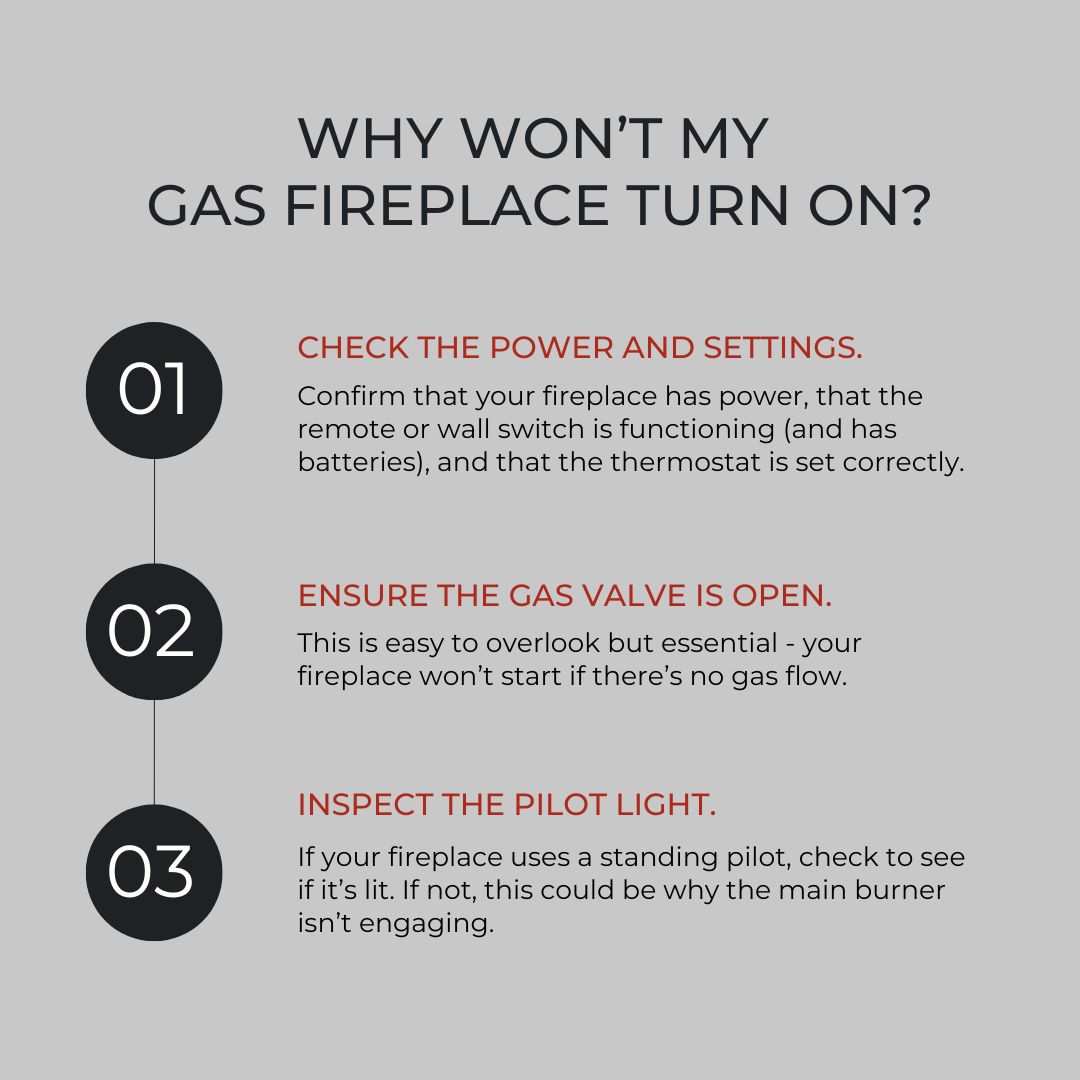
Battery and remote issues often cause gas fireplaces to malfunction. Checking these components can quickly solve many problems. Batteries power the remote and wall switches. Weak or dead batteries stop the fireplace from turning on. Remotes might need resetting to work properly. Testing these parts is simple and saves time before calling a technician.
Replacing Batteries
Start by removing the battery cover on the remote or wall switch. Use fresh batteries matching the device’s specifications. Insert them carefully, respecting the positive and negative ends. Old batteries can leak and damage the device. Replace batteries regularly, especially before the heating season. Test the device after replacement to confirm it works.
Testing Wall Switches
Wall switches control the gas fireplace’s ignition. Test the switch by toggling it on and off. If nothing happens, check the wiring for loose connections. Use a multimeter to verify electrical continuity. Sometimes, dust or moisture causes failure. Clean the switch gently if needed. Replacing a faulty switch may be necessary for proper operation.
Remote Control Reset
Remote controls can lose sync with the fireplace receiver. To reset, remove the batteries and press all buttons for 10 seconds. Reinsert batteries and point the remote at the fireplace receiver. Press the power button to test. Some models require a specific reset button or sequence. Consult the user manual for exact instructions. Resetting often restores remote functionality quickly.
Resetting Your Fireplace
Resetting your gas fireplace often resolves many common problems quickly. It refreshes the system and clears minor faults. A reset can restore ignition and improve performance without complex repairs.
Different models require different reset methods. Understanding soft and hard reset options helps you troubleshoot effectively. Remote-controlled fireplaces have unique reset steps to follow.
Soft Reset Techniques
Soft resets are simple and safe. Turn off the fireplace using the wall switch or remote. Wait for about five minutes to let all components power down.
After the wait, turn the fireplace back on. This action clears minor errors and resets the control board. Soft resets often fix ignition problems and flame issues.
Check the pilot light after the reset. If it still won’t light, try a hard reset next.
Hard Reset Procedures
Hard resets involve cutting power completely. Switch off the fireplace at the main power source or circuit breaker. Leave it off for at least ten minutes.
This allows the system to fully reset and clear deeper faults. After ten minutes, restore power and turn the fireplace on. Watch for normal ignition and flame behavior.
Hard resets can fix control module glitches or sensor faults. Use this method only if the soft reset does not work.
Remote Controlled Systems
Remote fireplaces may need special reset steps. Remove batteries from the remote control first. Turn off the fireplace at the main switch or breaker.
Wait five to ten minutes. Replace the remote batteries with fresh ones. Turn the fireplace back on and pair the remote if needed.
Follow the manufacturer’s instructions for remote programming after reset. This ensures the remote communicates correctly with the fireplace.
Safety Precautions
Safety is the top priority when dealing with gas fireplaces. Small problems can turn into serious hazards quickly. Understanding key safety steps can protect your home and family. Always handle gas issues with care and caution.
Gas leaks are dangerous and require immediate attention. Knowing how to respond fast can prevent accidents. Recognizing signs of a gas leak helps you act quickly and safely.
Gas Leak Response
If you smell gas, do not ignore it. Leave the area at once to avoid inhaling fumes. Avoid using electrical switches, phones, or flames. Open windows and doors to let fresh air in. Call for professional help from a safe location.
When To Shut Off Gas
Turn off the gas supply if you detect a leak or smell gas strongly. Shut the main valve located near your fireplace or gas meter. Only turn it back on after a professional inspects the system. Never try to fix a gas leak by yourself.
Emergency Contacts
Keep emergency numbers handy for quick access. Save your local gas company and fire department contacts. In case of a gas leak or fire, call them immediately. Early reporting can prevent damage and save lives.
When To Seek Help
Gas fireplaces usually work well with basic care. Some problems need more than simple fixes. Knowing when to seek help can keep you safe. It can also save time and money. Troubleshooting small issues is fine, but certain signs call for professional support.
Ignoring serious problems can lead to bigger risks. Gas leaks and electrical faults are dangerous. A trained technician has the tools and skills to fix complex issues safely. Acting quickly protects your home and family.
Persistent Odors
Smelling gas or strange odors is a serious warning. These smells can mean a leak or incomplete burning. Do not ignore persistent odors. Turn off the fireplace and leave the area. Call a professional to inspect and repair the unit. Safety must be the top priority.
Electrical Control Issues
Gas fireplaces often use electrical parts to start and control flames. Problems like flickering flames or unresponsive switches may signal electrical faults. These can be hard to diagnose without experience. Faulty wiring or controls may cause hazards. Contact an expert to check and fix electrical problems quickly.
Complex Repairs
Some fireplace problems need more than cleaning or battery changes. Issues with the gas valve, burner, or pilot assembly require special tools. Complex repairs must be done by certified technicians. Attempting these fixes alone can cause damage or injury. Professionals ensure the fireplace works safely and efficiently after repair.
Frequently Asked Questions
What Is The Most Common Problem With A Gas Fireplace?
The most common problem with a gas fireplace is ignition failure. Dust, a faulty pilot light, dead batteries, or gas supply issues often cause it. Cleaning the pilot assembly and checking gas pressure usually resolves this issue quickly.
How To Reset A Gas Fireplace?
To reset a gas fireplace, turn the control switch to OFF, wait a few minutes, then switch to ON or REMOTE. Listen for a beep signaling reset. For electronic models, press the receiver’s pinhole reset or cut power at the breaker to restart the ignition system.
How To Clean A Thermocouple On A Gas Fireplace?
Turn off the gas and allow the thermocouple to cool. Gently clean it using fine steel wool or sandpaper. Wipe off debris with a clean cloth. Reinstall and test the fireplace to ensure proper ignition. Repeat cleaning if necessary for consistent performance.
What Causes A Gas Fireplace To Stop Working?
A gas fireplace stops working due to ignition failure, dirty pilot assembly, faulty thermocouple, dead batteries, or gas supply issues. Clogged burners and poor air-to-fuel ratio also cause flame problems. Regular cleaning and battery checks help maintain function. Persistent issues need professional repair.
Why Won’t My Gas Fireplace Pilot Light Stay Lit?
A dirty or faulty thermocouple often causes this issue. Dust or debris on the pilot assembly can block ignition. Check and clean the pilot area or replace the thermocouple if needed.
Conclusion
Gas fireplaces can have common problems like ignition failure or soot buildup. Regular cleaning helps keep them working well. Check batteries and gas supply often to avoid issues. Strange smells or persistent flame problems need quick attention. Safety matters—never ignore the smell of gas.
Simple fixes often solve small troubles. For complex problems, call a professional without delay. Proper care ensures warmth and comfort all season long.