Is your humidifier acting up just when you need it most? Maybe it’s not producing any mist, or the water isn’t flowing properly.
These common problems can be frustrating, especially when dry air makes your home uncomfortable. But don’t worry—you don’t have to struggle or spend money on replacements right away. In this guide to humidifier troubleshooting, you’ll discover simple, effective steps to get your device working smoothly again.
From quick checks like power and water levels to easy cleaning tips that remove stubborn mineral buildup, you’ll learn exactly how to fix the issues yourself. Keep reading, and you’ll soon enjoy the perfect humidity in your home without hassle.

Credit: device.report
Basic Checks
Start with basic checks before diving into complex fixes. These simple steps solve many common humidifier issues. Quickly confirm power, water, settings, and filter status. This helps avoid unnecessary repairs and saves time. Follow these easy tips to get your humidifier running smoothly again.
Power And Outlet
Check if the humidifier is plugged in properly. Test the outlet with another device to confirm it works. Make sure any child lock or safety switch is off. A dead outlet or power switch can stop the unit from working.
Water Level And Float
Ensure the water tank is full enough for operation. Look for the float inside the tank; it should move freely. A stuck or low float can prevent the humidifier from releasing mist. Refill with clean water if the level is low.
Settings And Mist Output
Verify the mist output setting is not too low. Check if the humidity target is already reached, which may pause misting. Adjust the controls to a higher setting if needed. Sometimes the unit just needs a small boost to start misting.
Filter Placement And Saturation
Inspect the filter or wick inside the unit. It should be seated correctly and fully wet. A dry or misplaced filter blocks mist production. For new filters, soak or turn them upside down briefly to saturate before use.
Patience With Warm Mist Models
Warm mist humidifiers need time to heat water before mist appears. This process can take several minutes. Wait patiently after turning the unit on. The mist will start once the water reaches the right temperature.
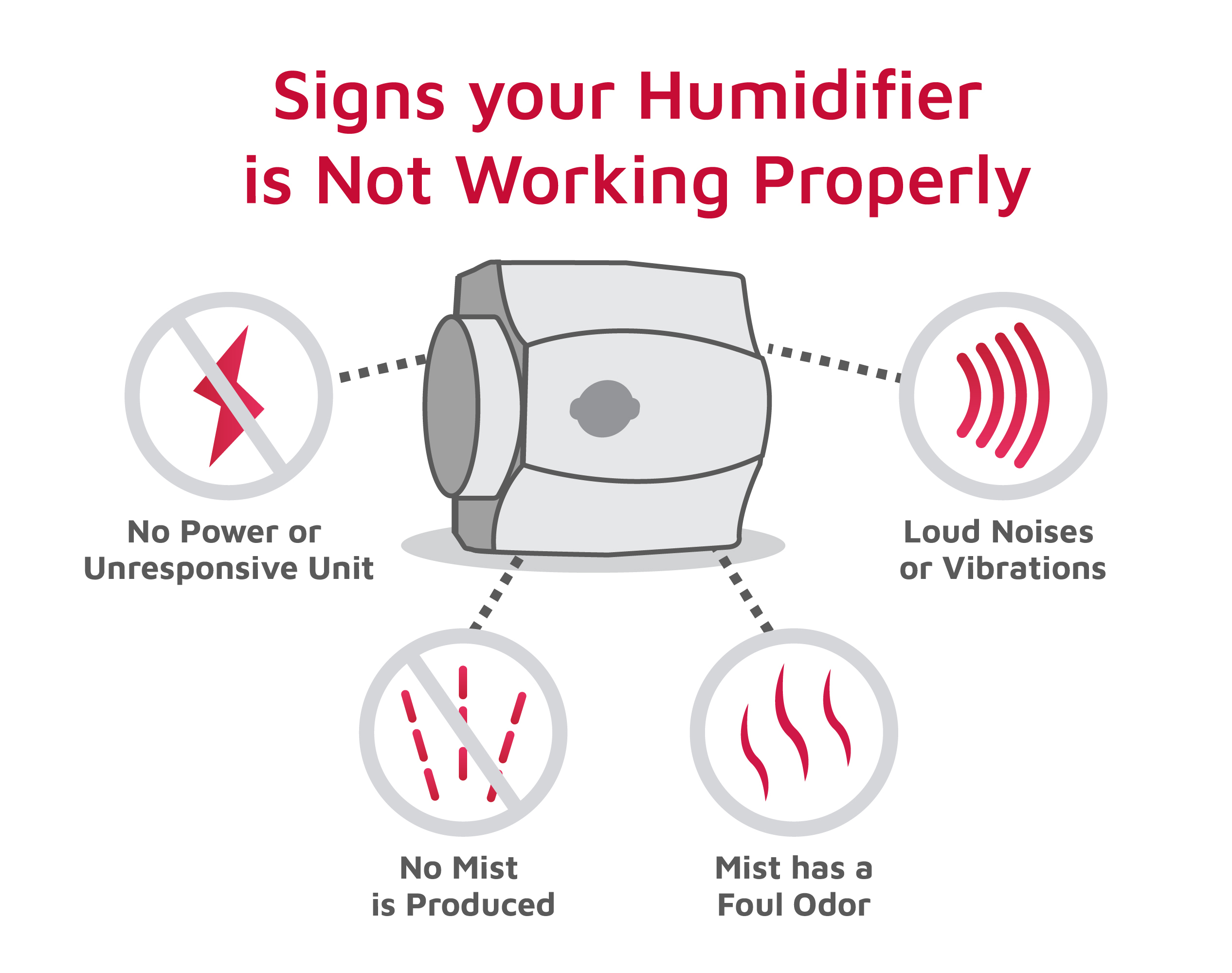
Credit: www.lennox.com
Cleaning Steps
Regular cleaning keeps your humidifier running well and extends its life. Dirt and mineral buildup block mist and cause odors. Follow these simple cleaning steps to maintain your device’s performance and air quality. Clean your humidifier every one to two weeks for best results.
Unplug And Empty
Always unplug your humidifier before cleaning. This prevents electric shock and damage. Remove the water tank and empty any remaining water. Rinse the tank and base with clean water to remove loose dirt and dust. Dry parts with a soft cloth before further cleaning.
Vinegar Soak For Mineral Buildup
Hard water leaves white scale inside the tank and base. Use white vinegar to dissolve these deposits. Mix equal parts vinegar and water and fill the tank. Let it soak for 30 minutes to one hour. Use a soft brush to scrub areas with buildup. Rinse thoroughly with clean water to remove vinegar smell.
Cleaning Ultrasonic Diaphragm
The ultrasonic diaphragm produces mist but can clog easily. Gently clean it with a cotton swab dipped in vinegar. Avoid pressing hard to prevent damage. Remove mineral crust and debris carefully. Wipe the diaphragm dry with a soft cloth before reassembling the unit.
Whole-home System Cleaning
Whole-home humidifiers need regular cleaning too. Turn off your HVAC system before starting. Remove and soak the water panel or pads in vinegar solution. Clean the water line and reservoir to prevent mold growth. Replace filters as recommended by the manufacturer. Regular maintenance keeps the system efficient and safe.
Advanced Tips
Advanced tips can help resolve persistent humidifier issues. These techniques go beyond basic checks. They improve performance and extend your device’s life. Follow these steps carefully for best results.
Using Distilled Water
Using distilled water reduces mineral buildup inside your humidifier. Tap water often contains minerals that cause white dust and clog parts. Distilled water is free from these minerals. It keeps your humidifier cleaner and working better. Regular use also lowers maintenance needs. Always fill the tank with distilled water for optimal performance.
Salt Addition For Warm Mist
For warm mist humidifiers, adding a small amount of salt can improve mist quality. Salt helps the water boil evenly and prevents scale on heating elements. Use only the amount recommended by the manufacturer. Too much salt can damage the unit. This simple trick keeps your humidifier running smoothly and producing consistent mist.
Correct Filter Installation
Incorrect filter placement can cause your humidifier to malfunction. Filters must fit snugly and be fully saturated with water. A dry or loose filter reduces mist output and may damage the device. Always check the filter’s position after cleaning or replacing it. Proper installation ensures the best humidity output and protects internal parts.
Manufacturer Support And Warranty
Contact manufacturer support for complex problems you cannot fix. Many brands offer helpful guides, troubleshooting tips, and customer service. Check if your humidifier is under warranty before attempting major repairs. Warranty coverage can save money on parts or replacements. Keep your purchase receipt and warranty details handy for quick assistance.
Common Issues
Humidifiers improve air quality but sometimes face common problems. Understanding these issues helps keep your device working well. Troubleshooting saves time and avoids costly repairs. Below are frequent humidifier problems and easy fixes.
Low Or No Humidity Causes
Low humidity often means the humidifier isn’t releasing enough moisture. Check if the water tank is empty or the mist level is set too low. Mineral buildup can block mist output. Use distilled water to reduce deposits. Also, clean the filter or wick regularly. A clogged filter limits water flow and lowers humidity.
Water Leaks And Solutions
Leaks occur from cracks in the tank or loose connections. Always place the humidifier on a flat surface. Inspect the water tank for damage. Tighten all parts firmly but avoid overtightening. Clean the base and seals to prevent water pooling. Use a soft cloth to dry spills immediately. Regular maintenance stops leaks from worsening.
Clogged Water Panels And Valves
Water panels and valves control water flow inside the humidifier. Mineral deposits can clog these parts. Remove the panel and soak it in vinegar to dissolve buildup. Rinse thoroughly before reinstalling. Check valves for dirt or blockages. Clean gently with a soft brush. Proper cleaning restores smooth water flow and better humidity output.
Faulty Humidistat Signals
The humidistat controls when the humidifier turns on and off. Wrong signals cause the device to stop working or run too long. Dust or dirt on the sensor can cause errors. Clean the sensor carefully with a dry cloth. Test the humidistat by adjusting humidity settings. Replace it if the problem continues. Accurate signals keep your home comfortable and safe.

Credit: www.youtube.com
Frequently Asked Questions
Why Is The Mist Not Coming Out Of My Humidifier?
Check power, water level, and settings first. Clean mineral buildup with vinegar. Use distilled water to prevent clogs. Ensure the filter is wet and properly placed. Allow time for warm mist models to heat up.
What Are The Common Problems With Humidifiers?
Common humidifier problems include no mist output, mineral buildup, clogged filters, faulty water levels, and electrical issues. Regular cleaning and using distilled water help prevent these issues. Check settings, ensure proper filter placement, and verify power supply for optimal performance.
Why Is My Humidifier Not Working Properly?
Your humidifier may not work due to low water, power issues, incorrect settings, or mineral buildup. Clean the tank, use distilled water, and check the filter and water lines. Ensure the unit heats up properly and settings are adequate. Replace faulty parts if problems persist.
Why Is My Humidifier Not Fogging Up?
Check power, water level, and settings first. Clean mineral buildup from the tank, heating element, or diaphragm. Use distilled water to prevent deposits. Ensure the filter is wet and correctly placed. For whole-home units, inspect water lines for clogs.
Why Is My Humidifier Not Producing Mist?
Check if the humidifier has power and enough water. Mineral buildup can block mist; clean the tank and parts with vinegar.
Conclusion
Proper humidifier care keeps your air comfortable and healthy. Check power, water, and settings regularly. Clean the tank and parts to avoid mineral buildup. Use distilled water to reduce future problems. Replace filters when needed and inspect water lines in whole-home units.
Small steps prevent big issues and extend your humidifier’s life. Stay patient during warm-up times for best results. Regular maintenance saves time and money. Keep your space cozy and breathe easier with a well-functioning humidifier.