Is your outdoor gas light flickering, refusing to ignite, or constantly blowing out? You’re not alone.
Outdoor gas lights add a warm, inviting glow to your space, but when they stop working properly, it can be frustrating and even risky. The good news? Many common problems have simple fixes that you can handle yourself. In this guide, you’ll discover easy-to-follow troubleshooting tips that will help you bring your gas light back to life quickly and safely.
Keep reading, and you’ll gain the confidence to tackle your outdoor gas light issues without calling a professional every time. Your beautiful, glowing yard is just a few steps away!
Common Ignition Problems
Outdoor gas lights add charm to any space but sometimes fail to ignite. Common ignition problems often stem from simple issues. These problems stop the flame from lighting or cause it to go out quickly. Troubleshooting these faults keeps your gas light glowing safely and reliably.
Checking Gas Valve And Key
The gas valve controls fuel flow to the burner. If it is closed or stuck, the light won’t ignite. Turn the valve key slowly to open it fully. Listen for a faint hiss indicating gas flow. Test the valve key for smooth turning. Replace it if stiff or broken. Ensure the gas supply line is connected and active.
Inspecting Burner Orifice
The burner orifice is a small hole where gas escapes to ignite. Dirt, rust, or spider webs can block it. Use a flashlight to inspect the orifice closely. A blocked orifice prevents gas from reaching the flame. Clear the blockage carefully without enlarging the hole. A clean orifice allows gas to flow evenly and light easily.
Cleaning Clogs And Debris
Clogs inside the gas light parts stop proper ignition. Remove debris with a soft brush or compressed air. Avoid harsh tools that may damage delicate parts. Check inside the burner, valve, and gas line for dirt buildup. Cleaning restores smooth gas flow and reliable lighting. Regular maintenance prevents future ignition failures.
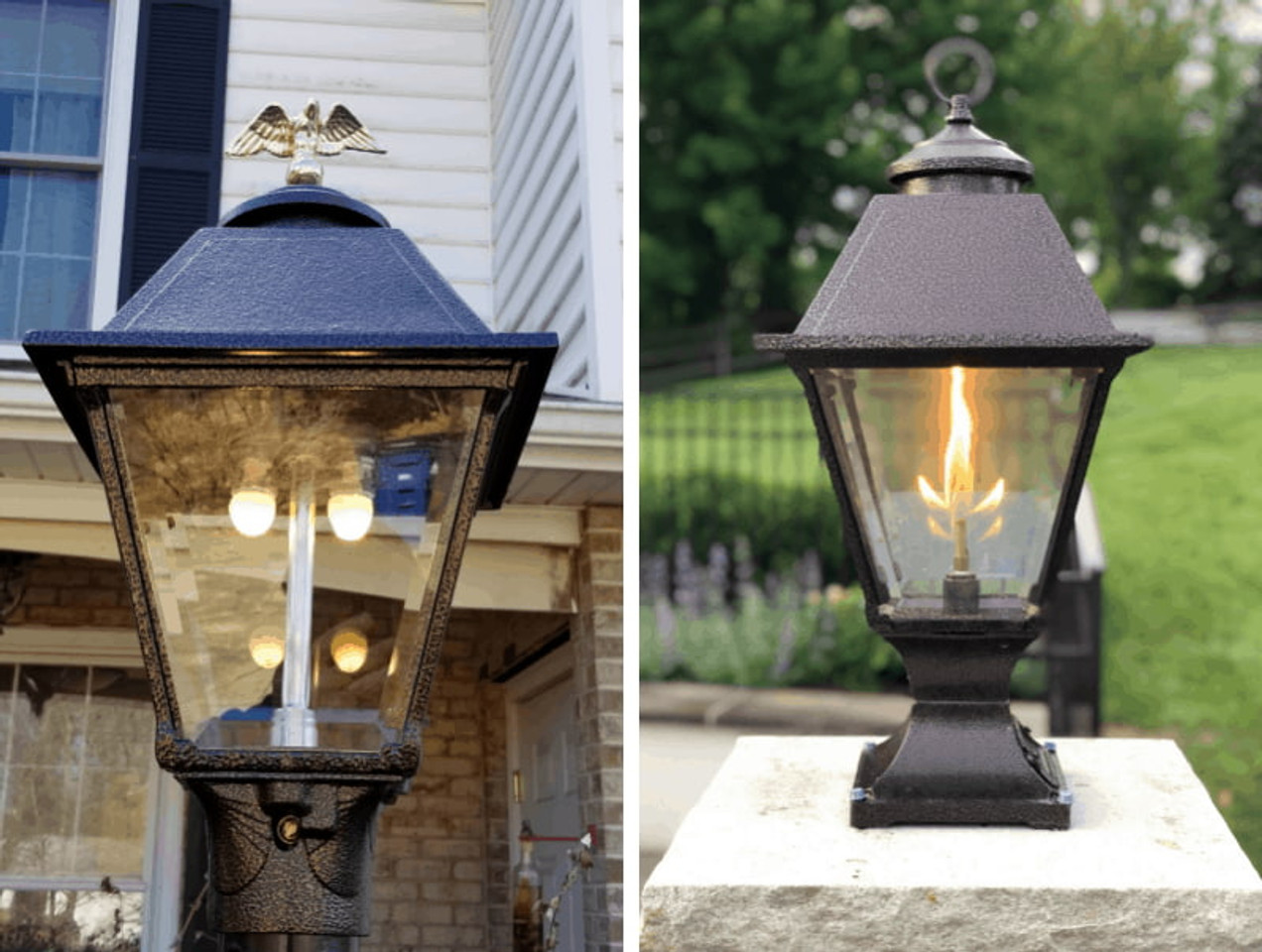
Credit: americangaslamp.com
Flame Issues
Flame issues are common problems in outdoor gas lights. A weak or uneven flame affects light quality and safety. Understanding how to handle flame problems helps keep your gas light working well. Check the flame carefully to find signs of trouble. Small adjustments can improve flame performance and prevent bigger issues.
Adjusting Flame Height
Flame height affects light brightness and fuel use. Too high a flame wastes gas and may cause soot. Too low a flame can go out easily. Locate the flame adjustment screw on your light. Turn it slowly to raise or lower the flame. Stop adjusting once the flame is steady and blue. Check the flame often to keep it at the right height.
Preventing Flame Blowouts
Wind or drafts can blow out your gas flame. Place the light in a sheltered spot to reduce wind. Use glass enclosures or covers designed for gas lights. Avoid placing the light near open windows or vents. Regularly clean the burner to remove dirt that can affect flame stability. A strong, steady flame lasts longer and uses gas efficiently.
Ensuring Proper Oxygen Flow
Oxygen is needed for a clean, bright flame. Blocked air vents reduce oxygen and cause a weak flame. Check air inlets for dust, spider webs, or debris. Clean vents with a soft brush or compressed air. Do not cover vents or block airflow with decorations. Good oxygen flow helps the flame burn blue and steady.
Gas Supply Concerns
Gas supply problems often cause outdoor gas light issues. Checking the supply helps find the root cause fast. This section covers key points to check and fix gas supply concerns. Safety stays top priority during all steps.
Verifying Gas Line Integrity
Start by inspecting the gas line for cracks or damages. Look for kinks or bends that block gas flow. Ensure fittings connect tightly with no signs of corrosion. Replace any worn parts to prevent gas leaks. A strong, intact line guarantees steady gas delivery.
Detecting Leaks With Soapy Water
Mix water with liquid soap to create a bubble solution. Apply the soapy water over all gas line joints and connections. Watch closely for bubbles forming, which signal gas leaks. No bubbles mean the line stays sealed and safe. This simple test helps spot hidden leaks early.
Handling Gas Pressure Problems
Low or high gas pressure causes flickering or no flame. Use a pressure gauge to measure gas pressure at the supply point. Adjust the regulator to maintain steady, proper pressure. Replace the regulator if it fails to control pressure. Correct pressure ensures reliable light performance.
Maintenance Tips
Proper maintenance keeps outdoor gas lights working safely and efficiently. Regular care prevents common issues and extends the light’s life. Simple steps help avoid costly repairs and keep your area well-lit.
Focus on key parts like the pilot orifice and bug screens. Follow a consistent inspection schedule to catch problems early. These easy tasks improve performance and safety.
Cleaning Pilot Orifice
The pilot orifice controls gas flow to the flame. Dirt or rust can block it, causing weak or no flame. Turn off the gas before cleaning. Use a soft brush or compressed air to clear debris. Avoid using sharp tools that might damage the orifice. Clean regularly to ensure steady ignition.
Removing Obstructed Bug Screens
Bug screens protect the burner but can trap dirt and insects. This blockage reduces gas flow and light brightness. Remove the screen carefully and rinse it with water. Use a soft brush to remove stuck debris. Dry completely before reinstalling. Clean the screen every few months or after heavy bug seasons.
Regular Inspection Schedule
Set a routine to inspect your outdoor gas light. Check for cracks, rust, or loose parts. Look at the gas line for leaks or damage. Ensure the flame burns steady without flickering. Inspect at least twice a year, more often in harsh weather. Early detection helps maintain safety and performance.
When To Call Professionals
Sometimes, outdoor gas light issues go beyond simple fixes. Complex problems need expert help. Knowing when to call professionals keeps your property safe and your lights working well. Professional help prevents damage and injury from gas leaks or faulty parts.
Hiring Licensed Plumbers
Licensed plumbers understand gas systems deeply. They follow local codes and safety rules strictly. Hiring a licensed plumber ensures repairs meet legal standards. They can fix leaks, replace valves, and test gas pressure. Their work reduces risks of gas accidents at your home.
Working With Gas Lighting Specialists
Gas lighting specialists have skills specific to outdoor gas lamps. They know how to handle delicate parts and old fixtures. Specialists can clean, adjust, or replace mantles and burners safely. They also offer advice on maintaining your lights for longer life. Their expertise guarantees proper lighting and safety.
Safety Precautions
Gas is dangerous without proper handling. Avoid DIY repairs if unsure about gas lines or fittings. Always shut off the gas supply before any inspection. Use protective gloves and eyewear during any work. Call professionals at the first sign of strong gas smell. Safety saves lives and prevents costly damage.

Credit: www.youtube.com
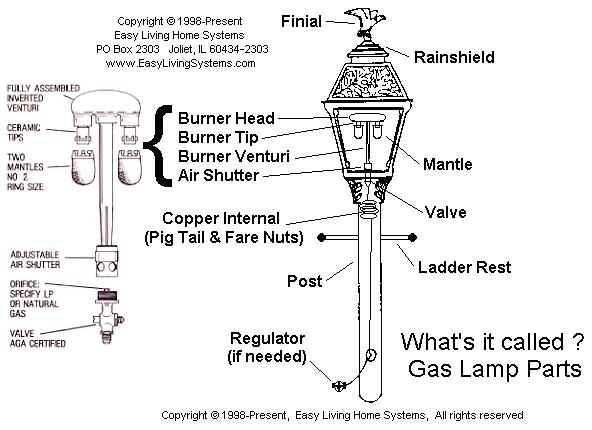
Credit: bacara.com.ar
Frequently Asked Questions
Why Is My Gas Lantern Not Working?
Check the gas valve and key for proper operation. Clean the burner orifice from dirt or spider webs. Ensure the gas line is not kinked or leaking. Verify the pilot orifice is free of rust and debris. Remove obstructing bug screens to allow oxygen flow.
How To Adjust Gas Lantern Flame?
Turn the gas valve slowly to increase or decrease the flame size. Adjust until the flame is steady and blue. Avoid yellow or flickering flames for safety and efficiency.
Who Repairs Gas Lanterns?
Professional gas lighting specialists, licensed plumbers, or HVAC providers repair gas lanterns safely and effectively. Schedule service with trained experts.
Why Does My Gas Lantern Keep Blowing Out?
Your gas lantern keeps blowing out due to low gas pressure, clogged burner or pilot orifice, strong wind, or insufficient oxygen supply. Check and clean the orifice, ensure proper gas flow, secure the lantern from wind, and verify adequate ventilation to maintain a steady flame.
Why Won’t My Outdoor Gas Light Ignite?
Check if the gas valve is open and the key works properly. Also, inspect the burner orifice for dirt or spider webs blocking gas flow.
Conclusion
Outdoor gas light issues often have simple fixes. Check valves, orifices, and gas lines first. Clean clogged parts carefully to restore flow. Ensure no leaks or kinks in the gas line. Keep flames steady by adjusting the gas flow. Regular maintenance prevents most common problems.
Stay safe by handling gas parts with care. When unsure, consult a qualified professional. Bright outdoor lighting adds charm and security. Troubleshooting helps keep your gas light shining bright.