Is your septic system acting up and causing you worry? You’re not alone.
Many homeowners face unexpected septic troubles that disrupt daily life and lead to costly repairs if ignored. But what if you could spot the warning signs early and fix minor issues before they become major headaches? In this guide to septic system troubleshooting, you’ll learn simple, clear steps to identify common problems, understand what’s going wrong, and know exactly when to call in a professional.
Keep reading, because the health of your septic system affects your home’s comfort, safety, and value—and we’re here to help you protect it.
Common Septic Problems
Septic systems can face various common problems that affect their performance. Understanding these issues helps homeowners act quickly and avoid costly repairs. The most frequent problems involve tank failures, water surface issues, effluent filters, and the impact of vegetation and soil.
Tank Failures
Tank failures occur when the septic tank cracks or leaks. This allows untreated waste to escape into the ground. Heavy use or lack of regular pumping causes sludge buildup. Over time, this clogs the system and damages the tank walls. Signs include slow drains and bad odors near the tank.
Surface Water Issues
Surface water pooling near the septic area is a warning sign. It means water is not draining properly and may flood the system. Excess rain or poor drainage around the tank causes this problem. Standing water can damage the drainfield and reduce its filtering ability. Keep surface water away to protect the system.
Effluent Filter Problems
The effluent filter stops solids from entering the drainfield. If it clogs, wastewater backs up into the tank or home. A dirty filter reduces system efficiency and can cause blockages. Regular cleaning of the filter prevents these problems. Ignoring the filter leads to costly repairs later.
Vegetation And Soil Impact
Plants and soil affect septic system health. Deep-rooted trees near the tank or drainfield can break pipes. Heavy soil compaction limits water absorption. Grass growing too thick can hide leaks or wet spots. Proper landscaping and soil care keep the septic system working well and extend its life.
Credit: www.vdwws.com
Signs Of Septic Trouble
Septic systems work quietly beneath the ground. They handle wastewater from homes. Signs of trouble often show before a full failure. Spotting these signs early can save money and hassle. Watch for changes in your yard and plumbing. These hints tell you when the system needs attention.
Standing Water And Damp Spots
Look for pools of water near the septic tank or drainfield. Wet, soggy soil where the ground is usually dry is a warning. This happens when the system leaks or clogs. Water that does not soak in means trouble below. Standing water can attract insects and cause bad smells.
Unpleasant Odors
Bad smells around the tank or drainfield are clear signs. Foul odors mean waste is not breaking down properly. The smell might be like rotten eggs or sewage. These odors can come inside the house or stay outside. Any strange smells near plumbing or soil need checking.
Lush Grass And Algal Blooms
Grass growing extra green and thick over the septic area signals leaks. The soil gets extra nutrients from sewage escaping the system. Algal blooms in nearby ponds or lakes show excess waste is spreading. Bright, healthy grass in dry seasons is unusual and a red flag.
Slow Drains And Gurgling Pipes
Drains that take longer to clear water may mean a clog in the system. Gurgling sounds from pipes happen when air gets trapped. These noises and slow draining show the septic system is struggling. Pay attention to sinks, tubs, and toilets for these signs. Early action can prevent bigger problems.
Resetting The Septic Pump
Resetting the septic pump is a key step in fixing common septic system issues. The pump moves wastewater from the tank to the drain field. Sometimes, the pump stops working or the alarm sounds, signaling a problem. Resetting the pump can clear minor faults and restore normal operation. This process is simple and can save time before calling a professional.
Locating The Control Box
The control box is near the septic tank or inside your home. It has indicator lights and buttons. Look for a small metal or plastic box mounted on a wall or post. The green light means the pump runs well. A red light or blinking means trouble. Knowing where the control box is helps you reset the system quickly.
Silencing The Alarm
The alarm sounds when the pump stops or the tank is too full. On the control box, find the red or silence button. Press it once to stop the noise. This action does not fix the problem but makes it easier to work on the system. The alarm may turn back on if the issue is not resolved.
Checking The Circuit Breaker
Power issues can stop the septic pump. Go to your home’s electrical panel. Find the breaker labeled for the septic system. Flip it off and wait a few seconds. Then flip it back on. This resets the pump’s power supply. If the breaker trips again, a deeper electrical or pump problem may exist.
Reducing Water Usage
Heavy water use can overload the septic system. Stop using water for laundry, dishes, and showers for several hours. This pause allows the pump to clear the tank. Reducing water use helps the system recover and may turn off the alarm. Avoiding water spikes protects the septic pump and drain field.
Troubleshooting Pump Alarms
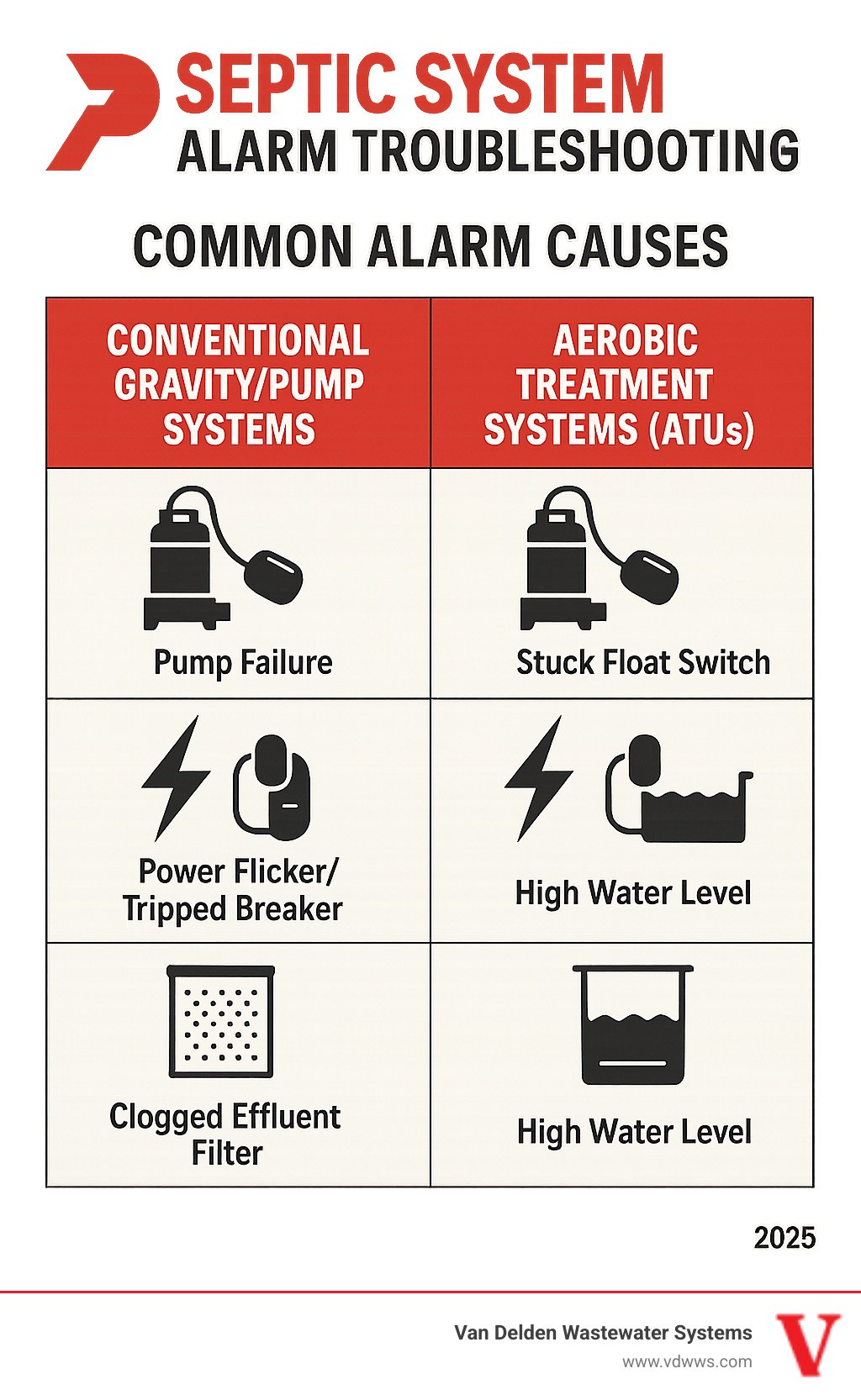
Septic system pump alarms warn of issues that need fast attention. These alarms help prevent costly damage and system failure. Understanding common causes of pump alarms makes troubleshooting easier. Check the pump and its components to find the problem. Follow simple steps to fix the issue and keep the system working well.
Stuck Float Issues
The float controls the pump by sensing liquid levels. Sometimes, the float gets stuck due to dirt or debris. A stuck float can keep the alarm ringing or stop the pump from working. Gently move the float to free it. Clean any buildup around it. This simple fix often stops false alarms and restores normal function.
Power And Electrical Problems
Power loss or electrical faults can trigger pump alarms. Check the circuit breaker for any tripped switches. Inspect wiring for damage or loose connections. Ensure the control box has power and the indicator lights are working. Reset the breaker if needed and test the pump. Electrical issues are common and usually easy to fix with basic checks.
Pump Failure Signs
A failing pump causes alarms and system backups. Listen for unusual noises like grinding or humming. Look for slow pumping or no water flow. Check for wet spots or odors near the tank. If the pump does not run after resets, it may need repair or replacement. Early detection of pump failure saves money and prevents bigger problems.
When To Call A Pro
Knowing when to call a professional for septic system issues can save time and prevent damage. Some problems need expert attention to avoid costly repairs. Watch for signs beyond basic troubleshooting steps. Acting early helps keep your septic system running smoothly.
Persistent Alarm Alerts
Septic alarms warn of system problems. If the alarm keeps sounding after silencing it, call a pro. Continuous alerts may mean a pump failure or electrical issue. Professionals can diagnose and fix the root cause safely.
Breaker Tripping
If the septic system breaker trips repeatedly, it signals an electrical fault. Resetting might help temporarily. Frequent trips require a technician to check wiring and pumps. Ignoring breaker issues risks damage or hazards.
Visible Standing Water
Standing water near the septic tank or drainfield shows drainage problems. This can cause soil contamination and system failure. A professional can inspect and repair leaks or blockages. Avoid walking or driving on wet areas.
Safety Concerns
Septic systems involve electricity and waste. If you smell strong odors or see damaged parts, stop work immediately. Call a pro to handle risks safely. Professionals use proper tools and follow safety rules to protect you and your home.

Credit: ruralhometech.com
Distinguishing Clogs From Full Tanks
Knowing the difference between a clogged septic system and a full tank is key for proper troubleshooting. Both issues cause drainage problems but need different fixes. Clogs block pipes or drains, slowing water flow. A full tank means the septic system cannot handle more waste, causing backups and spills. Recognizing signs helps prevent damage and costly repairs.
Whole House Vs Localized Drain Issues
Drain problems can affect the whole house or just one area. A clog in the main line causes all drains to back up. Local clogs block a single drain, like a sink or shower. If only one drain is slow or backed up, it is likely a local clog. If many drains are slow, the tank may be full or the main line clogged.
Sewage Odors And Drainfield Indicators
Bad smells near drains or the yard signal septic problems. Sewage odors by the house or near the drainfield often mean a full tank. A full tank cannot hold waste, so it seeps out and smells. Wet or soggy spots in the yard, especially near the drainfield, show system failure. Healthy drainfields stay dry and firm. Watch for bright green grass patches on the drainfield; this can mean excess moisture from a full tank.
Quick Fix Tips
Quick fix tips help keep your septic system working well. Small actions can stop big problems fast. These simple steps save time and money. Follow easy advice to avoid common septic issues and keep your system healthy.
Regular Pumping Schedule
Pump your septic tank every 3 to 5 years. Regular pumping removes solids before they clog the system. A full tank causes backups and damage. Set reminders to keep this task on time. This simple step prevents costly repairs and keeps your system clean.
Proper Water Usage
Use water wisely to avoid overloading your septic system. Spread out laundry and dishwashing over days. Fix leaks to stop excess water flow. Too much water pushes solids into the drainfield. Balanced water use protects your septic and extends its life.
Maintaining Vegetation
Plant grass or shallow-rooted plants near your septic area. Avoid trees and bushes with deep roots. Roots can damage pipes and the drainfield. Keep the soil covered to prevent erosion. Healthy vegetation helps absorb water and supports your system.
Avoiding Surface Water Infiltration
Direct rainwater and runoff away from your septic system. Use gutters, drains, and grading to move water. Standing water near the tank or drainfield causes failure. Check for puddles after storms and fix drainage problems. Keeping surface water out protects your septic system’s function.
Credit: advancedsepticservicesfl.com
Frequently Asked Questions
What Are The Most Common Problems With Septic Systems?
Common septic system problems include tank failures, infrequent pumping, overuse, surface water infiltration, lack of effluent filters, improper vegetation, and soil compaction.
How To Diagnose Septic Tank Issues?
Diagnose septic tank issues by checking for standing water, foul odors, and unusually green grass near the tank. Inspect for slow drains or sewage backups. Monitor alarm signals and observe for surface water pooling. Regularly schedule professional inspections to identify and fix problems early.
How To Reset A Septic Pump?
To reset a septic pump, silence the alarm on the control box first. Then, switch the circuit breaker off and on. Reduce water use to help the system catch up. If the alarm continues after hours, check for stuck floats or call a professional.
How To Tell The Difference Between A Clog And A Full Septic Tank?
A clog causes slow drains or backups localized to fixtures. A full septic tank triggers sewage odors, standing water, and widespread drainage issues.
What Are The Common Signs Of Septic System Failure?
Look for standing water or wet spots near the tank or drainfield. Bad odors and unusually green grass in dry weather also indicate problems. These signs often mean the system needs inspection or repair.
Conclusion
Septic system problems can cause serious home issues if ignored. Watch for signs like odors, wet spots, or slow drains. Regular checks and simple fixes often prevent bigger damage. Use water wisely to avoid overloading your system. When problems persist, contact a septic professional quickly.
Staying alert helps keep your system working well. Simple care saves money and stress in the long run. Keep your septic system healthy for a safe, clean home.