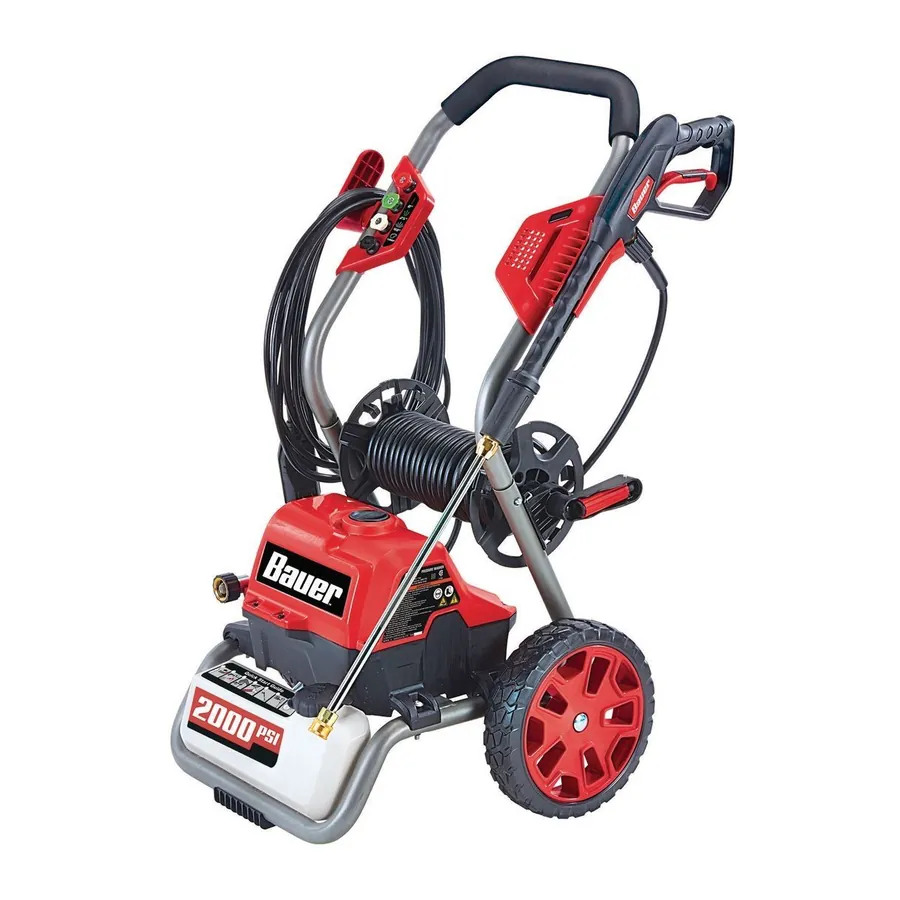
A Bauer 2000 psi pressure washer that won’t start or has lost pressure usually just needs a clean water inlet filter, a cleared spray nozzle, or fresh pump oil. The most common cause is an air lock from failing to bleed the line. Before disassembling, turn off the power and release trapped pressure. If the motor hums but won’t spin, stop immediately; that’s a capacitor issue requiring a qualified technician.
Why your Bauer pressure washer stops working
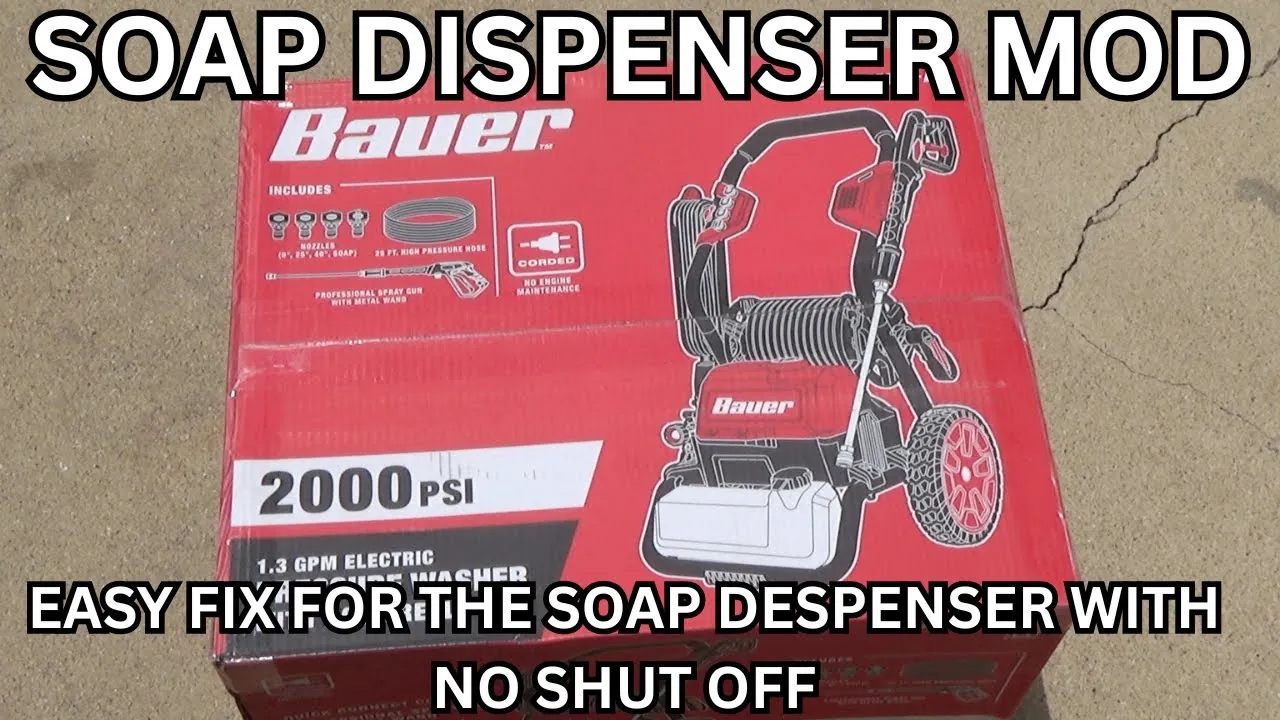
When bauer 2000 psi pressure washer troubleshooting points you toward a dead machine, the real cause almost always sits in the water path or the electrical supply. The problems rank from easiest to hardest: blocked water flow, tripped safety switches, then worn pump seals.
Water starvation is the top reason these units lose pressure or pulse badly. A clogged inlet screen forces the pump to pull against nothing, which introduces air into the system. That air makes the pump chatter and eventually triggers the thermal relief valve to dump hot water.
The second most likely cause is a dirty nozzle tip. Even a tiny piece of sand stuck in the orifice backs up pressure all the way to the unloader valve. The machine might shut itself off through its thermal overload switch if it runs like this for too long.
Electrical faults come third. These washers draw a heavy starting current on a standard 120-volt household circuit. If you’re sharing that outlet with another appliance, the voltage drops below what the motor needs to turn over.
If the unit trips your home’s breaker every time you pull the trigger, the fault could be a shorted stator winding inside the motor. Testing or replacing internal motor components, fuses, or wiring requires a licensed repair shop—never open the motor housing yourself.
You can read your exact model’s amp draw and required breaker size off the silver rating plate on the back of the frame.
Bleed the air out of the pump
This fix is for any machine that pulses, chatters, or sprays weakly right after you connect the garden hose. It costs nothing and takes under two minutes.
Air trapped inside the pump head stops the pistons from drawing water properly. You’ll hear a rapid clicking sound, and the spray will spit instead of flowing smoothly.
Here is exactly what to do:
- Turn the power switch to “Off” and unplug the cord from the wall.
- Connect your garden hose to the water inlet and turn the spigot on fully.
- Squeeze the trigger gun and hold it open.
- Wait until water flows out of the wand in a solid, steady stream with no bubbles. This usually takes 30 to 60 seconds for a standard 50-foot hose.
- Release the trigger, plug the machine in, and turn it on.
If the spray is smooth and quiet, the air lock was your problem. If it still pulses, move to the next step.
Don’t skip holding the trigger open before turning on the power. Running the pump dry while trying to push air out damages the ceramic plungers. For machines left sitting over winter, allow about half as long again to clear thicker, stale water from the lines.
Clear debris from the nozzle and inlet
Use this method when the machine starts fine but loses pressure after a few minutes, or when it shuts off entirely during use. It fixes blockages that trick the unloader valve into bypassing water.
A partially blocked nozzle creates massive backpressure. The motor strains, overheats, and trips its internal safety switch.
First, check the spray tip. Remove the colored plastic nozzle from the end of the wand. Hold it up to the light—you shouldn’t see any shadow inside the hole. Push the small metal cleaning pin (included with the washer) through the orifice from the back side. Flush it with water.
Next, unscrew the brass garden hose connector at the water inlet. Inside, you’ll find a small cylindrical mesh screen. Pull it out with needle-nose pliers. Rinse away any grit, algae, or pipe scale under a faucet. Push it back in firmly.
Turn the water on and bleed the hose again. If the pressure returns to normal, the blockage was in one of those two spots.
If you’ve cleaned both and the machine still dies mid-spray, the unloader valve spring may be fatigued. Replacing internal valve springs involves opening the pressurized pump manifold, which is work for a certified small-engine or pressure washer repair shop.
Replace the pump oil on sealed units
This is for machines that run but sound louder than usual, vibrate heavily, or leak milky fluid from the bottom of the pump head. It’s worth doing only if your specific Bauer model has a visible oil fill cap and drain plug; some 2000 psi consumer pumps are factory-sealed and can’t be serviced this way. Check your manual to confirm yours isn’t permanently sealed.
Pump oil breaks down from heat and friction. When it gets low or contaminated with water, the crankshaft bearings grind.
Drain the old oil while the pump is slightly warm so it flows out completely. Tilt the machine over a catch pan and remove the drain bolt. Let it empty for 5 full minutes.
Refill with non-detergent SAE 30 pump oil, which is what most axial cam pumps require. Pour slowly through the fill hole until the oil reaches the center of the sight glass on the side of the pump. Don’t overfill—it foams and loses its ability to protect the bearings.
Run the machine for 30 seconds with the spray wand attached and trigger released to circulate the new oil. Check the sight glass again; add a little more if the level dropped.
If the oil comes out looking like a chocolate milkshake, water has breached the piston seals. Seal replacement requires pressing out the ceramic plungers. That job needs specialized pullers and alignment tools, so take it to a professional service center rather than forcing parts apart yourself.
Mistakes that damage a Bauer pressure washer
Bad advice ruins these machines faster than hard water does. Here are the habits that actually cause the breakdowns people try to fix.
- Running the pump without the trigger pulled for more than two minutes. The water inside the closed loop heats up rapidly. This melts the rubber packings inside the pump head and forces the thermal relief valve to dump boiling water onto your feet.
- Using bleach or undiluted acid in the soap tank. The chemical injector uses soft rubber gaskets not rated for harsh solvents. Bleach eats through them, causing internal leaks and premature pump seal failure.
- Connecting to a shared extension cord. A 14-gauge wire longer than 25 feet drops the voltage reaching the motor. The motor pulls extra amps to compensate, overheats, and burns out the windings. Plug directly into the wall.
- Leaving water inside the pump during freezing weather. Ice expands with enough force to crack the aluminum pump head straight down the middle. Always run pump antifreeze through the system before storing it in an unheated garage.
- Forcing a clogged nozzle with a drill bit. The orifice is machined to a precise diameter. Stretching it with a power tool permanently lowers your operating pressure and ruins the spray pattern. Use only the provided pin.
How to keep your Bauer pressure washer running
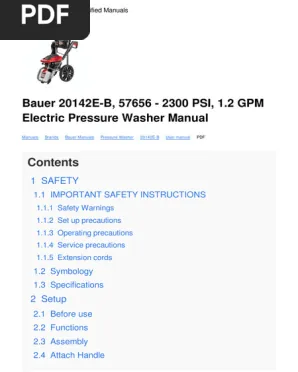
Small changes in how you set up and store the machine prevent the most common failures. Follow this table to swap bad habits for safe ones.
| If you’re doing this | Do this instead | Why |
|---|---|---|
| Turning the power on before the water flows | Bleed the hose with the trigger first | Prevents dry-running the pump pistons |
| Storing the unit with water inside | Run RV antifreeze through the pump | Stops ice from cracking the aluminum head |
| Using a long, thin extension cord | Plug into a dedicated 15-amp or 20-amp outlet | Delivers full voltage so the motor doesn’t overheat |
| Leaving the nozzle attached during storage | Remove tips and store them in a dry bag | Keeps mineral deposits from cementing inside the orifice |
| Pulling the cord to move the machine | Roll it using the wheels and handle | Yanking the hose strains the brass inlet threads |
These steps don’t require tools or technical knowledge. They just change the order of operations so the pump never starves, the motor never strains, and the metal never freezes.
Frequently asked questions
Why does my Bauer pressure washer keep shutting off?
It shuts off because the thermal overload switch trips when the motor gets too hot. This happens when the nozzle is blocked, the water supply is restricted, or you’re using an undersized extension cord. Clean the nozzle tip, check the inlet screen, and plug the washer directly into a wall outlet. If it still cuts out after five minutes of normal use, the switch itself may be faulty.
Can I use dish soap in my pressure washer?
No, dish soap creates thick suds that clog the chemical injector and damage the pump seals. Only use detergents specifically labeled for pressure washers. These are formulated to be low-sudsing and safe for the rubber gaskets inside the machine. Using household cleaners voids the warranty and leads to expensive repairs.
How long can I run a 2000 psi pressure washer continuously?
You can run it for about 3 to 5 minutes before you need to release the trigger and let cool water flush the pump. Keeping the trigger locked in bypass mode for longer overheats the water inside the pump head. Check your owner’s manual for the exact duty cycle, as it varies by the specific motor type installed in your model year.
Is it safe to leave the pressure washer plugged in?
No, you should unplug it whenever you aren’t actively spraying. Leaving it plugged in means the motor can accidentally start if someone bumps the power switch or if the GFCI outlet malfunctions. Always turn the switch off, unplug the cord, and squeeze the trigger to release stored pressure before walking away from the machine.
What happens if the pressure washer runs out of water?
The pump will destroy its own seals in less than 60 seconds. Without water to lubricate and cool the ceramic plungers, the friction generates extreme heat. You’ll hear a loud grinding noise, followed by water leaking from the bottom of the pump. Always ensure your spigot is fully open before pulling the trigger.
How often should I change the pump oil?
This assumes you’re using the machine for typical home cleaning tasks. If you notice milky oil before that interval, water has entered the crankcase and you need to change it immediately. Your exact capacity is printed on the pump housing or in the manual.
Why is water leaking from the bottom of my Bauer washer?
Water dripping from the bottom usually means the high-pressure seals inside the pump head have worn out. You might also see milky pump oil if you check the sight glass. Replacing these seals requires disassembling the pump manifold. Because this involves handling pressurized components and precise alignments, take it to a certified repair technician rather than attempting it yourself.
Conclusion
Every pressure washer has a limit where basic maintenance ends and mechanical repair begins. If cleaning the filters, bleeding the air, and checking your power source don’t bring the pressure back, the fault is inside the sealed pump or motor. At that point, contact a local authorized service center or reach out to Harbor Freight Tools, which distributes the Bauer brand, to arrange a proper diagnosis.
Related guides