You can resolve most common performance issues with simple maintenance and environmental adjustments when performing danby silhouette wine cooler troubleshooting. The most frequent cause of cooling failure is a blocked airflow path or a dirty condenser coil, which prevents the unit from releasing heat properly. If your unit isn’t cooling, start by checking the power supply and the surrounding room temperature before looking for more complex internal faults.
Why your Danby Silhouette wine cooler overheats
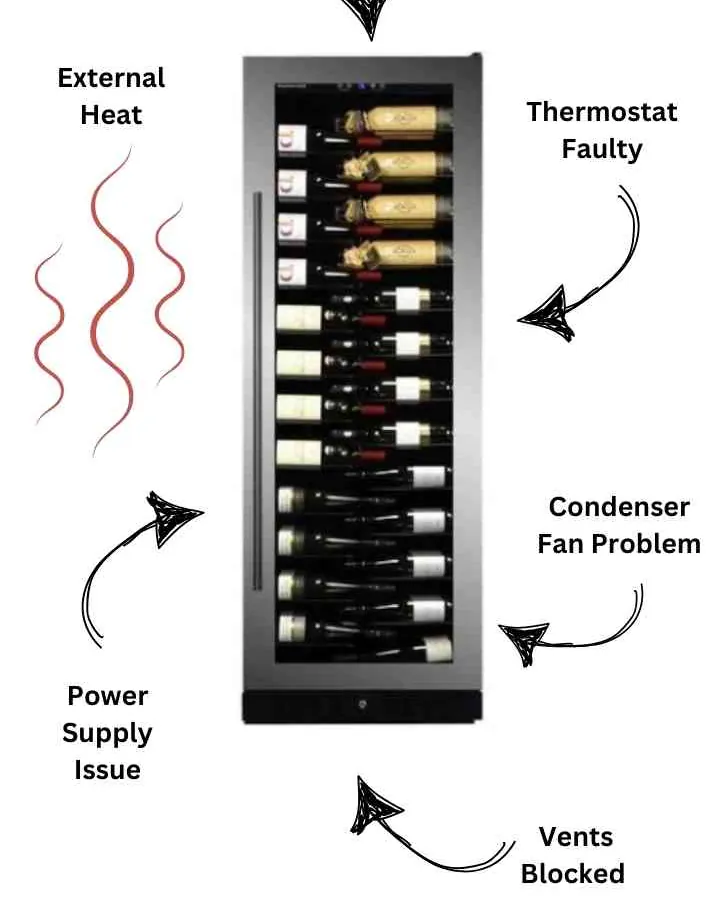
Most cooling problems start with the environment rather than a mechanical failure. Your wine cooler needs a specific amount of space around its sides and back to breathe. If the unit is pushed too close to a wall, heat builds up behind the cabinet. This forces the compressor to work harder than it was designed to, which eventually leads to poor temperature regulation or a complete shutdown.
Another common cause involves the condenser coils. These coils are the metal lines on the back or bottom of your unit. Over time, they collect dust, pet hair, and lint. When these coils are covered in debris, they can’t release heat into the air. This makes the motor run constantly without actually cooling the interior. Keeping these coils clean is the easiest way to keep the compressor running for its expected lifespan.
Finally, consider the ambient temperature of your room. These appliances are designed to work within a specific range, usually between 60°F and 90°F. If you keep the unit in a garage or an unheated basement, the internal thermostat may struggle to read the temperature correctly. If the outside air is too cold, the cooling system may not turn on at all. Always check the Danby product support portal for the specific temperature range required for your model number.
Safety: Inside a mains-powered machine, the parts behind the outer cover can hold a dangerous electrical charge even after it has been unplugged — that’s why they sit behind a cover. Opening the housing, or testing or replacing anything behind it, is a job for a qualified technician, never a home repair.
Clear the airflow space
Good airflow is essential for the cooling system to function. You must ensure there’s at least 3 to 5 inches of clear space on all sides of the unit. If you have built the unit into a cabinet, verify that the front grille isn’t blocked by dust or debris. This is the most common mistake, and it often leads to overheating of the compressor.
To improve airflow, pull the unit away from the wall. Use a vacuum with a soft brush attachment to clear the rear vent and the front toe-kick area. If you find the unit is tightly wedged into a space, the heat becomes trapped. This will cause the internal temperature to rise, even if the set temperature remains unchanged.
If the unit is against a wall, check the temperature of the side panels. If they feel hot to the touch, the unit is struggling to dissipate heat. If moving the unit doesn’t help within 24 hours, the issue is likely a mechanical component rather than an airflow blockage. If the compressor cycles on and off every few minutes, the blockage is severe and requires immediate clearance to prevent permanent motor damage.
Clean the condenser coils
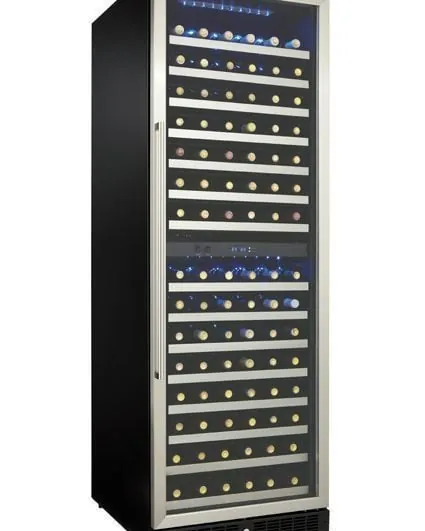
Dirty coils are a frequent cause of poor performance. To clean them, first unplug the unit from the electrical outlet for your own safety. Locate the coils on the back or bottom of the cooler. Use a long-handled brush or a vacuum hose to gently remove any dust or lint buildup. Don’t use sharp tools, as you might puncture the tubing.
If you damage the tubing, you’ll lose the refrigerant, and the unit will stop cooling permanently. This is a fix for someone who is comfortable moving the appliance, but if the coils are located inside a sealed panel, don’t attempt to open it.
If you see ice buildup on the coils, unplug the unit and leave the door open to allow the ice to melt safely.
A common mistake is ignoring the fins behind the coils. If these are bent, airflow drops significantly. Use a fin comb to straighten them gently. If the coils are greasy, apply a non-corrosive foaming cleaner. Wipe them dry afterward to prevent rust. If the unit still runs hot after cleaning, the issue is likely a failed fan motor.
Adjust the thermostat settings
Sometimes the issue is just an incorrect setting. Check the digital control panel to ensure the temperature is set to your desired range. If the display shows a number that seems wrong, try a hard reset. Unplug the cooler for 15 minutes, then plug it back in. This often clears minor glitches in the control board software.
If you have a digital display that flashes or shows an error code, refer to your owner’s manual to identify the specific fault. Most units use a common “E1” or “E2” code to signal a sensor failure. If the unit isn’t reaching the set temperature even after a reset, you may have a failed thermostat sensor.
A common mistake is assuming the unit is broken when it’s merely blocked. Check that the internal air vents aren’t obstructed by food containers or ice buildup. If the fan runs constantly but the air remains warm, the sensor is likely failing to trigger the compressor.
This is a technical repair that requires specific tools. If you aren’t a certified technician, don’t attempt to replace internal electrical parts. Contact a qualified appliance repair service to avoid voiding your warranty or causing an electrical hazard.
What not to do
Never use a knife or screwdriver to chip away ice inside the cabinet. Puncturing the hidden evaporator lines releases refrigerant and permanently kills the compressor. If you see frost buildup, simply unplug the unit and let it thaw naturally for 24 hours.
Don’t plug the wine cooler into an extension cord. These appliances draw high amperage during startup, which causes thin-gauge cords to melt or ignite. Always use a dedicated wall outlet to prevent a fire.
Avoid placing the cooler in direct sunlight or next to an oven. Heat forces the compressor to run continuously, which triples your energy costs and shortens the motor’s lifespan by years.
Don’t spray cleaning fluid directly onto the electrical control panel. Moisture seeping behind the buttons triggers short circuits that fry the motherboard. Instead, dampen a microfiber cloth and wipe the surface gently. If the display flickers after cleaning, unplug the unit immediately and wait until it’s bone-dry to restart.
How to stop it happening again
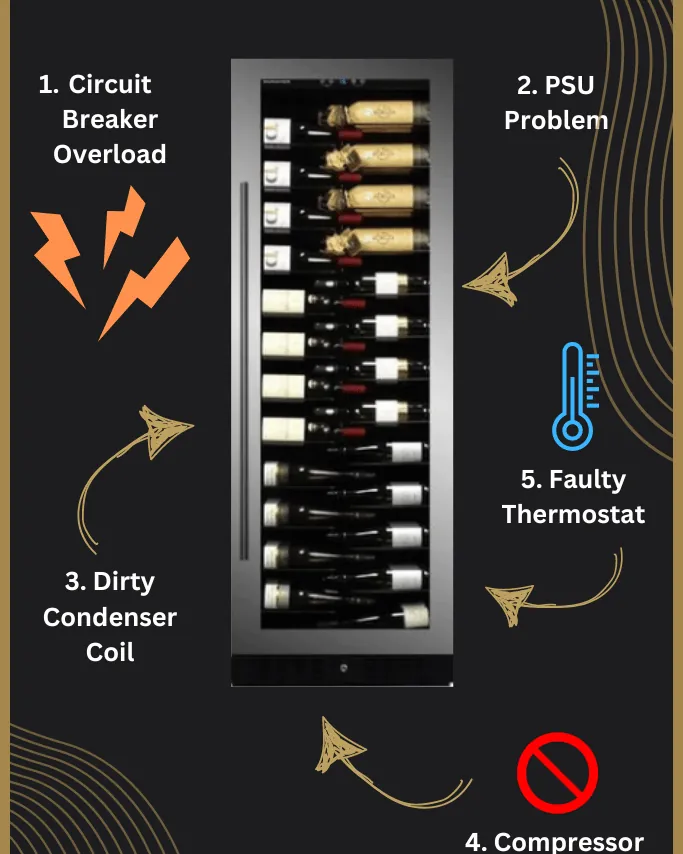
To keep your wine cooler running smoothly, you should perform basic inspections every few months. The following table shows how to adjust your habits to prevent common cooling issues.
| If you’re doing this | Do this instead | Why |
|---|---|---|
| Pushing the unit against the wall | Leave 4 inches of space | Allows heat to escape |
| Cleaning with wet cloths | Use a dry microfiber cloth | Protects the electronics |
| Ignoring a warm room | Keep it in a climate-controlled area | Prevents sensor errors |
Most owners mistake a humming sound for a minor annoyance, but it’s often the first sign of a failing condenser fan. If your unit stays above 75 degrees Fahrenheit, the compressor will run constantly, which may eventually lead to premature failure.
Use this simple decision rule: If the internal temperature fluctuates more than four degrees, check the door seal immediately. Run a bill along the gasket; if it slides out without resistance, the seal is compromised. Replacing a worn gasket is inexpensive compared to replacing the entire unit. Always prioritize airflow over aesthetics.
Frequently asked questions
How long should the compressor run?
The compressor typically runs for 15 to 30 minutes, depending on door usage and room temperature. If it runs for hours, it’s likely struggling to reach the target temperature due to a bad door seal or dirty coils. Check the rubber gasket for cracks or looseness that allows cold air to escape.
Is it safe to leave the cooler in a garage?
No, most wine coolers aren’t built for extreme outdoor temperatures. If the garage drops below 50°F or rises above 90°F, the internal thermostat will likely malfunction. This can lead to the unit failing to cool or the wine freezing inside the bottles. If you must keep it in a garage, ensure the space remains climate-controlled throughout the year to maintain the manufacturer’s specified operating range.
Why is my wine cooler making a loud noise?
A loud noise usually indicates that the cooling fan is hitting an obstruction or the compressor is struggling. First, ensure the unit is level, as uneven surfaces cause internal components to vibrate. If the noise persists as a clicking or grinding sound, you should call a professional technician for an inspection.
How do I fix a leaking wine cooler?
A leak is usually caused by a blocked drain hole inside the back wall of the unit. Use a small, soft pipe cleaner to gently clear the drain hole of any debris. If the drain is clear and water still pools, check the door seal for gaps that allow warm air to enter.
What happens if I set the temperature too low?
Setting the temperature too low forces the compressor to run constantly, which can cause the evaporator coils to freeze over. Once these coils are covered in ice, they can’t transfer cold air, and the temperature inside the cabinet will actually rise. If you notice frost building up on the back wall, unplug the unit and allow it to defrost completely.
Is it safe to replace the thermostat myself?
No, replacing the internal thermostat involves working with electrical wiring and sensitive sensors that can be easily damaged. If you aren’t an experienced technician, you risk damaging the control board or causing an electrical short. Most modern units require specific calibration after a component replacement. If your troubleshooting steps don’t fix the cooling issue, contact a professional to avoid further damage to the appliance.
Conclusion
If the steps above don’t bring your unit back to its normal temperature, it’s time to consult a professional technician. A trained repair person can test the sealed system, the compressor, and the internal sensors safely. Attempting to open the sealed cooling system yourself will likely void any remaining warranty and could lead to hazardous refrigerant leaks.
Related guides