An Avanti fridge that won’t cool usually just needs its condenser coils cleaned or its thermostat turned to a colder setting. That’s the first step in avanti refrigerator troubleshooting when the compressor runs but the inside stays warm. The single most common cause is dust blocking airflow over those coils at the back, which traps heat and prevents the system from releasing it. Unplug the machine, pull it away from the wall, and brush the coils clean before you call anyone.
Why your Avanti refrigerator isn’t cooling
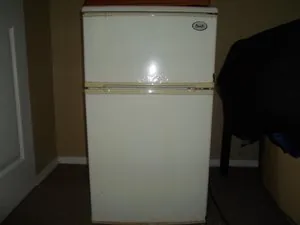
When that path gets blocked or a control fails, the inside warms up fast. You don’t need a manual to rank the usual suspects.
The top cause is dirty condenser coils. These metal fins sit on the back or bottom of the unit. Dust and pet hair coat them over time, trapping the heat the system tries to release. The compressor then runs nonstop without actually lowering the temperature inside.
A failed start relay is the second most likely problem. This small part sits on the side of the compressor and gives it the extra push needed to turn on. If it burns out, you’ll hear a faint click every few minutes followed by silence. The compressor never starts, so nothing cools.
Third, the thermostat might be set wrong or broken. If the dial gets bumped to the warmest setting, the compressor simply won’t run. A broken thermostat does the same thing even when the dial points to cold.
If the compressor hums normally but the fridge stays warm after you’ve cleaned the coils, the sealed system has likely lost its refrigerant. That’s a job for a licensed technician, because handling refrigerant requires EPA certification under Section 608 of the Clean Air Act. Don’t try to fix a sealed leak yourself.
Safety: Inside a mains-powered machine, the parts behind the outer cover can hold a dangerous electrical charge even after it has been unplugged — that’s why they sit behind a cover. Opening the housing, or testing or replacing anything behind it, is a job for a qualified technician, never a home repair.
Clean the condenser coils to restore airflow
This fix is for any Avanti owner whose fridge runs constantly but stays too warm inside. It takes about fifteen minutes and only requires a vacuum with a brush attachment or a soft coil brush. You don’t need any special training.
First, unplug the refrigerator from the wall outlet. Never work around the back of a plugged-in appliance. Pull the unit out far enough to reach the rear panel comfortably.
Locate the condenser coils. On most Avanti compact models, they’re the black wire grid on the back. On some mini fridges, they’re hidden behind a lower kick plate. Remove that plate if yours has one.
Use your vacuum brush to sweep away all visible dust, cobwebs, and pet hair. Go slowly so you don’t bend the thin metal fins. If the dust is caked on, use a dry paintbrush to loosen it first, then vacuum again.
Plug the fridge back in and listen. Within five minutes, the compressor should cycle on and off normally instead of running flat out. Check the interior temperature two hours later. It should drop to between 35°F and 38°F, which is the safe food storage range recommended by the FDA refrigerator temperature guidelines.
If the coils are spotless and the fridge still won’t cool, this fix didn’t solve your problem. Move on to testing the electrical parts.
Test the start relay on the compressor
This step is for a fridge that clicks repeatedly but never actually starts cooling. The start relay is a small plastic module plugged directly into the side of the compressor. Replacing it costs very little compared to buying a new unit.
Unplug the refrigerator completely before touching anything near the compressor.
Locate the compressor at the bottom rear. It’s the black, football-shaped metal tank. Find the small plastic cover on its side and gently pry it off. Underneath, you’ll see the start relay plugged into three metal pins.
Pull the relay straight off the pins. Shake it next to your ear. If it rattles like a broken maraca, the internal ceramic disc has shattered. That’s your answer. A rattling relay is dead and must be replaced.
Write down the exact model number printed on your Avanti’s rating plate, usually found inside the door. Order the matching relay from an appliance parts supplier. Push the new relay firmly onto the three pins, replace the plastic cover, and plug the fridge in.
If the compressor now starts humming smoothly and the interior gets cold within an hour, the repair worked. If it still just clicks and shuts off, the compressor itself has likely failed. At that point, replacing the whole refrigerator makes more sense than paying for a new compressor.
Call a technician for sealed system repairs
This route is for cases where the compressor runs quietly and continuously, the coils are perfectly clean, yet the inside never gets cold. That combination almost always means the sealed refrigerant loop has a leak or a blockage.
It’s worth pursuing this fix only if your Avanti model cost significantly more than a basic replacement or is built into custom cabinetry, since professional repair is expensive relative to replacing an inexpensive unit.
You can’t safely diagnose or repair a sealed refrigerant system at home. Handling refrigerants legally requires EPA certification, and the equipment needed to find a microscopic leak isn’t something a homeowner keeps in a closet. Trying to puncture or solder these lines risks releasing harmful gas and permanently destroying the compressor.
Find an appliance repair service that specifically lists sealed system work for compact refrigerators. Tell them your model number and mention that you’ve already verified the compressor is running and the coils are clean. This saves them diagnostic time and saves you money on the service call.
The honest limit here is simple: the exact repair cost depends entirely on where the leak hides in your specific unit’s tubing, and only the technician’s pressure test on your machine will give you that final price. If they quote more than half the cost of a new fridge, decline the repair and shop for a replacement.
Mistakes that make Avanti fridge problems worse
Bad advice spreads fast online, and following it can ruin your appliance or your food. Here are the things you shouldn’t do when your fridge acts up.
- Packing food against the back wall. People shove items tight against the rear panel to fit more inside. This blocks the internal air vents, creating warm pockets while freezing whatever touches the wall. Leave at least an inch of space behind your groceries.
- Turning the thermostat to maximum immediately. Cranking the dial all the way to coldest doesn’t speed up cooling. It just forces the compressor to run without stopping, which can freeze your produce solid and burn out the motor prematurely. Adjust it one notch at a time and wait twenty-four hours.
- Using a hair dryer to melt frost. Applying direct heat to the interior plastic lining warps it quickly. Worse, if you accidentally hit an electrical component or the evaporator cover, you risk a shock or melted wiring. Always unplug the unit and let ice melt naturally with the door open.
- Plugging the fridge into an extension cord. Compact refrigerators draw a sudden surge of power when the compressor kicks on. Thin extension cords overheat under that load, causing voltage drops that damage the start relay. Plug it directly into a grounded wall outlet.
- Ignoring a clicking sound. Assuming a rhythmic click is normal operation lets a failing start relay keep trying to force a locked compressor. This eventually burns out the compressor windings entirely, turning a cheap relay fix into a total loss.
How to prevent Avanti refrigerator breakdowns
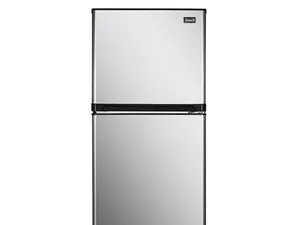
Small habits determine whether a compact fridge lasts years or dies in months. Change how you use it, and you’ll stop repeating the same repairs.
| If you’re doing this | Do this instead | Why |
|---|---|---|
| Pushing the fridge flush against the wall | Leave 2 to 3 inches of gap behind it | The condenser needs room to dump heat; trapped hot air makes the compressor overwork and fail early. |
| Cleaning coils once every few years | Vacuum the coils every 6 months | Dust builds up faster than you think, especially with pets, insulating the coils until they can’t release heat. |
| Storing hot leftovers directly inside | Let food cool to room temperature first | Hot containers spike the internal humidity and force the compressor into an emergency run cycle that stresses the relay. |
| Setting the dial and forgetting it | Check the interior temp monthly with a thermometer | Dials drift over time, and a slow failure won’t trigger an alarm until your milk spoils. |
| Plugging other devices into the same outlet | Give the fridge its own dedicated circuit | Shared outlets cause voltage dips when other appliances cycle on, which damages the fridge’s sensitive start components. |
Frequently asked questions
Why is my Avanti refrigerator running but not cooling?
Dirty condenser coils are the most common reason. When dust covers the coils on the back, the fridge can’t release the heat it pulls from inside. The compressor runs constantly, but the temperature barely drops. Unplug the unit, pull it out, and vacuum the black metal grid thoroughly. If the coils are already clean and the compressor hums without cooling, the sealed system likely has a refrigerant leak.
How long does an Avanti refrigerator last?
A compact Avanti fridge typically lasts 4 to 8 years with regular maintenance. Models kept in climate-controlled rooms with clean coils often reach the upper end of that range. Units placed in hot garages or packed tightly against walls tend to fail closer to year four because their compressors overwork.
Is it safe to leave an Avanti mini fridge plugged in all the time?
Yes, it’s designed to stay plugged in continuously. The thermostat cycles the compressor on and off automatically to maintain the set temperature. Unplugging it daily actually causes wider temperature swings inside, which forces the system to work harder when you plug it back in. Just ensure it’s connected directly to a grounded wall outlet rather than an extension cord.
What happens if my Avanti fridge keeps clicking?
That clicking sound means the start relay is trying to engage the compressor but failing. The relay sends a jolt of power to start the motor; if the motor doesn’t turn, a safety switch cuts power with a click. Repeated clicking will eventually burn out the relay completely or damage the compressor windings. Unplug the fridge and have the relay checked before the compressor locks up permanently.
Can I put my Avanti refrigerator in a garage?
Only if your garage stays between 50°F and 90°F year-round. Compact fridges use a single thermostat that reads the ambient air. In a freezing garage, the thermostat thinks the inside is already cold enough and never turns the compressor on, letting your food thaw. In extreme summer heat, the compressor runs nonstop and burns out. Check your owner’s manual for the exact operating temperature range.
How do I defrost an Avanti mini fridge?
Unplug the unit, remove all food, and leave the door wide open. Place towels on the floor to catch the melting ice. Let it thaw naturally for several hours. Never chip at the ice with a knife or use a heat gun, as the evaporator coils hide just behind the thin interior plastic lining. Puncturing that lining destroys the sealed system instantly.
Why is water pooling inside my Avanti refrigerator?
A blocked drain hole is usually the culprit. Most compact models have a small drain channel at the back interior wall that carries condensation to a pan underneath. Food crumbs or mold plug this hole easily. Use a cotton swab or a pipe cleaner to gently clear the opening. Once water flows freely down the channel again, the pooling on your bottom shelf will stop.
Conclusion
Every Avanti problem starts with the simplest checks: power, airflow, and settings. Clean the coils first, listen to the compressor second, and verify the thermostat third. If those three steps don’t bring the temperature back down, the issue lives inside the sealed system or the main board. That’s exactly where your own tools stop working and a licensed appliance technician takes over.