A bradford white water heater troubleshooting guide works by matching your symptom to its most likely cause, then running safe checks before you call a pro. The single most common issue is no hot water, usually from a tripped breaker or a pilot light that’s gone out. If the tank won’t fire up, check the power switch and reset button first. You’ll find your exact model’s specs on the rating plate attached to the side of the tank.
Why a Bradford White water heater stops working
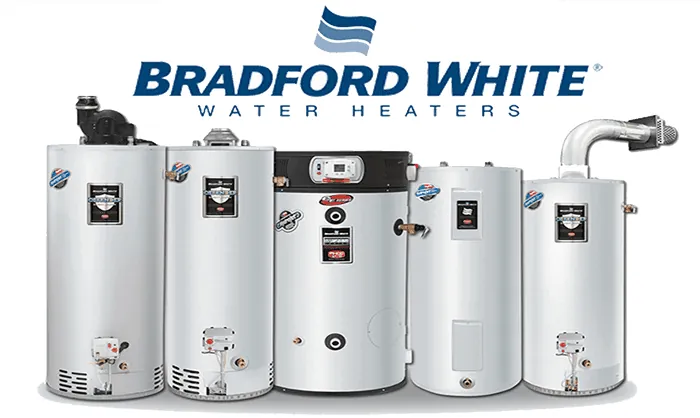
Three main things stop a Bradford White water heater from making hot water. Ranked by how often they happen, the top causes are power loss, a failed thermostat, and sediment buildup inside the tank.
Power loss affects both electric and gas models. An electric unit requires a dedicated double-pole breaker to function, while a gas model with electronic controls relies on a standard outlet to power its ignition system.
A bad thermostat is the second most common failure. Electric tanks have an upper and lower thermostat behind metal covers. When the upper one fails, you get no hot water at all. If the lower one breaks, you’ll only get a few gallons before the shower turns freezing. Gas models use a single gas control valve with a built-in sensor that can wear out over time.
Sediment buildup causes strange noises and slow heating. Hard water leaves calcium and minerals at the bottom of the tank. That layer acts as an insulator, preventing heat from reaching the water and causing the tank walls to overheat. You’ll hear popping or rumbling sounds as steam bubbles try to escape through the crust.
The honest limit here is that every tank’s age, local water hardness, and electrical setup change what actually fails. You can read your own unit’s condition off the serial number on the rating plate to see if it’s near the end of its expected life.
Safety: Inside a mains-powered machine, the parts behind the outer cover can hold a dangerous electrical charge even after it has been unplugged — that’s why they sit behind a cover. Opening the housing, or testing or replacing anything behind it, is a job for a qualified technician, never a home repair.
Reset the high limit switch on the tank
This fix is for electric models that suddenly produce zero hot water after working fine. Every electric Bradford White tank has a red reset button hidden behind the upper access panel. It’s a safety device called the ECO, or energy cut-off. When the water gets dangerously hot, this button pops out and cuts all power to the heating elements.
If the water is lukewarm, don’t press this button; that points to a bad lower element instead. If the water is completely cold, this is where you start.
First, go to your breaker box and turn off the double-pole breaker labeled for the water heater. Never touch the wires inside the panel while the power is on. Remove the two screws holding the upper metal cover plate.
Pull back the insulation pad carefully. You’ll see a small red button in the center of the thermostat. Press it firmly until you feel a click. Put the insulation and cover back exactly as you found them, then flip the breaker on.
Wait about an hour. If the water gets hot and stays hot, you’ve solved a one-time glitch. If the red button trips again within a day or two, don’t keep resetting it. A repeatedly tripping switch means a stuck thermostat or a shorted heating element is overheating the water. Replacing those parts requires working with exposed 240-volt wiring, which carries a lethal shock risk and must be handled by a licensed electrician or plumber.
Relight the pilot on a gas model
This fix applies only to gas-powered Bradford White tanks that use a standing pilot light. If you turn the hot water tap and hear nothing, or smell no gas, the flame has likely gone out. A draft from an open window or a clogged air intake screen usually blows it out.
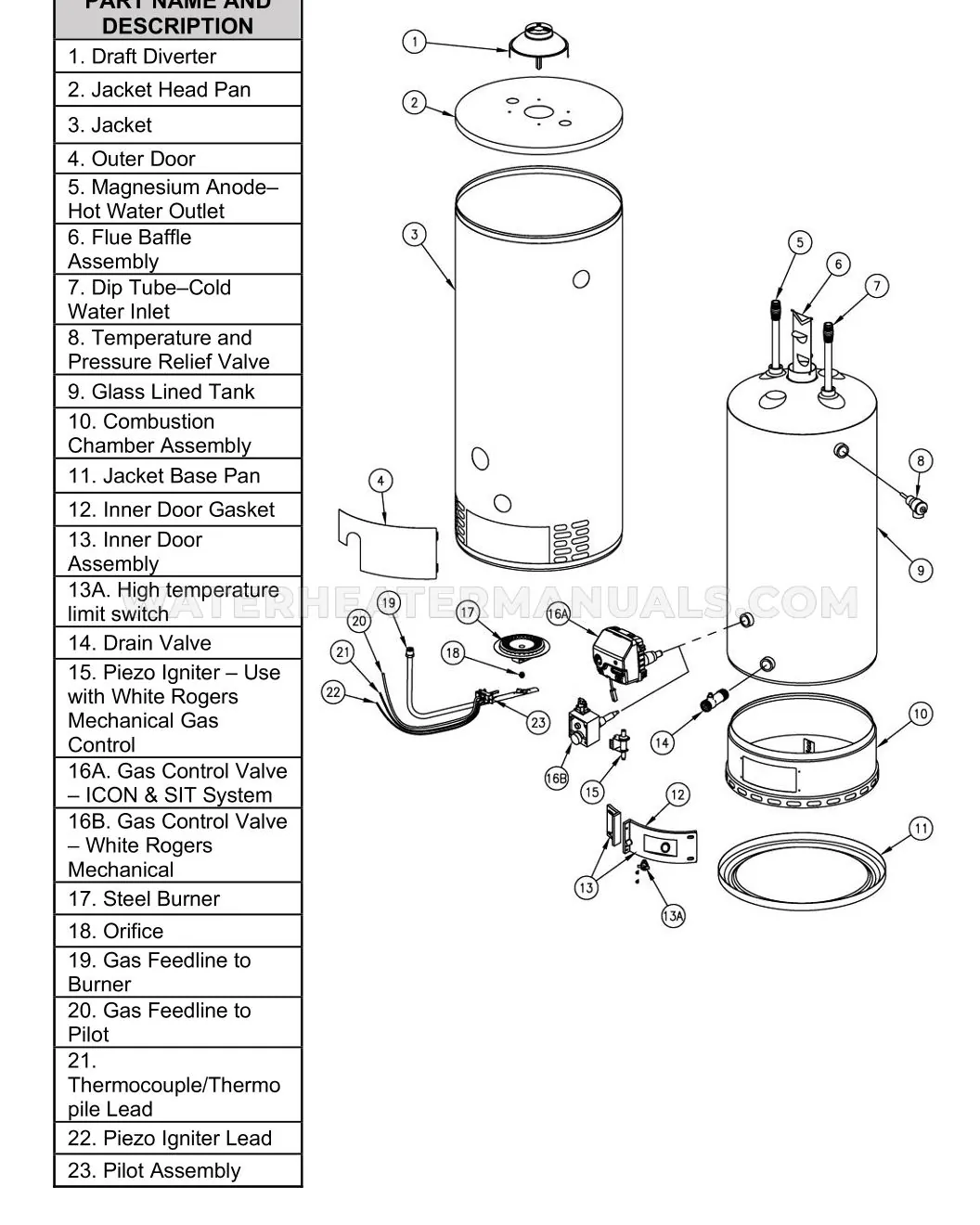
Look at the gas control valve near the bottom of the tank. Turn the dial to the “Off” position. Wait five full minutes so any trapped gas clears out safely. Turn the dial to “Pilot.” Press the dial down and hold it.
While keeping it pressed, push the red spark igniter button next to the valve once per second. Look through the sight glass at the bottom. When you see a steady blue flame, keep holding the dial down for 60 more seconds. Release it slowly. If the flame stays lit, turn the dial to “On.”
If the flame won’t stay lit after three tries, stop. The thermocouple might be broken, or the gas supply could have an issue. This is also who this fix isn’t for: if your model uses a sealed combustion chamber or a powered blower, the ignition system is closed off. Opening those components voids the warranty and risks a gas leak. For those units, or if the pilot keeps dying, call a licensed HVAC technician.
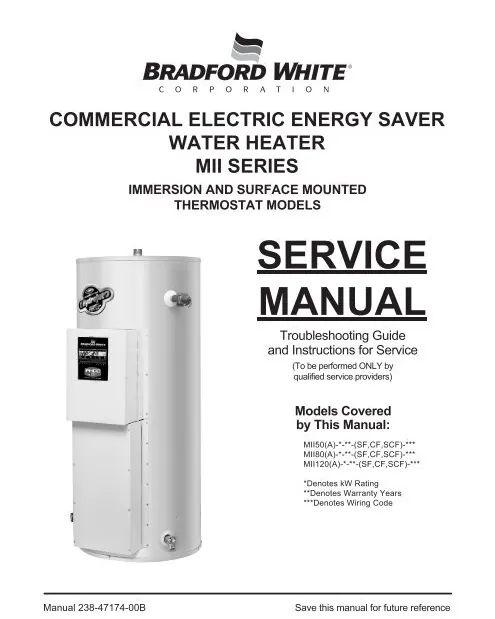
You can confirm your specific ignition type by checking the Bradford White installation manual for your exact model number.
Flush sediment from the tank
This fix is for tanks that rumble, pop, or take twice as long to heat water. Sediment traps heat against the steel floor of the tank. That wastes energy and eventually cracks the glass lining inside. Flushing it out restores normal heating speed.
It’s worth the effort if your tank is relatively new and just started making noise. It isn’t worth it if the tank already leaks from the bottom, because the rust has eaten through the steel.
Turn off the power at the breaker for electric models, or turn the gas valve to “Pilot” for gas ones. Connect a standard garden hose to the brass drain valve at the bottom of the tank. Run the other end outside or to a floor drain.
Open a hot water faucet somewhere in the house to let air in. Open the drain valve fully. Let the water run until it looks clear, which usually takes 15 to 20 minutes for a 40-gallon tank. Close the valve, remove the hose, close the faucet, and restore power or gas.
If the drain valve is completely blocked by hard calcium chunks, forcing it open with a wrench can snap the plastic stem inside. That floods your utility room. Clearing a jammed valve requires shutting off the cold water supply and replacing the valve assembly, a job best left to a professional plumber to avoid water damage.
Bad fixes for a Bradford White water heater
Some advice online sounds helpful but actually damages the tank or puts you at risk. Here is what to avoid when your water heater acts up.
- Turning the thermostat to maximum to heat water faster. This doesn’t speed up the heating elements. It just forces them to run longer without stopping. The water will exceed 140°F, creating a severe scalding hazard at the tap and causing the high limit switch to trip repeatedly.
- Wrapping a gas water heater in an insulation blanket. Gas models pull combustion air from the room around their base. Covering the tank blocks airflow to the burner. This causes incomplete combustion, producing carbon monoxide inside your home.
- Replacing a gas control valve yourself. The valve threads directly into the pressurized gas line. Cross-threading it or using the wrong pipe sealant creates a slow gas leak. Only a licensed professional should handle gas fittings.
- Using chemical drain cleaners to clear a slow drain valve. Those harsh acids eat through the rubber seals and brass threads inside the valve. They also contaminate your drinking water supply. Always flush with plain water pressure.
- Taping over a leaking temperature and pressure relief valve. That valve opens on purpose when internal pressure gets dangerously high. Blocking it turns the tank into a sealed pressure vessel that can rupture violently.
How to prevent water heater problems
Small habits keep the tank running smoothly and delay expensive repairs. Match what you’re doing now against these safer choices.
| If you’re doing this | Do this instead | Why |
|---|---|---|
| Leaving the thermostat at 140°F | Set it to 120°F | Saves energy and prevents mineral scale from baking onto the heating elements too fast. |
| Ignoring rusty water at the tap | Check the anode rod every 3 years | The sacrificial rod protects the steel tank from rusting out. Once it’s gone, the tank corrodes. |
| Storing boxes against the tank | Leave 18 inches of clear space | Gas models need fresh air to burn cleanly, and electric panels need room for safe access. |
| Skipping the yearly flush | Drain 5 gallons every 12 months | Removes loose sediment before it hardens into a thick crust at the bottom of the tank. |
| Plugging other devices into the same outlet | Give the gas heater a dedicated outlet | Shared circuits cause voltage drops that make the control board shut down randomly. |
Frequently asked questions
Why is my Bradford White water heater making popping noises?
Popping noises mean sediment has built up at the bottom of the tank. Water gets trapped under the mineral layer and boils into steam bubbles. Those bubbles burst through the crust, causing the sound. Flushing the tank through the bottom drain valve usually stops the noise. If the popping continues after a thorough flush, the glass lining may have cracked, meaning the tank itself is failing.
How long does a Bradford White water heater last?
A standard tank lasts for a period of time that depends on water quality and regular maintenance. Hard water with heavy minerals shortens that span, while flushing the tank annually extends it. You can check your exact manufacture date by decoding the serial number on the rating plate.
Is it safe to reset the water heater myself?
Yes, pressing the red reset button on an electric model is safe if you turn off the 240-volt breaker first. Never remove the metal cover plates while the power is on. If the button trips again immediately after you reset it, don’t keep pushing it. That means a deeper electrical fault exists, and you need a licensed technician to test the heating elements.
What happens if the TPR valve leaks?
A leaking temperature and pressure relief valve means the tank is either overheating or over-pressurized. First, check that your thermostat isn’t set above 120°F. If the temperature is normal, your home’s water pressure might be too high. Don’t cap or plug the valve to stop the drip. It’s a critical safety device that prevents the tank from bursting under extreme pressure.
Can I replace the heating element without draining the tank?
No, you cannot. Removing the element while the tank is full will instantly flood the room. You must turn off the power, shut off the cold water supply, and drain the tank below the level of the element first. Working with wet electrical connections also carries a severe shock risk. Always verify the power is off at the breaker before touching any wires.
Why does the hot water only last 5 minutes?
A five-minute hot water supply usually points to a burned-out lower heating element in an electric tank. The upper element heats the top half for your shower, but once that water is gone, the cold bottom half has no working element to heat it. Testing and replacing elements involves live 240-volt wiring, so hire a qualified electrician or plumber for this repair.
How often should I flush my water heater?
Flush your tank annually if you have city water, or every six months if you use well water with high mineral content. Draining a few gallons helps remove sediment buildup. This simple maintenance keeps heating elements efficient and prevents the rumbling noises caused by mineral crusts forming on the tank floor.
Conclusion
If you still can’t get the unit working, don’t hesitate to reach out to a licensed plumber for help. It’s better to be safe than sorry when dealing with gas or electrical components. Once you’ve got things running smoothly again, keep your manual handy so you’re ready for next time.