You can resolve most issues with a Danby dehumidifier by checking the bucket sensor and air filter. If your unit fails to collect water or shows an error code, the most common cause is a misaligned bucket. Verify the bucket is pushed firmly into its housing and the float switch is free of debris. If problems persist, consult your manual or the Danby support page.
Troubleshooting common Danby dehumidifier issues

When your unit stops working, it’s often due to simple environmental or mechanical factors that you can fix without professional help. The first common cause is an incorrect humidity setting; if the target humidity is higher than the current room level, the compressor won’t turn on. You should always set the target level at least 5% lower than the current room reading to force the unit to begin operation.
Another frequent issue involves the air filter, which collects dust and debris over time. If the airflow is restricted, the evaporator coils can freeze, causing the unit to stop pulling moisture effectively. You can usually see ice buildup on the coils if you look through the back grille. If you see frost, turn the unit off and let it thaw for several hours before cleaning the filter and restarting.
Finally, consider the ambient temperature of your room. Most refrigerant-based dehumidifiers struggle to extract water if the room temperature drops below 65 degrees Fahrenheit. In cool environments, the coils are much more likely to frost over, which shuts down the system as a safety measure. If your basement or storage area is colder than this, you may need a unit specifically rated for low-temperature operation.
Safety: Inside a mains-powered machine, the parts behind the outer cover can hold a dangerous electrical charge even after it has been unplugged — that’s why they sit behind a cover. Opening the housing, or testing or replacing anything behind it, is a job for a qualified technician, never a home repair.
Resetting the water bucket and float
If your unit has power but won’t start, the water bucket is likely the culprit. The safety mechanism requires the bucket to be perfectly level and fully inserted to engage the microswitch. If the bucket is tilted even slightly, or if the plastic float inside the bucket is stuck, the machine assumes the tank is full and refuses to run.
To fix this, remove the bucket completely and inspect the area behind it. Look for any plastic debris or loose packaging that might be blocking the switch. Ensure the float arm moves up and down freely without catching on the side walls. When you slide the bucket back into place, push firmly until you hear a solid click or feel the unit’s internal switch engage.
This fix is for users whose units show a “full” light even when the bucket is empty. If the light remains on after you have re-seated the bucket, try unplugging the unit for 60 seconds to reset the internal control board. If the light stays on after a hard reset, the internal microswitch may be faulty. If you aren’t comfortable testing electrical components, don’t attempt to open the casing; contact a qualified appliance repair technician instead.
Cleaning the air filter and intake
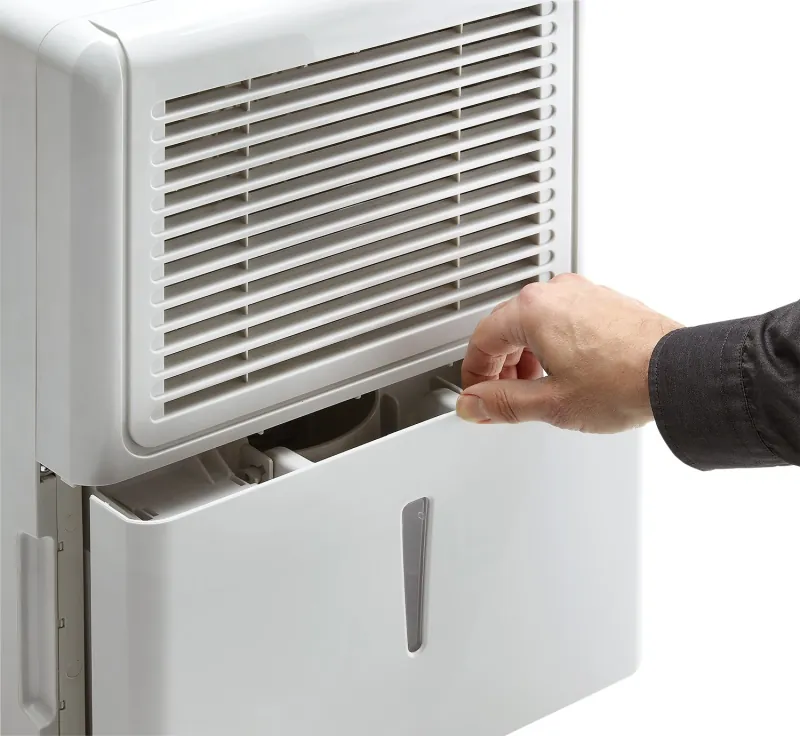
Restricted airflow is the most common reason a dehumidifier loses efficiency over time. When the intake grille or the mesh filter is clogged with dust, the fan can’t pull enough air across the cold coils. This causes the moisture to stay in the air rather than condensing, and it forces the compressor to work harder than necessary.
Start by locating the filter, which is typically found behind the rear grille. Slide it out gently and wash it with warm water and mild soap. If the filter is brittle or has visible holes, replace it immediately to prevent dust from entering the internal cooling fins. Never run the unit without a filter, as this will quickly clog the internal coils and require a professional cleaning.
Once the filter is clean and completely dry, reinsert it and check the intake grille for any obstructions like curtains or boxes. The unit needs at least 12 inches of clearance on all sides to function properly. If you find the unit is still not pulling water after cleaning, check the fan speed setting. If it’s set to “Low,” try switching to “High” to increase the air volume moving across the coils.
Testing for frozen evaporator coils
If your unit runs but collects no water, you may have a frozen coil issue. This happens when the air is too cold or the airflow is too low, causing the condensation on the coils to turn into ice instead of dripping into the bucket. If the coils are covered in white frost or ice, the machine can’t condense any new moisture.
To solve this, turn off the unit and unplug it from the wall. Leave the unit in a well-ventilated area for at least 6 hours to allow the ice to melt completely. Don’t try to scrape the ice off with a tool, as the aluminum fins are extremely thin and will bend or puncture easily, which ruins the cooling system.
This approach is for users who have confirmed the room temperature is at least 65 degrees Fahrenheit. If the unit freezes repeatedly even in a warm room, the internal refrigerant level may be low or the fan motor might be failing. These are mechanical failures that require a professional repair service. If your warranty is still active, check your purchase documents before paying for a technician, as you may be entitled to a replacement or covered repair.
Mistakes that damage your dehumidifier
- Using a heavy-duty extension cord: Many people use cords that aren’t rated for the high amperage a compressor draws, which leads to overheating at the plug.
- Placing the unit in a corner: Blocking the intake or exhaust vents prevents the unit from moving enough air, which causes the compressor to cycle on and off too frequently.
- Ignoring the “Full” light: Leaving a full bucket in the machine for days can lead to mold growth inside the reservoir, which then spreads spores into the air you breathe.
- Adjusting settings while the unit is off:
Preventing future performance issues
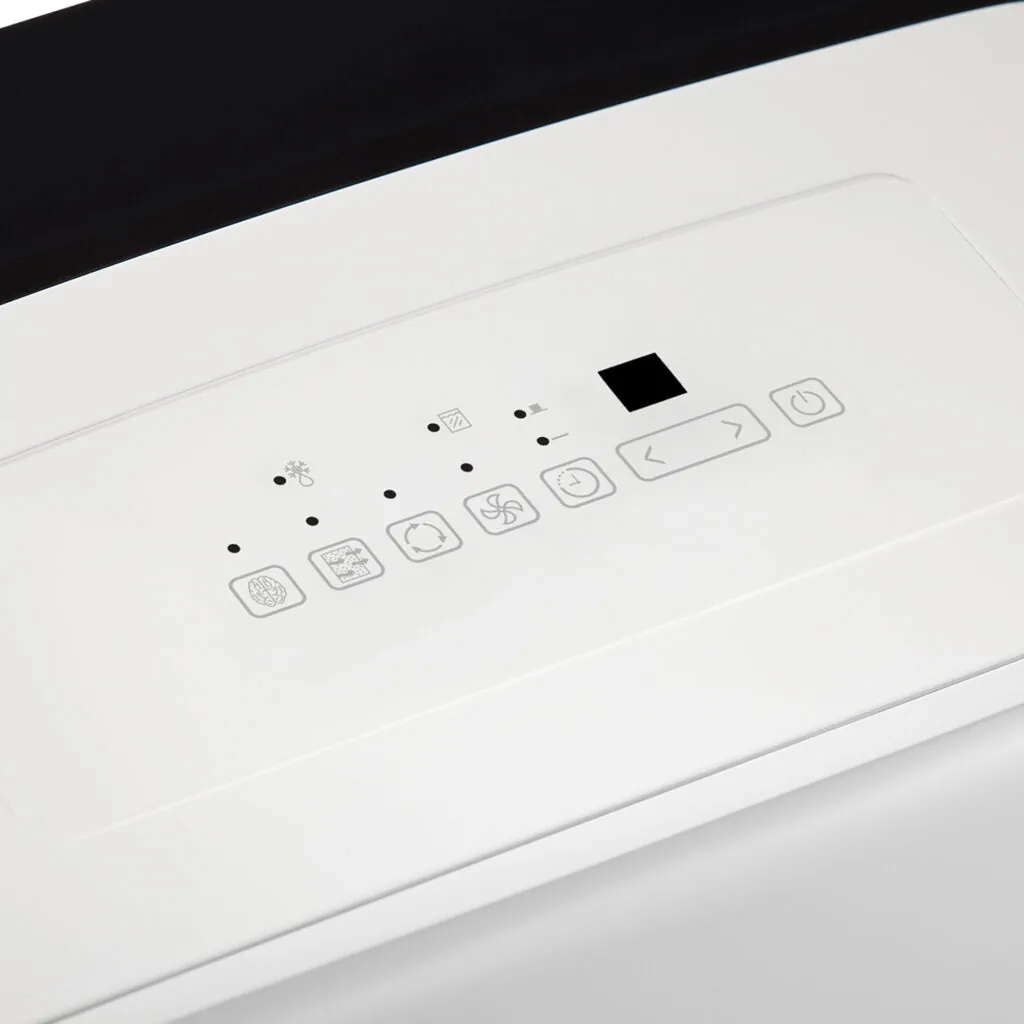
Maintenance is the key to a long-lasting dehumidifier. If you monitor the following conditions, you’ll avoid the most common service calls for these machines.
| If you’re doing this | Do this instead | Why |
|---|---|---|
| Running it in a cold room | Move it to a warmer space | Cold air causes ice buildup |
| Using a long extension cord | Plug directly into the wall | Prevents voltage drops and fire |
| Cleaning the filter monthly | Clean every 2 weeks | Prevents dust buildup on coils |
| Leaving the bucket full | Empty it daily | Stops mold and bacterial growth |
The most common mistake owners make is placing the unit against a wall. This chokes the intake, forcing the compressor to cycle excessively. To prevent premature failure, maintain at least six inches of clearance on all sides.
If your basement temperature drops below 60 degrees Fahrenheit, ice will inevitably form on the internal coils. In this case, you must switch to a model specifically rated for low-temperature operation. Otherwise, the machine will run constantly without extracting any moisture, leading to a burnt-out motor. Always prioritize airflow to ensure the internal humidistat reads the room accurately.
Frequently asked questions
How long does a dehumidifier take to lower humidity?
Dehumidifiers typically take 24 to 48 hours of continuous operation to lower room humidity significantly. The exact time depends on room size and your unit’s pint capacity. For large, damp basements, you may need to run the unit for several days.
Is it safe to leave a dehumidifier running 24/7?
Yes, most modern dehumidifiers are designed to run continuously until they reach the set humidity level or the bucket fills. As long as the unit is on a flat surface with proper clearance, it operates safely. Check the bucket daily unless using a continuous drainage hose.
Why is my dehumidifier leaking water on the floor?
Leaking usually occurs because the bucket isn’t seated correctly or the internal drain hose is loose. Ensure the bucket is pushed in fully and the rear drain plug is tightened. If water leaks from the casing, the internal drain pan may be cracked.
How do I know if my dehumidifier is broken?
Your unit is likely broken if it displays an error code after a hard reset or runs for hours without collecting water. A lack of water collection despite a clean filter suggests a failed compressor or refrigerant loss. Contact the manufacturer to check your warranty status.
Can I use a dehumidifier in a basement?
Yes, a basement is the most common place to use a dehumidifier, provided the temperature remains above 65 degrees Fahrenheit. Because basements are naturally damp, you should use a model with a built-in pump or a gravity-fed hose to avoid manual emptying. If your basement is very cold, look for a unit specifically labeled for “low-temperature” or “basement” use, as standard models will freeze up and stop working in those conditions.
What do the error codes mean?
Error codes like E1, E2, or P1 usually indicate a sensor failure or a full bucket state. A P1 code typically means the bucket is full or the float switch is stuck. Consult your owner’s manual for specific definitions, as these labels vary by model.
How often should I clean the water bucket?
Wash the water bucket with mild soap and warm water every two weeks to prevent slime and mold buildup. If you notice a musty smell, clean the bucket more frequently. Always rinse thoroughly to remove soap residue before replacing it in the machine.
Conclusion
If your machine still won’t run properly after these checks, it’s a good idea to reach out to the manufacturer’s service team. They’ll help you determine if you need a replacement part or a professional repair. Don’t let a faulty unit ruin your home’s air quality; you’ve got this covered.
Related guides