
You can usually fix a diesel tractor won’t start troubleshooting issue by checking the battery connections, fuel levels, and safety interlocks first. When a diesel engine refuses to turn over, the most common cause is a poor electrical connection or a lack of fuel flow due to air in the lines. If the engine cranks but won’t fire, look for a clogged fuel filter or a tripped safety switch. These simple steps often resolve the problem without needing professional help.
Troubleshooting why your diesel tractor won’t start

A diesel engine requires three main things to run: compression, fuel, and heat. Unlike gasoline engines, diesels use high compression to ignite the fuel. If the engine cranks slowly or clicks, the issue is almost always electrical. A weak battery or corroded terminals prevent the starter from getting the power it needs to turn the heavy internal parts of the engine.
If the engine turns over quickly but won’t start, the problem is likely in the fuel system. Diesel fuel can gel in cold weather, or air can get trapped in the lines after the tractor runs out of fuel. You should also check for “stale” fuel if the tractor has been sitting for several months. According to the U.S. Environmental Protection Agency, diesel fuel quality can degrade over time, which affects how easily the engine ignites.
Finally, consider the safety systems designed to protect you. Modern tractors have interlocks on the seat, the clutch, and the power take-off (PTO) lever. If any of these aren’t in the exact position required for starting, the engine won’t crank at all. It’s a common mistake to overlook the neutral safety switch, which prevents the engine from starting unless the transmission is in the correct gear.
Check electrical connections and battery
Start by inspecting your battery terminals for any white or blue powder, which is a sign of corrosion. If you see this buildup, use a wire brush to clean the posts and the cable ends until you see bright metal.
A loose ground cable is another frequent culprit; follow the negative cable from the battery to the frame and ensure the bolt is tight. If the battery is older than four years, it may simply lack the cold cranking amps to turn the engine over.
If the dash lights are dim or flicker when you turn the key, the battery is likely discharged. You can try to jump-start the tractor using a vehicle with a similar voltage system, but never attempt to jump a 24-volt system with a standard 12-volt car battery.
If the tractor starts after a jump, you know the battery or the alternator is the issue. If you hear a single loud “click” but the engine doesn’t turn, the starter solenoid might be stuck or faulty.
This fix is for those who are comfortable working with basic hand tools around a battery. If you see signs of bulging on the battery case or smell a strong rotten-egg odor, don’t attempt to charge or jump it. These are signs of a damaged battery that needs immediate replacement by a qualified service center.
Inspect fuel lines and filters
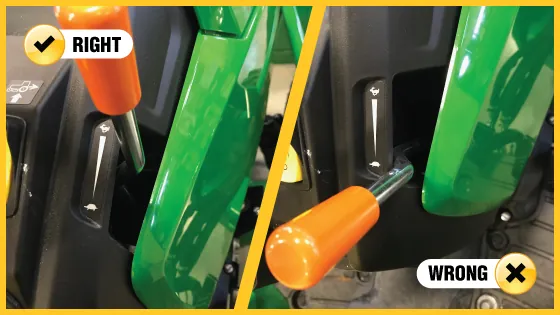
Start by checking your fuel gauge to ensure you actually have fuel in the tank. If the tank is full, look at the fuel filter bowl for signs of water or dark sediment. Many diesel tractors have a clear bottom on the fuel filter where you can see if water has settled. If you see water, you must open the drain plug at the bottom of the filter until clean fuel flows out.
If you recently ran the tank dry, you have likely introduced air into the fuel system. Diesel engines can’t pump fuel if there’s air in the lines, which is known as an airlock. You’ll need to “bleed” the system by loosening the fuel line fitting at the injector slightly while cranking the engine until fuel bubbles out, then tightening it again. This process varies by model, so check your owner’s manual for the specific bleed screw location.
This task is for those with basic mechanical knowledge who feel comfortable working with fuel lines. If you’re unsure about the location of your fuel injectors or high-pressure lines, stop immediately. Opening the wrong line on a modern high-pressure common rail system can be dangerous due to the extreme pressure, so consult a professional technician if you can’t identify the bleed points.
Verify safety switches and interlocks
If the tractor shows no signs of life when you turn the key, the issue is often a safety interlock. First, move the gear shifter to neutral and back into gear to ensure the switch is fully engaged. Check that the PTO lever is completely in the “off” position, as many tractors won’t start if the PTO is engaged. Sit firmly in the seat to ensure the seat safety switch is pressed down.
Some models require you to press the clutch pedal all the way to the floor before the starter will engage. If the switch under the pedal is dirty or loose, the tractor will think the clutch is up and refuse to start. You can gently push the pedal multiple times to see if the switch clicks into place. If your tractor has a brake-pedal lock for parking, ensure that’s also set correctly.
This fix is for owners who want to avoid a service call for a simple sensor issue. If these steps don’t work, the safety switch itself may be broken or disconnected behind the panel. Don’t try to bypass or “hot-wire” these switches to force a start. Bypassing safety equipment creates a major risk of the tractor moving unexpectedly, which can cause serious injury or equipment damage.
Common mistakes to avoid
- Using starting fluid: Never spray ether or starting fluid into the air intake of a diesel engine, as it can cause internal damage to the pistons.
- Ignoring the glow plugs: If you don’t wait for the “wait to start” light to turn off in cold weather, the engine will struggle to ignite the cold fuel.
- Over-cranking the starter: Don’t hold the key in the start position for more than 10-15 seconds at a time, or you’ll overheat and ruin the starter motor.
- Ignoring fuel leaks: Never attempt to tighten a high-pressure fuel line while the engine is running or while you’re cranking it, as the spray can penetrate the skin.
Proper tractor maintenance
| If you’re doing this | Do this instead | Why |
|---|---|---|
| Leaving fuel in the tank | Use a fuel stabilizer | Prevents algae and sludge growth |
| Ignoring battery corrosion | Clean terminals yearly | Ensures full electrical current flow |
| Waiting for a breakdown | Change filters on schedule | Prevents blockages that cause airlocks |
| Storing in high humidity | Use a trickle charger | Keeps the battery at full charge |
Most owners wait until the engine sputters before checking fuel lines, but by then, sediment has already reached the injectors. A simple rule applies: if the tractor sits idle for more than thirty days, add stabilizer immediately.
Ignoring battery terminals is a common mistake that costs hundreds in premature replacements. If you see white, powdery buildup, use a wire brush and a baking soda solution to neutralize the acid.
Air filters are another point of failure. If you operate in dusty conditions, check the intake every 50 hours rather than waiting for the seasonal service interval. A clogged filter starves the engine of oxygen, forcing it to burn excess fuel.
This inefficiency creates carbon buildup that shortens the lifespan of your piston rings. If the filter looks gray or feels heavy, replace it. Don’t attempt to blow it out with compressed air, as this often punctures the delicate paper membrane.
Frequently asked questions
How long should I wait for glow plugs to heat up?
Wait until the “wait to start” light turns off, typically taking 5 to 15 seconds. If your tractor lacks a light, wait 10 seconds when temperatures are below 40 degrees Fahrenheit. Cranking too soon prevents combustion and drains your battery.
Can I use a car battery to jump my tractor?
Yes, you can use a 12-volt car battery to jump a 12-volt tractor battery if the cables are thick enough. Connect the positive cable to the positive terminal and the negative to the tractor frame. Don’t use a car battery if your tractor uses a 24-volt system.
Why does my tractor click but not start?
A clicking sound means the starter solenoid lacks enough current to turn the engine. This is usually caused by loose cables, corroded terminals, or a discharged battery. If your connections are clean and tight, the battery is likely too weak to hold the required voltage.
Is it safe to bleed diesel fuel lines myself?
Bleeding a fuel system is safe only on low-pressure systems where you can identify the correct bleed screws. High-pressure common rail systems can exceed 20,000 PSI and are extremely dangerous. If you’re unsure about your system’s pressure, contact a qualified service technician.
What happens if I run out of diesel fuel?
Running a diesel engine until the tank is empty introduces air into the fuel lines, preventing the engine from starting. Air bubbles stop fuel from reaching the injectors properly. You must bleed the air from the system using your service manual before the engine will fire.
How often should I change the fuel filter?
If you notice the engine losing power under a load or struggling to start, the filter might be clogged sooner than expected. Always keep a spare filter on hand, as a single tank of contaminated fuel can clog a brand-new filter in just a few hours of use.
Conclusion
If your engine still won’t catch after these checks, don’t keep cranking it, as you might drain the battery or damage the starter. It’s time to consult your owner’s manual for specific bleed procedures or call a local mechanic. You’ll be back to your field work before you know it.
Related guides