When your RV cabin turns cold, performing dometic df series furnace troubleshooting can save you from a frigid night and the high cost of emergency repairs. Professionally diagnosing these systems typically ranges from $150 to $450 depending on the complexity of the internal component failure. Understanding the sequence of operations—from the initial sail switch engagement to the ignition of the propane burner—is the most reliable way to identify why your unit is failing to heat. By systematically checking your power supply, gas pressure, and airflow, you can often restore functionality without needing a professional technician.
Key Takeaways
- Confirm your coach battery voltage is above 12.0 volts, as low power prevents the blower motor from reaching the necessary RPM to engage the sail switch.
- Ensure your propane tanks are open and the gas system is purged of air by lighting your stove burners first.
- Inspect the sail switch for debris or pet hair; this is the most common mechanical failure point in the DF series.
- Verify that all ducting is unobstructed and that the return air intake isn’t blocked by cushions or gear.
Safety: Inside a mains-powered machine, the parts behind the outer cover can hold a dangerous electrical charge even after it has been unplugged — that’s why they sit behind a cover. Opening the housing, or testing or replacing anything behind it, is a job for a qualified technician, never a home repair.
Understanding Your Furnace System
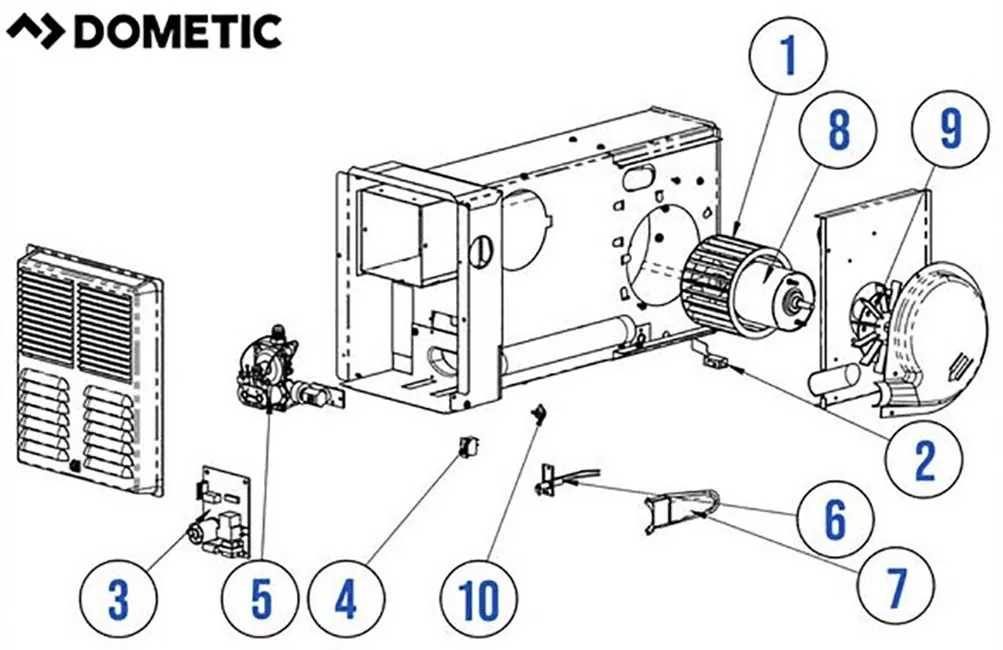
The Dometic DF series is a forced-air furnace designed for reliability in mobile environments. It functions through a specific electronic sequence: the thermostat calls for heat, the control board initiates the blower motor, the sail switch detects sufficient airflow, the gas valve opens, and the igniter lights the burner.
If any step in this sequence fails, the control board enters a lockout mode to prevent gas accumulation. You must understand the control board logic to isolate whether your problem is electrical, airflow-based, or gas-related.
Troubleshooting Dometic DF Series Furnace Issues
| Step | Component | Action |
|---|---|---|
| 1 | Power Supply | Check battery levels and DC fuse panel. |
| 2 | Airflow | Clear return air vents and check blower wheel. |
| 3 | Sail Switch | Inspect for obstructions or mechanical sticking. |
| 4 | Gas Supply | Purge lines and verify regulator pressure. |
| 5 | Igniter | Clean electrode and check for spark gap. |
Is My Sail Switch Failing?
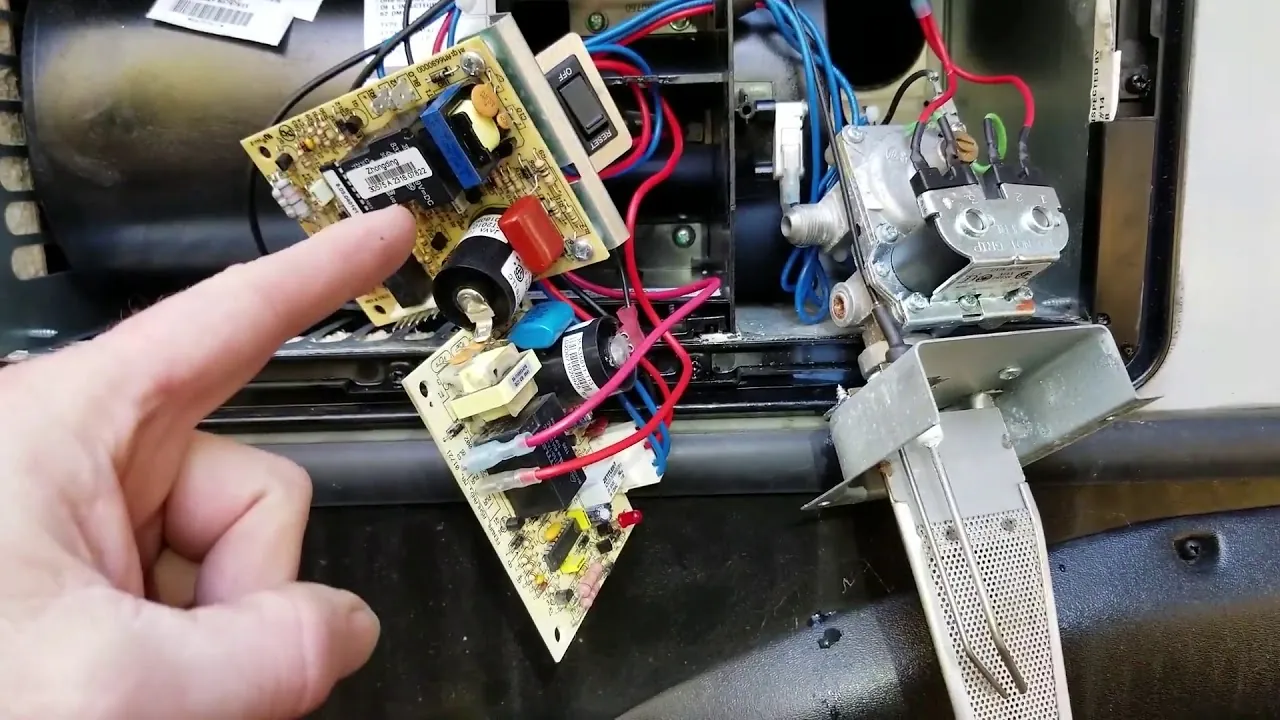
The sail switch is a small, paddle-like component located inside the furnace housing. Its sole purpose is to prove that the blower is moving enough air to safely vent combustion gases outside. If the blower motor is weak or the air intake is blocked, the switch won’t close, and the furnace won’t attempt to light.
If you hear the blower running but never hear the “click” of the gas valve, the sail switch is the likely culprit. You can test it by using a multimeter to check for continuity when the blower reaches full speed.
Why Won’t My Furnace Ignite?
Ignition failure is often caused by an incorrect spark gap distance or a dirty igniter electrode. Over time, carbon buildup can insulate the electrode, preventing the high-voltage spark from jumping across the gap to ignite the propane.
If you hear a rapid clicking sound but no flame, the control board is trying to ignite the fuel but failing to detect a flame. Ensure the electrode is clean and positioned correctly according to the Dometic furnace installation manual to ensure the spark is hitting the gas stream directly.
How to Test the Thermal Fuse
Managing Propane Gas Pressure
If your stove burners light but the furnace does not, you may have a gas pressure issue or a malfunctioning gas valve. The furnace requires a consistent 11 inches of water column pressure to operate correctly.
If the pressure is too low, the burner won’t light or will struggle to stay lit. Warning: Never attempt to adjust the propane regulator yourself unless you have a manometer to verify the pressure output, as incorrect pressure can lead to dangerous carbon monoxide leaks.
Understanding the Lockout Mode
The Dometic control board is programmed to protect the system. If it attempts to ignite three times without success, it enters “lockout mode.” To reset the furnace, you must move the thermostat switch to the “off” position for at least 30 seconds before switching it back to “heat.” If the unit continues to cycle into lockout, there’s a persistent fault that requires deeper investigation into the combustion chamber integrity or the control board itself.
Checking the Blower Wheel
The blower wheel is the heart of the airflow system. If it becomes clogged with dust, pet hair, or debris, it can’t push enough air to trigger the sail switch. Furthermore, a loose blower wheel that slips on the motor shaft will fail to generate the necessary pressure. Periodically inspect the wheel through the access panel and ensure it spins freely without hitting the housing. Cleaning the blades with a soft brush can significantly improve airflow and furnace efficiency.
Electrical Connections and Grounding
Many “mysterious” furnace problems are actually poor electrical connections. Because RVs vibrate constantly, wire nuts can loosen and spade connectors can oxidize. Inspect every connection point near the furnace, especially the ground wire. A poor chassis ground will cause intermittent operation, where the furnace works occasionally but fails when the batteries are low or the vibration is high. Use contact cleaner on all spade terminals to ensure a solid, low-resistance connection.
Inspecting the Burner Assembly
Over many seasons, spiders and other insects may build nests in the burner tube or the exhaust manifold. These obstructions disrupt the flow of air and gas, leading to “sooting” or incomplete combustion. If you see yellow flames instead of a crisp blue flame, the burner is likely obstructed. Use a flexible brush or compressed air to clean the burner assembly, but be careful not to damage the delicate igniter electrode or the gas orifice while cleaning.
Related guides
- Dometic Furnace Troubleshooting Guide Pdf: Ultimate Fix Tips
- Lennox Elite Series Furnace Troubleshooting: Expert Tips
Frequently Asked Questions
Why does my furnace blow cold air?
If the furnace blows cold air, it means the blower motor is working, but the burner isn’t lighting. This is usually caused by a lack of propane, a faulty sail switch that isn’t proving airflow, or a bad igniter. Check your propane levels first, then ensure the sail switch is clean and clicking when the blower reaches full speed.
How do I reset my Dometic furnace?
To perform a hard reset, turn your thermostat to the “off” position and wait at least 30 seconds. This clears the control board’s memory and resets the lockout timer. If the furnace immediately attempts to light and fails again, the board is sensing a fault, such as a lack of flame or an open thermal fuse, which requires further troubleshooting.
Can I run the furnace on just battery power?
What is the purpose of the sail switch?
The sail switch acts as a safety interlock. It’s a small paddle that detects the movement of air inside the furnace housing. If the blower motor fails to move enough air, the sail switch remains open, preventing the control board from opening the gas valve. This prevents the furnace from filling the burner box with raw propane, which could lead to a dangerous explosion.
How long should a Dometic furnace last?
With proper maintenance, including annual cleaning of the burner and blower wheel, these furnaces can last 15 to 20 years. The most common wear items are the sail switch, the igniter, and the control board. Regular inspection of the exterior exhaust vent for mud dauber nests and ensuring the interior air return is clear will significantly extend the lifespan of your unit.
Conclusion
To ensure your furnace remains operational throughout the upcoming season, schedule a time this weekend to inspect your sail switch and clean the return air intake vents. If these simple steps don’t resolve the issue, consult your owner’s manual to identify the specific fault code provided by your control board’s diagnostic light before purchasing replacement parts.