A Craftsman snowblower won’t start because of stale fuel, a fouled spark plug, or a closed valve, and fixing it means checking these three parts in order. When you run through basic craftsman snowblower troubleshooting, the first thing to look at is always the gas sitting in the tank. Old fuel turns into varnish inside the carburetor over just thirty days, blocking the tiny jets that feed the engine. If your machine sat all summer with gas in it, drain the tank completely before you try pulling the starter cord again.
Why a Craftsman snowblower won’t start
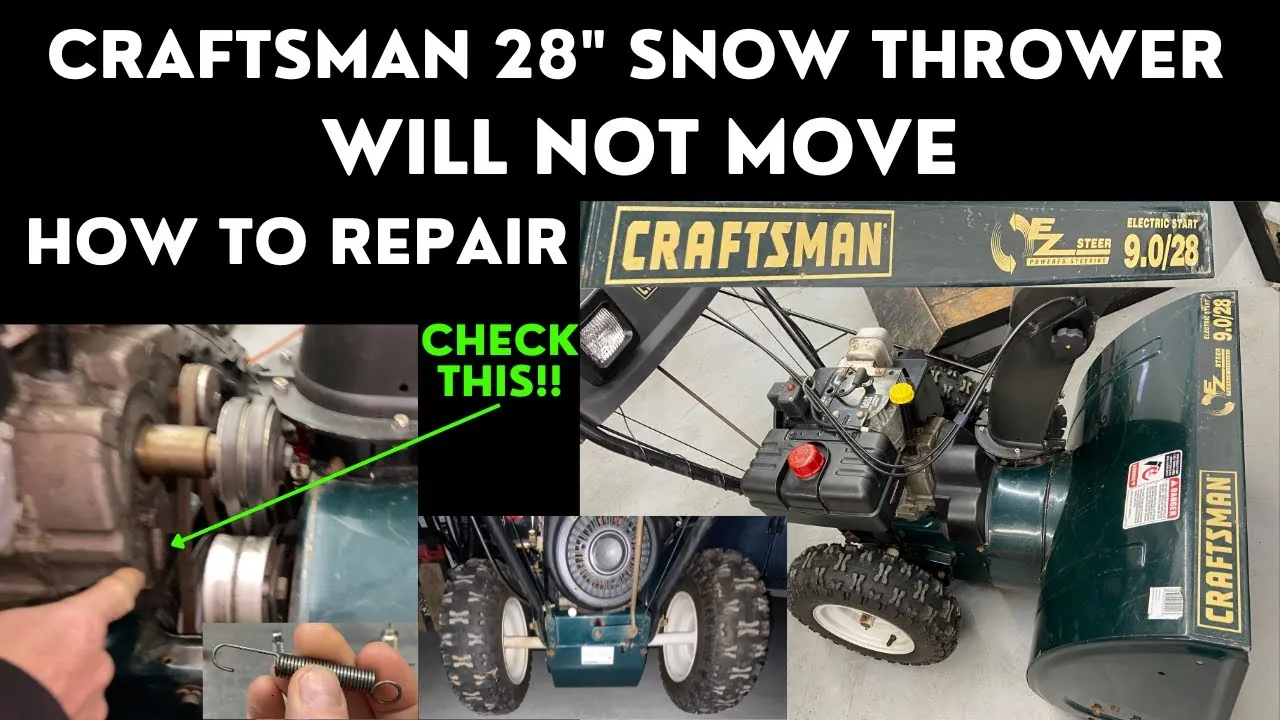
Three things cause almost every starting failure on a Craftsman snowblower, and they follow a strict order. You should check them from the easiest to the hardest so you don’t waste time taking things apart.
The most common cause is stale gasoline. Ethanol-blended fuel absorbs water from the air, and that moisture separates inside your tank. It sinks to the bottom and gets pulled straight into the carburetor, where it stops the engine from firing. Gas left sitting for more than thirty days loses its ability to ignite properly.
The second cause is a dirty or fouled spark plug. Carbon builds up on the electrode tip during normal use, which eventually blocks the electrical spark. Without that spark, the fuel mixture inside the cylinder can’t ignite no matter how hard you pull the rope.
The third cause involves the fuel shut-off valve or the choke setting. The valve sits near the base of the carburetor, and it’s easy to forget you turned it off last spring. The choke needs to be fully closed when the engine is cold, but leaving it closed after the engine warms up floods the cylinder with too much fuel.
You can safely check the fuel age, swap the spark plug, and flip the valves yourself. However, if the engine still won’t turn over after those checks, the problem might be internal compression loss. At that point, stop working on it and take it to an authorized service center listed on the Craftsman support page.
Drain old fuel and refill the tank
This fix is for anyone whose snowblower sat unused for more than thirty days with gas left inside the tank. Stale fuel is the main reason engines refuse to turn over after summer storage.
First, move the machine outside away from any open flames or sparks. Place an approved gas can under the fuel drain line if your model has one. If it doesn’t, use a hand siphon pump to empty the tank completely. Don’t skip this step and just add new gas on top of the old stuff.
Once the tank is empty, pour in fresh 87-octane or higher unleaded gasoline. Don’t fill it past the indicator line inside the neck. Leave about an inch of space so the fuel can expand without spilling out. If you plan to store the machine again later, mix in a fuel stabilizer right now following the exact ratio printed on the bottle.
Turn the fuel shut-off valve to the open position. Set the choke lever to full. Pull the starter cord firmly until you feel resistance, then give it a fast, smooth pull. The engine should fire within three to five pulls if bad gas was your only issue.
If it starts but runs rough for a minute, that’s normal while fresh fuel pushes the remaining residue through the lines. If it still won’t catch after ten pulls, draining the tank didn’t solve the problem. Move to the next fix.
Replace the spark plug
This fix is for machines that have fresh gas and open valves but still produce no spark when you pull the cord. A worn plug costs very little, but running the engine on a bad one forces the ignition coil to work much harder. That extra strain can burn out the coil, turning a cheap repair into a much bigger bill.
Start by disconnecting the rubber spark plug boot. Grip the boot itself, not the wire, and pull it straight off the plug tip. Use a spark plug socket wrench to unscrew the old plug counter-clockwise. Look at the metal tip once it’s out. Black soot means the engine ran rich, while white blistering means it ran too lean. Oil on the threads points to worn piston rings.
Take a new plug made specifically for your Craftsman engine size. Check the gap between the center and side electrodes using a wire gap tool. Most small snowblower engines need a gap of 0.030 inches, but read your owner’s manual for your exact number. Gently bend the side electrode if the gap is wrong.
Screw the new plug in by hand first so you don’t cross-thread the hole. Once it’s finger-tight, use the wrench to turn it another quarter-turn. Push the rubber boot back on until you hear it click. Try starting the engine again. A healthy spark usually fires the engine on the first or second pull.
Clean the carburetor bowl
This fix is for snowblowers that start for two seconds and die immediately, or ones that surge up and down without settling. That behavior means fuel isn’t flowing smoothly through the carburetor jets.
Cleaning the carburetor bowl is worth the effort when fresh gas and a new spark plug haven’t worked. It’s not worth it if the machine is aged and leaks oil from multiple seals. In that case, the cost of professional labor often beats buying a whole new unit.
Locate the carburetor behind the air filter cover. Place a small rag directly underneath it to catch drips. Remove the single bolt holding the metal bowl at the bottom of the carburetor body. Let the trapped fuel drain into the rag.
Look inside the bowl for gummy brown residue or floating dirt. Wipe it completely clean with a lint-free cloth. Find the tiny brass jet screwed into the center tube above the bowl. Spray carburetor cleaner directly through the jet holes until the spray comes out clear on the other side. Don’t poke a wire through the holes, as scratching the brass changes the fuel flow permanently.
Reattach the bowl and tighten the bolt snugly without forcing it. This job requires working near raw gasoline, so keep everything outdoors. If the bowl is cracked or the internal needle valve is bent, you’ll need a certified small-engine mechanic to handle the replacement safely.
Bad advice that ruins snowblower engines
Wrong fixes cost you money and destroy parts that were fine to begin with. Here are the worst habits people repeat every winter.
- Spraying starting fluid directly into the carburetor. Starting fluid burns much hotter and faster than regular gasoline. Using it repeatedly can cause pre-ignition or detonation, which can crack or break piston rings and damage the cylinder wall.
- Leaving the choke fully closed after the engine warms up. The choke restricts air to help a cold engine start. Keeping it closed once the engine runs washes the lubricating oil off the cylinder walls with raw gas, scoring the metal inside.
- Tilting the snowblower backward to clean the auger. Tilting it the wrong way lets engine oil flow out of the crankcase and into the air filter. The soaked filter blocks all airflow, and the engine starves until you buy a new one.
- Mixing leftover summer gas with fresh winter fuel.
- Pulling the starter cord all the way to the end violently. Yanking the rope until it hits the plastic stop stretches the recoil spring inside the housing. Once that spring loses its tension, it won’t retract the cord, leaving you unable to start the machine at all.
Keep your Craftsman snowblower running reliably
Preventing starting issues takes about ten minutes at the end of every winter season. Skipping that short routine guarantees you’ll spend hours in the cold trying to revive a dead machine next November. Follow this table to replace bad habits with the right steps.
| If you’re doing this | Do this instead | Why |
|---|---|---|
| Leaving gas in the tank all summer | Run the engine dry or add stabilizer before storing | Untreated gas turns to varnish and clogs the carburetor jets in thirty days |
| Ignoring the spark plug for years | Replace the plug every single season | Worn electrodes force the ignition coil to overwork and fail early |
| Storing the machine outside uncovered | Put it in a dry garage or use a fitted cover | Moisture rusts the control cables and freezes the chute rotation gears |
| Using whatever gas is cheapest | Buy ethanol-free fuel rated for small engines | Ethanol pulls water from the air, which separates and blocks fuel lines |
| Forcing a frozen pull-cord | Bring the machine inside to thaw for two hours | Pulling against ice snaps the recoil spring or breaks the plastic handle |
| Never changing the oil | Drain and refill with 5W-30 oil yearly | Dirty oil carries metal shavings that grind down the internal bearings |
Frequently asked questions
Why does my Craftsman snowblower start then die?
It dies because the carburetor jet is partially blocked by old fuel residue. The engine gets just enough gas to fire, but not enough to keep running. Drain the fuel bowl and spray carburetor cleaner through the main jet to clear the blockage. If cleaning doesn’t hold the idle steady, the internal gasket between the carburetor and engine is likely cracked and leaking air.
How long does snowblower gas last before going bad?
Standard ethanol-blended gasoline goes bad after 30 days sitting in a tank. Ethanol-free fuel lasts about six months under the same conditions. Always check the expiration date printed on the stabilizer bottle, as expired additives won’t protect your fuel.
Can I use starting fluid on a Craftsman snowblower?
No, you shouldn’t use starting fluid on a snowblower engine. It ignites too aggressively for small cylinders and strips the protective oil film off the piston walls. This causes immediate friction damage. If fresh gas and a working spark plug won’t start the engine, the carburetor needs cleaning or the fuel lines are blocked somewhere else.
Is it safe to leave the choke on while clearing snow?
No, leaving the choke on while the engine is warm damages it. The choke is only meant for the first few seconds of a cold start. Once the engine runs smoothly, push the choke lever back to the open position. Running with the choke closed dumps unburned fuel into the exhaust and washes oil away from the cylinder walls.
What happens if I tilt my snowblower the wrong way?
Tilting it backward causes engine oil to flood the carburetor and soak the air filter. The engine will smoke heavily and stall when you set it upright again. Always tilt the machine forward onto the auger housing if you need to access the underside. If you already tilted it wrong, replace the air filter and let the carburetor drain completely.
How often should I change the spark plug?
Replace the spark plug once every winter season, even if the engine seems to run fine. Snowblowers sit unused for nine months, and moisture corrodes the plug tip during storage. A new plug ensures a strong spark when freezing weather arrives. Check your owner’s manual for the exact part number, as using the wrong heat range fouls the plug faster.
Why won’t my electric start Craftsman snowblower turn over?
The electric start fails because the battery lost its charge during storage or the power cord isn’t seated fully. Plug the extension cord directly into a grounded wall outlet, not a power strip. If it still clicks without turning, the battery needs charging for several hours. Batteries typically lose their ability to hold a charge after three winters and require replacement.
Conclusion
Getting a dead snowblower running again comes down to patience and the right order. Start with the fuel, move to the spark, and finish at the carburetor. Don’t skip steps or force parts that resist. Check your engine model plate for specific oil and plug specs, then consult your owner’s manual for seasonal maintenance schedules.