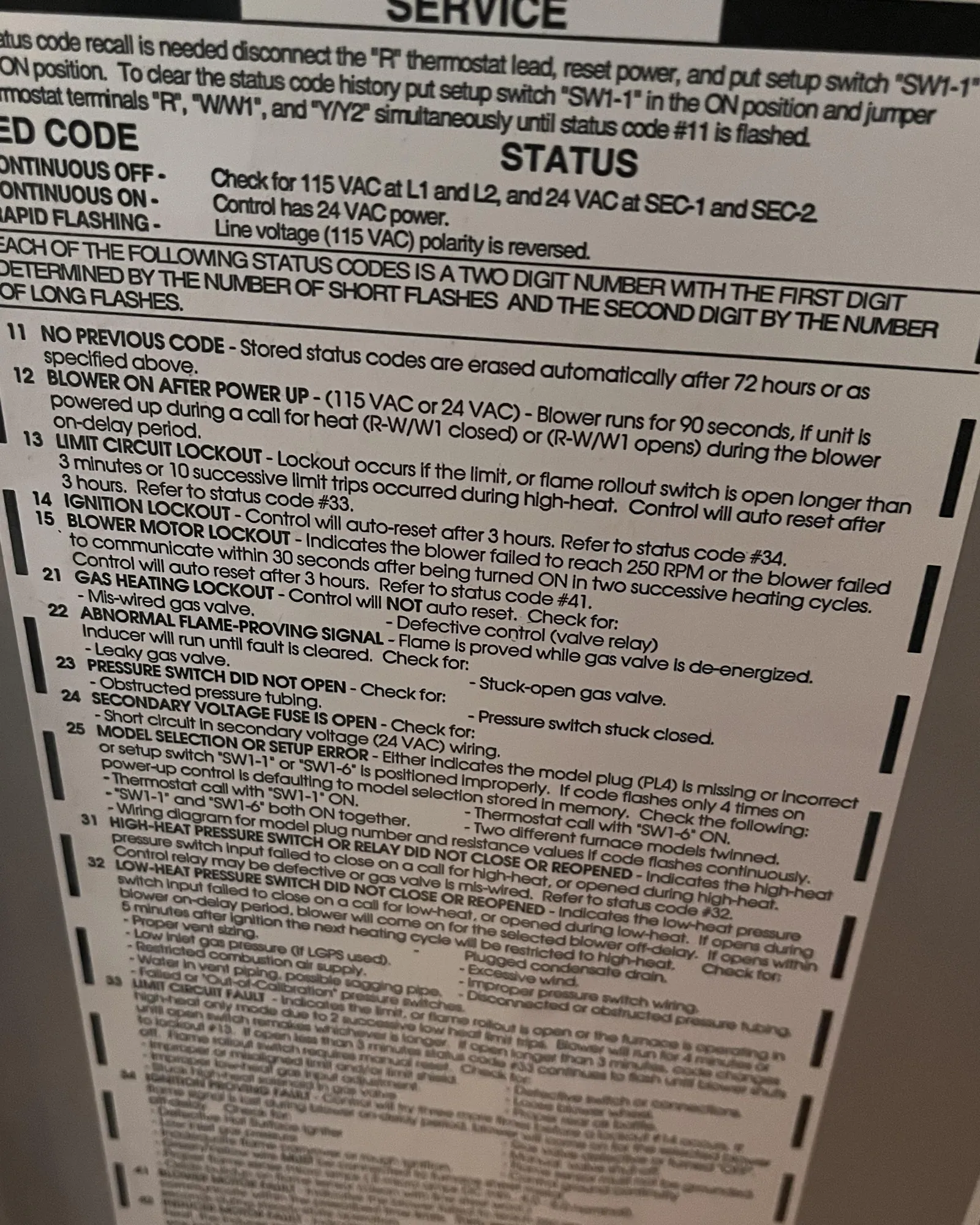
A flashing LED on the control board tells you what’s wrong, and bryant furnace troubleshooting codes are the two-digit numbers that light blinks out. Turn off power at the breaker, wait 30 seconds, then turn it back on to clear a false lockout.
Why your Bryant furnace flashes error codes
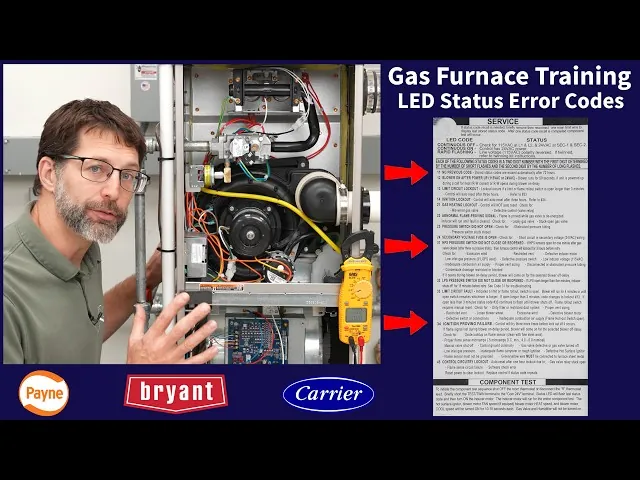
Your furnace uses a control board to watch every step of heating. When something fails, the board stops the cycle for safety.
The first real cause is ignition failure. The gas valve opens, but the burner doesn’t light within a few seconds. The board shuts off the gas immediately to prevent buildup. This usually points to a dirty flame sensor, a bad igniter, or a closed gas valve.
The second cause is a pressure switch problem. A small hose connects the draft inducer motor to a switch that proves exhaust gases are moving outside. If that hose cracks, clogs with water, or if the vent pipe gets blocked by snow or leaves, the switch stays open. The furnace won’t fire because it can’t prove the exhaust path is safe.
The third cause involves limit switches. These sensors sit inside the cabinet to measure air temperature. If the filter is completely blocked or the blower motor dies, heat builds up fast. The high limit switch trips to stop the heat exchanger from cracking.
You can find the exact blink patterns for your specific model printed on the wiring diagram inside the blower door or in the Bryant furnace installation manual. Always match the code to your exact model number, because meanings shift between older and newer boards.
Reset the furnace control board
This fix is for anyone seeing a single lockout code like 14 or 34 after a brief power outage or a temporary gas interruption. It clears the board’s memory so the furnace tries its startup sequence again.
First, go to your electrical panel. Find the breaker labeled for the furnace and flip it to the off position. Don’t just use the wall switch near the unit, because some models keep low-voltage power running through the thermostat wire even when that switch is off.
Leave the breaker off for exactly 60 seconds. This gives the capacitors on the control board time to drain fully. Flip the breaker back on. Walk over to the furnace and listen. You should hear the draft inducer start, followed by the click of the igniter.
Watch the LED window on the blower door. If it goes back to a slow, steady green pulse, the reset worked. Your furnace is running normally again. If the same rapid blinking returns within five minutes, don’t keep resetting it. Repeated resets on a real fault can damage the control board or mask a dangerous condition.
Clean the flame sensor safely
If your furnace starts, runs for three to five seconds, then shuts down and flashes code 14, the flame sensor is likely coated in carbon.
Turn off power at the breaker before doing anything else. Locate the flame sensor. It’s a thin metal rod with a single wire attached, sitting directly in the path of the burner flame. Remove the one screw holding it in place.
Take fine sandpaper—around 400 grit—or a clean dollar bill. Gently rub the metal rod until the dark coating is gone and the steel looks bright again. Don’t use heavy emery cloth or a file, because scratching the surface too deeply makes carbon stick faster next time.
Wipe the rod with a dry paper towel to remove any dust. Put it back exactly where it was and tighten the screw snugly. Turn the breaker back on and call for heat at the thermostat.
Check the pressure switch hose and vent
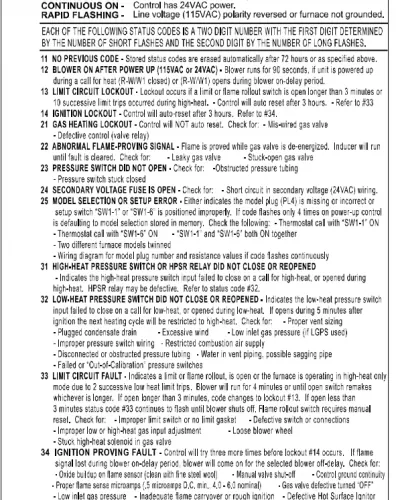
When the board flashes code 31 or 33, the pressure switch isn’t closing. This means the furnace doesn’t think the exhaust fan is pulling air correctly.
Go outside and look at the PVC exhaust pipe. Clear away any snow, ice, leaves, or bird nests blocking the opening. Even a small obstruction here stops the draft inducer from creating enough suction to close the switch.
Come back inside and turn off the power at the breaker. Open the blower compartment door. Look for a small rubber hose connecting the draft inducer motor to a round plastic switch. Pull the hose off both ends gently.
Hold it up to the light. If you see water pooled inside, shake it out. Blow through it to make sure air passes freely. Check the small plastic nipples on both the motor and the switch where the hose attaches. These often clog with rust or debris. Use a toothpick to clear them out.
Reattach the hose firmly on both ends. Restore power and test the system. If the inducer sounds normal and the burners light, the blockage was your issue.
Replace the igniter or call a professional
Code 14 that persists after cleaning the flame sensor often means the hot surface igniter isn’t glowing. This is the harder case. It’s worth your time if you’re comfortable removing panels and handling fragile ceramic parts.
Turn off the breaker and the gas valve at the furnace. Remove the burner access panel. The igniter sits near the burners, held by one bracket and connected by a wire harness. Unplug the wire connector carefully. Remove the mounting screw and slide the old igniter out.
Match the part number printed on the old igniter exactly. Slide the new one in without touching the black silicon carbide element with your bare fingers. Skin oils create hot spots that crack the material during heating.
Plug the harness in, replace the panel, and turn the gas and power back on. If it glows orange and the gas clicks on, you’re done.
Here is the honest limit: the exact resistance reading that proves an igniter is healthy varies by model, and you can read your required range off the wiring diagram inside your furnace door. If it doesn’t glow, the board may lack voltage. A certified HVAC technician can confirm whether the board has failed. Opening the sealed combustion chamber or testing high-voltage components carries a risk of shock or voiding your warranty.
Mistakes that make Bryant furnace errors worse
People try shortcuts when their heater stops working, but these choices often cost more than the original repair.
- Jumping the pressure switch wires. Bypassing this switch lets the furnace run without proving the exhaust is venting outside. This risks filling your home with carbon monoxide. The switch exists to protect your life, not just the machine.
- Resetting the breaker repeatedly. If the furnace locks out three times, the board goes into a hard safety lock. Forcing it to restart over and over can weld relay contacts shut on the control board. A replacement board costs significantly more than a simple sensor cleaning.
- Using a wire brush on the flame sensor. Heavy abrasives leave deep scratches in the metal rod. Carbon builds up much faster in those grooves, meaning you’ll face the same shutdown code in weeks instead of years.
- Taping a cracked pressure hose. Electrical tape shrinks under furnace heat. The seal fails quickly, and pieces of degraded adhesive can get sucked into the pressure port. Always buy the correct diameter silicone tubing from a hardware store.
- Ignoring a red blinking light. A slow green flash means normal operation. A fast red flash means a hard lockout. In this state the board prevents the furnace from attempting to start until power is cycled or a technician resets it.
How to prevent future Bryant furnace faults
Maintenance habits decide whether your furnace runs smoothly or flashes error codes all winter.
| If you’re doing this | Do this instead | Why |
|---|---|---|
| Swapping filters once a year | Change 1-inch filters every 60 days | Restricted airflow trips the high limit switch and causes code 33 lockouts. |
| Storing boxes near the furnace | Keep 3 feet of clear space around the unit | Blocked return air starves the blower, forcing the board to shut down the burners. |
| Ignoring strange noises | Listen for grinding when the inducer starts | Worn bearings drop motor speed below the threshold needed to close the pressure switch. |
| Leaving outdoor vents uncovered | Install a mesh screen over PVC pipes | Birds nesting in the exhaust pipe is a leading cause of sudden pressure switch failures. |
| Skipping yearly inspections | Book a tune-up before heating season begins | A technician cleans the burners and tests the igniter resistance before it fails on a cold night. |
Dust is the main enemy here. Keeping the blower compartment closed prevents household dust from being pulled directly across the electrical components.
Frequently asked questions
What does code 14 mean on a Bryant furnace?
Code 14 means the furnace tried to ignite the gas three times and failed each time. After the third failure, the control board locks out the system to prevent unburned gas from pooling in the heat exchanger. You’ll need to check the flame sensor, the igniter, or the gas supply. Power cycling the breaker clears the lockout temporarily, but the underlying fault must be fixed first.
How do I read the flashing lights on my furnace?
Count the short and long flashes coming from the LED window on the blower door. Short flashes represent the first digit, and long flashes represent the second. For example, one short flash and three long flashes equals code 13. Compare that number to the legend printed on the inside of the access panel or in your owner’s manual to find the specific fault.
Can I reset a Bryant furnace lockout myself?
Yes, you can clear a soft lockout by turning off the power at the breaker for 60 seconds. Turn it back on, and the furnace will attempt its startup sequence again. If the problem was a momentary glitch, it will run normally. If a part is actually broken, the same code will return within a few minutes, telling you a physical repair is required.
Is it safe to bypass the pressure switch?
No, bypassing the pressure switch is extremely dangerous. This switch ensures the exhaust fan is actively pushing combustion gases out of your house before allowing gas to flow. If you jump the wires, the furnace will burn gas even if the vent pipe is blocked. This forces deadly carbon monoxide back into your living space. Always replace a faulty switch instead of bypassing it.
Why does my furnace shut off after 5 seconds?
A shutdown after three to five seconds almost always points to the flame sensor. The igniter lights the gas, but the sensor fails to detect the flame. The control board assumes ignition failed and closes the gas valve immediately for safety. Cleaning the sensor with fine sandpaper usually fixes this. If it doesn’t, the sensor needs replacing or the board isn’t reading the microamp signal.
How long does a furnace igniter last?
A hot surface igniter wears out over time under normal heating cycles. Frequent short cycling—where the thermostat turns the furnace on and off rapidly—wears it out much faster. You can’t extend its life with maintenance, as it degrades from extreme thermal stress each time it heats to 2,000 degrees. Keep a spare matched to your model number in your home for emergencies.
What happens if I ignore a flashing error code?
Ignoring a flashing code forces the furnace into repeated failed cycles or a permanent hard lockout. Continuous attempts to ignite with a failing component can damage the control board or crack the heat exchanger from overheating. Once the board enters a hard lockout, simply resetting the wall switch won’t work anymore; you must cycle power at the breaker. You’ll lose heat entirely until a technician diagnoses and repairs the root cause.
Conclusion
Fixing a flashing furnace starts with reading the blinks accurately and checking the simple things first. A dirty sensor or a blocked vent pipe resolves most lockouts without calling for help. But when the problem moves past cleaning and basic resets, the risk shifts from a cold house to personal safety. Gas valves, cracked heat exchangers, and dead control boards require trained hands. Stop where your comfort ends, and let a licensed technician take over the rest.