To fix a slow flow or poor water quality, performing a culligan reverse osmosis system troubleshooting check usually begins with inspecting your water pressure and the age of your filter cartridges. If the system is producing very little water, the most common cause is a depleted storage tank or a clogged pre-filter that prevents water from reaching the membrane. You can often resolve these issues by checking your tank air pressure or replacing the sediment filters, provided you follow the specific replacement schedule for your system model.
Troubleshooting common Culligan reverse osmosis issues
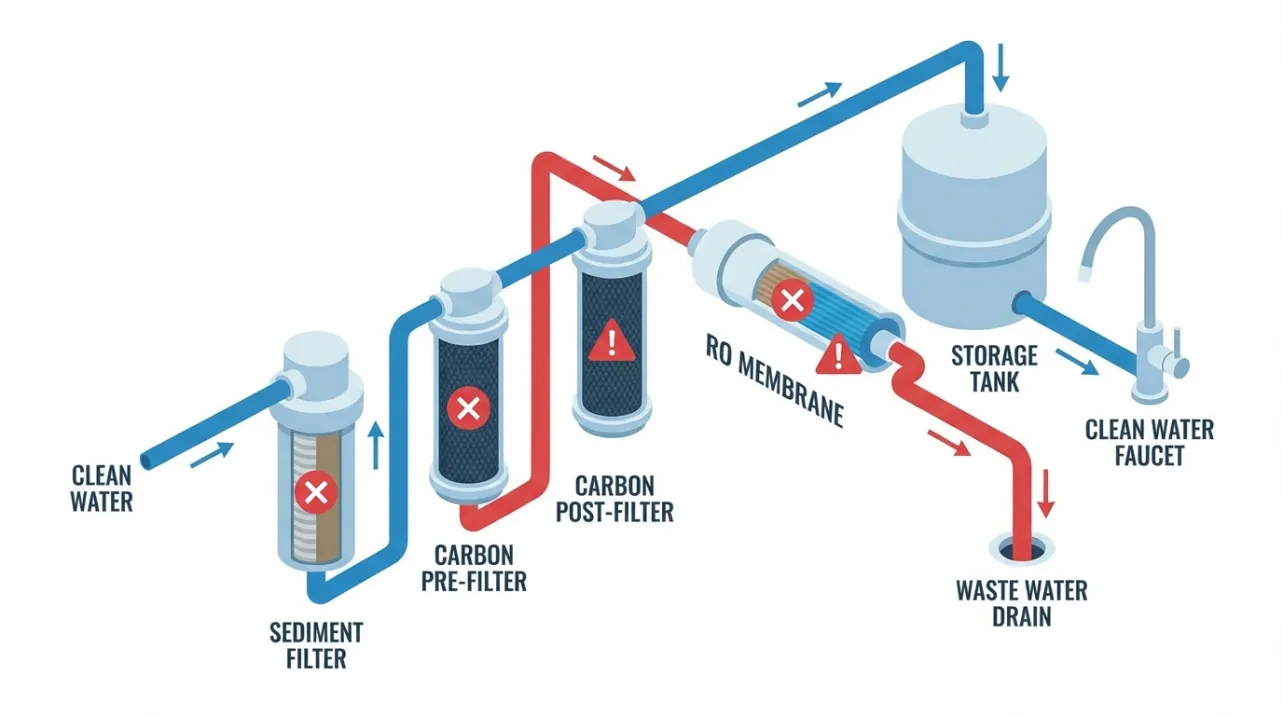
When your unit stops working as expected, the problem typically stems from one of three areas: pressure, filtration, or drainage. Reverse osmosis relies on a specific balance of water pressure to push molecules through the membrane. If the incoming pressure is too low, the system can’t function effectively. You can check your home’s water pressure at any outdoor faucet using a gauge, or refer to your local utility’s public data to see if your area has low municipal pressure.
Another frequent cause is a saturated filter or an exhausted membrane. Over time, these components trap minerals and sediment, which eventually blocks the flow. If you notice a change in the taste of your water, it’s often a sign that the membrane is no longer filtering properly.
Finally, the drain line may be restricted. If the system can’t discharge waste water, the pressure inside the unit rises, which prevents clean water from being produced. This often happens if the drain saddle is blocked by debris or if the air gap is clogged. If you aren’t comfortable inspecting these lines yourself, it’s best to contact a certified plumber to avoid damaging the connections or causing a leak.
Replace the pre-filters and post-filters
If your water flow has slowed to a trickle, the first step is to replace your pre-filters. These filters are designed to capture sediment and chlorine before they reach the delicate membrane. When these layers become full, they act like a wall that stops water from passing through the system. You should check your manual for the exact replacement schedule, as this varies by water quality and daily usage.
To replace the filters, turn off the water supply to the system and open the faucet to release any remaining pressure. Remove the filter housings, discard the old cartridges, and install the new ones according to the manufacturer’s instructions. Ensure the O-rings are seated correctly in their grooves to prevent leaks after you turn the water back on. If you notice the water still flows slowly after changing the filters, the problem might be the membrane itself.
This fix is for homeowners who are comfortable with basic plumbing tools and have the correct replacement filters for their specific model. If you haven’t changed these filters in more than 12 months, don’t expect a simple cleaning to fix the issue. If you’re uncertain about the process, contact a licensed professional to avoid water damage.
Check the storage tank pressure
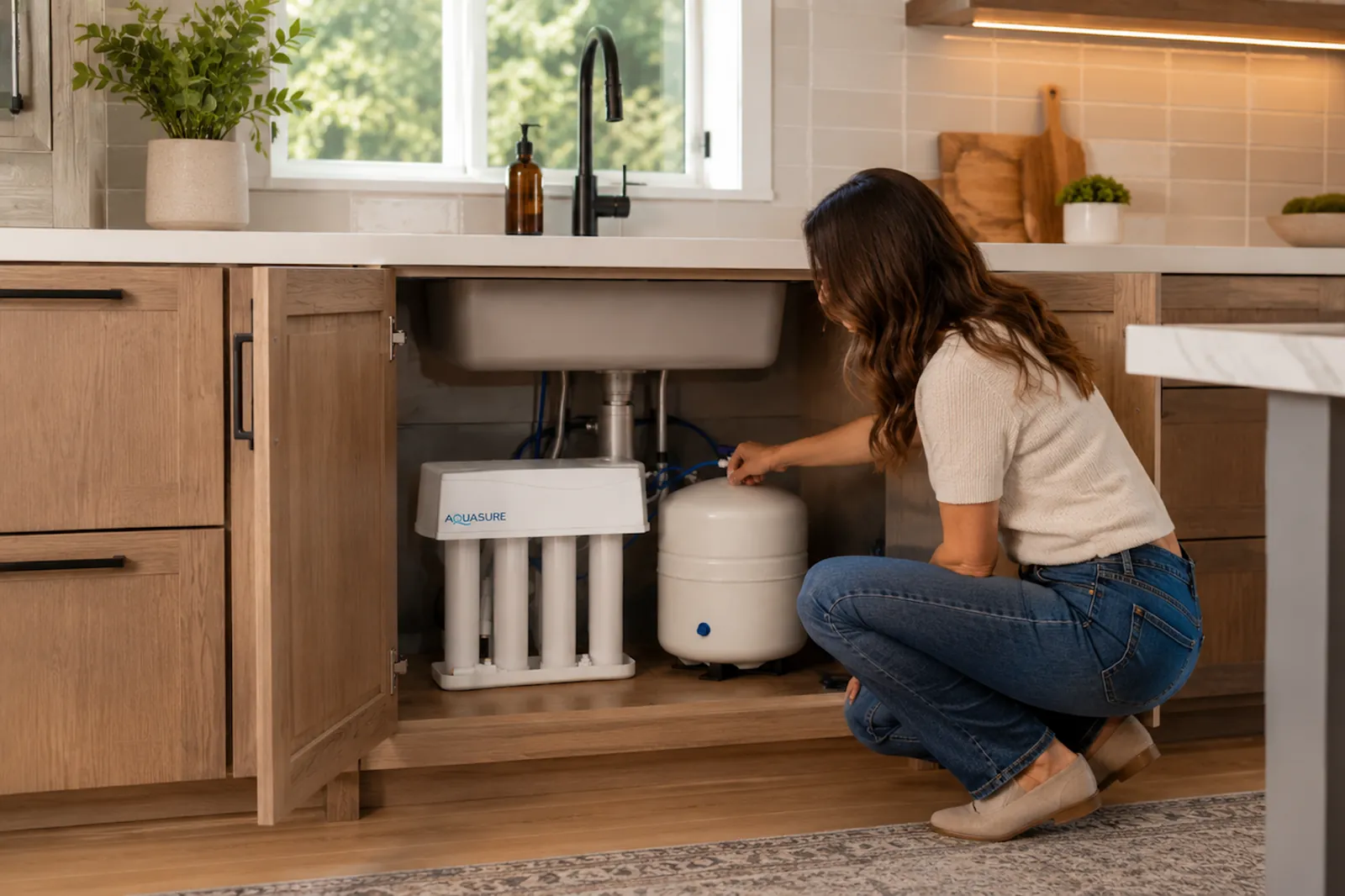
A common reason for a slow flow at the faucet is a loss of air pressure in the storage tank. Even if the system is producing water, the tank needs a specific amount of air to push that water out to your sink. If the tank feels heavy but the water comes out as a weak drip, it’s likely that the air cushion inside has leaked or faded.
You’ll need a standard tire pressure gauge to check the pressure through the valve on the side or top of the tank. Most residential reverse osmosis tanks require between 7 and 10 PSI of air when the tank is completely empty of water. If the pressure is lower than this, use a manual bicycle pump to add air in small bursts. Don’t use an air compressor, as the high force can rupture the internal bladder of the tank.
This task is for those who have a bicycle pump and a pressure gauge. If the tank doesn’t hold air pressure after you pump it up, the internal bladder is likely damaged and the tank must be replaced. If you’re unsure about the tank’s age, check the manufacture date stamped on the base; most tanks have a limited service life.
Test the reverse osmosis membrane
The membrane is the heart of your system, and it eventually reaches a point where it can no longer separate dissolved solids from your drinking water. If your filters are new and the tank has the correct air pressure, but the water still tastes off or the production rate is very slow, the membrane may be blocked. This is common in areas with “hard” water, which contains high levels of calcium and magnesium.
Testing the membrane requires a Total Dissolved Solids (TDS) meter. This handheld device measures the amount of minerals remaining in your water. If the TDS reading of your filtered water is nearly the same as your tap water, the membrane is no longer working. You should consult the manufacturer’s documentation for the expected TDS reduction percentage for your specific membrane type.
Replacing the membrane is more complex than changing a filter. It requires careful handling to avoid contaminating the new membrane with skin oils or dirt. If your system is older than three years, it’s usually more cost-effective to replace the membrane than to try and clean it. If you lack the tools or the time to handle the installation, a professional service technician can perform this swap quickly.
Avoid these common maintenance mistakes
Using harsh chemicals like bleach to clean the filter housings degrades the plastic, eventually causing hairline cracks. Use only mild dish soap and warm water to protect the structural integrity of the canisters.
Tightening housings with a wrench often leads to stripped threads or crushed O-rings. Always tighten these components by hand until you feel a firm stop. If a leak occurs, remove the O-ring, clean it, and apply a thin layer of food-grade silicone lubricant before reseating it.
Don’t attempt to bypass the flow restrictor. This small part maintains the specific backpressure required for proper filtration. Without it, the water moves too quickly through the membrane to be purified.
Finally, never leave the system dry for more than two weeks. The membrane must remain saturated to function.
Maintain your system for better results
| If you’re doing this | Do this instead | Why |
|---|---|---|
| Waiting for a leak | Check fittings monthly | Prevents sudden water damage |
| Ignoring change dates | Track dates on a calendar | Ensures water quality remains high |
| Using high-pressure air | Use a manual pump | Protects the fragile tank bladder |
| Forcing a stuck filter | Use a housing wrench | Prevents breaking the plastic housing |
To keep your system running, replace your filters every 6 to 12 months, depending on how much water you use. If your household exceeds four occupants, move toward the 6-month mark to account for higher volume.
If you have very hard water, you may need to replace them more often to prevent mineral buildup. You can identify this need by watching for a drop in faucet pressure. If the flow rate slows by more than 20 percent, the filter is likely clogged with sediment.
A common mistake is waiting for the taste to change before swapping the cartridge. By the time the water tastes off, the filter media is already exhausted and no longer removing contaminants. When in doubt, follow the calendar rather than your palate. If your water source comes from a private well, test the output annually to confirm that your specific filter grade still matches your current water chemistry.
Frequently asked questions
Can I clean a clogged reverse osmosis membrane?
No, you can’t effectively clean a clogged membrane. Once pores are blocked by mineral scale, the membrane is permanently damaged and must be replaced. Residential membranes are sealed units, so replacement is the only way to restore water quality.
Why does my water taste like plastic?
A plastic or chemical taste usually occurs when new filters aren’t properly flushed. You must run the system through two full tank cycles to clear out manufacturing residue. If the taste persists, ensure your filters are installed in the correct order.
How long should the water flow last?
Your system should fill an 8-ounce glass in 10 to 15 seconds when the tank is full. If it takes longer, your tank likely needs more air pressure or the filters are clogged. Note that flow naturally slows as the tank empties.
Is it safe to drink water if the system is slow?
It’s generally safe to drink the water if the system isn’t leaking and filters are current. A slow flow usually indicates low tank pressure rather than a safety failure. Stop using the water if it appears cloudy or tastes bad.
What happens if I ignore the filter change light?
Ignoring the maintenance schedule causes filters to become blocked, stopping water flow. Saturated filters also fail to remove chlorine, which can damage your expensive membrane. Follow your manual’s schedule to protect your system and ensure water quality.
How many years does a reverse osmosis system last?
A well-maintained system can last for many years, though individual parts require periodic replacement. While the housing is durable, filters and O-rings are consumables that need regular attention. If persistent leaks occur, replace the brittle fittings to prevent potential flooding.
Conclusion
If you still notice issues after these checks, don’t hesitate to contact a local professional for a quick inspection. They’ll help you ensure your unit’s running at its best, so you’ve always got fresh, clean water on tap. It’s a simple way to keep your system working perfectly for years.