If your system is running constantly, performing furnace not shutting off troubleshooting starts with checking your thermostat settings and looking for a simple override. A furnace that never stops running is often just responding to a signal it’s receiving, rather than suffering from a mechanical failure. The most common cause is a thermostat set to “fan on” rather than “auto,” which keeps the blower motor active even when the heating cycle is complete.
Troubleshooting why your furnace won’t shut off
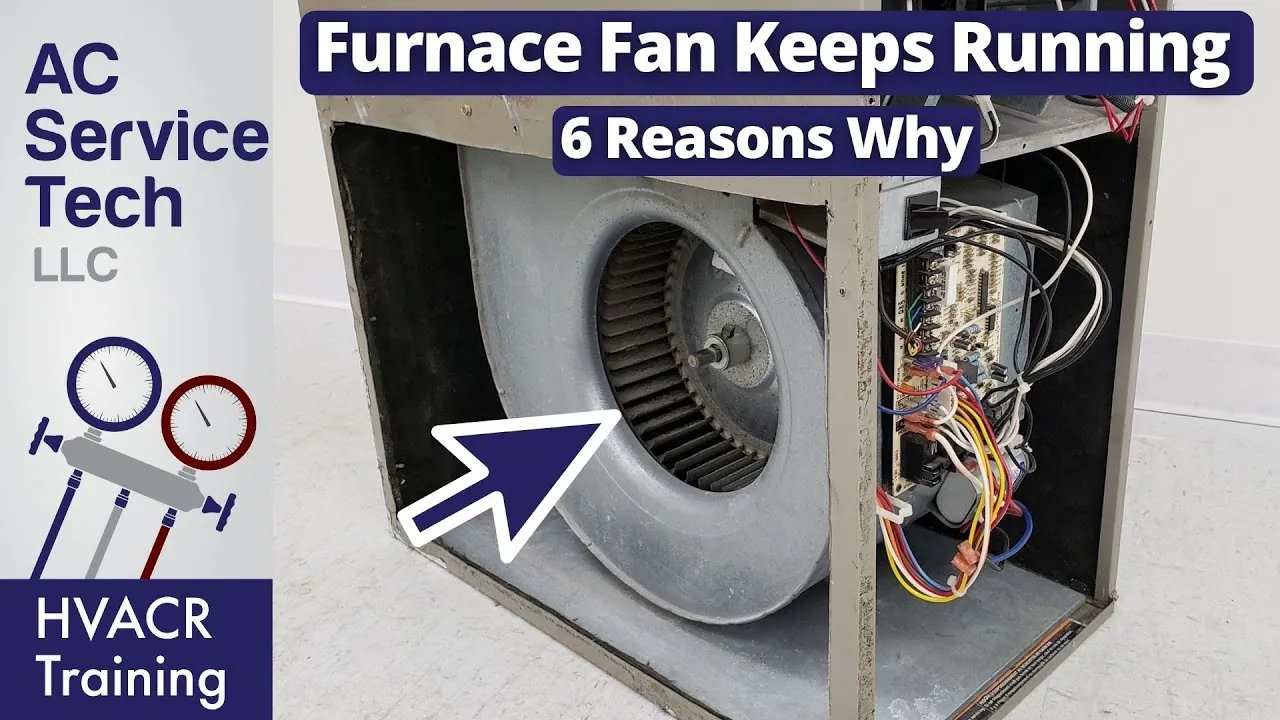
The primary reason a heating unit continues to run is a communication error between the thermostat and the control board. When the thermostat is set to “fan on,” the blower motor operates continuously to circulate air, even if the burners have already shut down. This is a deliberate feature for air filtration, but it often confuses homeowners who expect the unit to be silent when the house is warm.
Another frequent cause is a stuck relay on the control board. Inside your furnace, there’s a small switch that tells the blower to turn on or off. If this switch gets stuck in the closed position due to wear or a power surge, it will keep the motor spinning indefinitely. This is a hardware issue that requires a technician to inspect the internal components safely.
Finally, an incorrect heat anticipator setting in older, manual thermostats can cause the system to run too long. This small component tells the thermostat when to stop calling for heat based on how quickly the room warms up. If it’s calibrated incorrectly, the thermostat will not “know” the room has reached the set temperature, forcing the burner to stay lit well past the comfort point.
Adjust the thermostat settings
The first step in any diagnostic process is to verify the user-controlled settings on your wall thermostat. If you see the fan icon or the word “on” highlighted, switch the fan mode to “auto.” This change tells the system to only blow air when the burner is actively heating, which should stop the constant airflow immediately.
If the fan mode is already set to “auto,” try raising the temperature setpoint higher than the current room temperature and then lowering it significantly below the current reading. This forces the thermostat to cycle through its logic. Listen for a distinct “click” from the unit when you move the setting below the ambient temperature. If you hear the click but the furnace keeps running, the issue is likely within the furnace’s internal wiring or control board.
If you have a smart thermostat, check the app for any active “circulate” or “air quality” programs. These settings are designed to run the fan for a set number of minutes every hour to improve indoor air quality. If you find such a program, disable it to see if the behavior stops.
Always consult your thermostat owner’s manual to identify the specific menus for your model. If these steps don’t stop the unit, don’t attempt to open the furnace cabinet, as internal electrical components can hold a charge even when the power switch is turned off.
Inspect the air filter and vents
A furnace that can’t move enough air will often run longer than necessary because it can’t reach the desired temperature. When the filter is clogged with dust or debris, the blower has to work significantly harder to pull air through the system. This leads to overheating, which triggers internal safety limits that keep the fan running to cool the heat exchanger.
Check your air filter by sliding it out of the filter rack. If you can’t see light clearly through the material, it’s time for a replacement. A clean filter allows for proper airflow, which helps the system reach the set temperature in a normal cycle time. If you have a high-efficiency filter, remember that these need to be changed more frequently than basic fiberglass versions, typically every 30 to 60 days depending on household pets and dust levels.
Make sure that at least 80% of your home’s supply and return vents are open and unobstructed. Blocking vents with furniture or heavy curtains creates static pressure that prevents the furnace from heating efficiently. If you find that the system shuts off after you have cleared the vents and replaced the filter, the problem was likely a safety limit switch protecting the furnace from overheating. If the unit still runs nonstop, the issue is mechanical.
Check for stuck relays or sensors
If the thermostat and airflow are both correct, the issue may be a stuck limit switch or a faulty control board relay. These components are responsible for sending power to the blower motor and the gas valve. When a relay fails, it can weld itself in the “on” position, meaning the furnace receives a constant signal to operate.
This part of the diagnostic process is strictly for qualified professionals. Because the blower motor and gas valve are connected to high-voltage lines, there’s a risk of electrical shock or fire if handled incorrectly. A technician confirms whether the part has failed to determine if they must replace the board or relay.
Don’t attempt to bypass any sensors or switches yourself. These devices are installed to prevent the furnace from overheating, which can lead to cracks in the heat exchanger and dangerous carbon monoxide leaks. If you suspect a faulty board, turn off the furnace using the exterior power switch or the circuit breaker. Call a licensed HVAC contractor to perform the repair, as they have the proper training to handle electrical diagnostics and gas safety.
Common mistakes to avoid
Turning the breaker off and on repeatedly can damage the control board’s sensitive electronics. This rapid cycling creates power surges that often fry the delicate integrated circuits, turning a simple reset into a costly replacement.
Blocking off rooms to “save heat” actually increases backpressure. This forces the blower motor to work against excessive resistance, which leads to premature motor failure and uneven heating throughout the home.
Replacing the thermostat without verifying if the furnace control board is the actual source of the problem is a common error. If your system fails to ignite, check for a “limit switch” error code first. Ignoring these flashing lights or digital codes often masks a clogged filter or a failing blower.
Finally, avoid cleaning internal components like the igniter or gas valve. These parts are calibrated to precise tolerances; even a light touch can crack the ceramic igniter.
Professional maintenance and prevention
Setting your system up for success requires regular attention to the components that manage airflow and temperature. Compare your current habits with these recommended practices to prevent future issues.
| If you’re doing this | Do this instead | Why |
|---|---|---|
| Leaving fan on “on” | Set fan to “auto” | Prevents constant motor wear |
| Ignoring filter changes | Change every 3 months | Improves heat exchange efficiency |
| Closing vent registers | Keep all vents open | Prevents overheating and pressure |
| Cleaning internal parts | Call a professional | Avoids shock and gas leaks |
Many homeowners mistakenly believe that closing vents in unused rooms saves money. In reality, this creates static pressure that forces the blower motor to work harder, often leading to premature failure. If your home has rooms that remain too hot or cold, the issue is likely unbalanced ductwork rather than a lack of airflow.
You should schedule a professional inspection every spring and fall. If your system is aging, prioritize an annual inspection of the heat exchanger and burner assembly. If you hear rattling or metallic scraping, shut the unit down immediately.
Frequently asked questions
Can a bad thermostat cause a furnace to run forever?
A faulty thermostat can keep a furnace running if its internal contacts fail or the heat anticipator breaks. You can isolate the cause by disconnecting the thermostat wires from the base; if the furnace stops, the thermostat is the culprit. If the furnace continues running, the issue is likely a stuck control board relay.
How long should a furnace run per cycle?
A standard furnace cycle typically lasts between 10 and 20 minutes, depending on outdoor temperatures and home insulation. While cycles may lengthen during extreme cold, the furnace should always shut off once the target temperature is reached. If it runs for over 30 minutes on a mild day, you likely have a system failure.
Is it safe to leave a furnace running constantly?
It isn’t safe to leave a furnace running indefinitely if it ignores the thermostat. Constant operation can cause the heat exchanger to overheat, potentially leading to dangerous carbon monoxide leaks. If you can’t turn the furnace off via the thermostat, flip the circuit breaker until a professional can inspect the unit.
What happens if I ignore a furnace that won’t shut off?
A furnace that won’t shut off can cause the heat exchanger to crack, creating a severe safety hazard by allowing combustion gases into your home. This issue also leads to excessive utility bills and premature blower motor damage. Treat a nonstop furnace as a priority and have a licensed technician inspect the unit.
How much does it cost to fix a stuck furnace relay?
Repairing a stuck relay typically costs between $150 and $450, depending on whether the technician replaces a single relay or the entire control board. This price covers both the necessary parts and professional labor. Always obtain a quote from a local contractor, as rates vary based on your specific furnace model and market.
Conclusion
The most important takeaway when troubleshooting a furnace that won’t stop is to prioritize your safety by avoiding internal electrical work. By checking your thermostat settings, changing your air filter, and ensuring your vents are open, you can resolve most common issues yourself.