The most effective way to address heat pump compressor troubleshooting is to first verify that your thermostat is calling for cooling or heating and that your circuit breakers are fully engaged. If your unit is silent or humming without starting, the issue often stems from a tripped breaker, a dirty air filter blocking airflow, or a faulty contactor. These simple checks can save you from an unnecessary service call when the problem is just a lack of power or airflow.
Identifying heat pump compressor troubleshooting signs
When your unit fails to move air or regulate temperature, the cause is usually related to energy flow or system safety. The compressor relies on a steady supply of electricity and clean air to function. If either is restricted, the system shuts down to protect its internal parts from overheating or mechanical damage.
A common cause is a dirty air filter, which restricts the airflow needed to transfer heat. When air can’t move through the system, the indoor coil can freeze, causing the compressor to work harder or shut off entirely.
You can check your own filter’s condition by following the Energy Star guide to proper filter maintenance. If the filter is clogged with dust, it prevents the unit from reaching the desired temperature and forces the compressor to cycle on and off too frequently.
Another cause is a failed contactor, which is the switch that tells the compressor to turn on. If this part is worn out or burnt, it won’t send the signal to start the motor.
You might hear a faint clicking sound when the system tries to engage, but the compressor itself remains still. While these are common issues, remember that the compressor is part of a high-voltage system. Any internal wiring or electrical component repair is strictly for a licensed professional.
Resetting the power to the unit
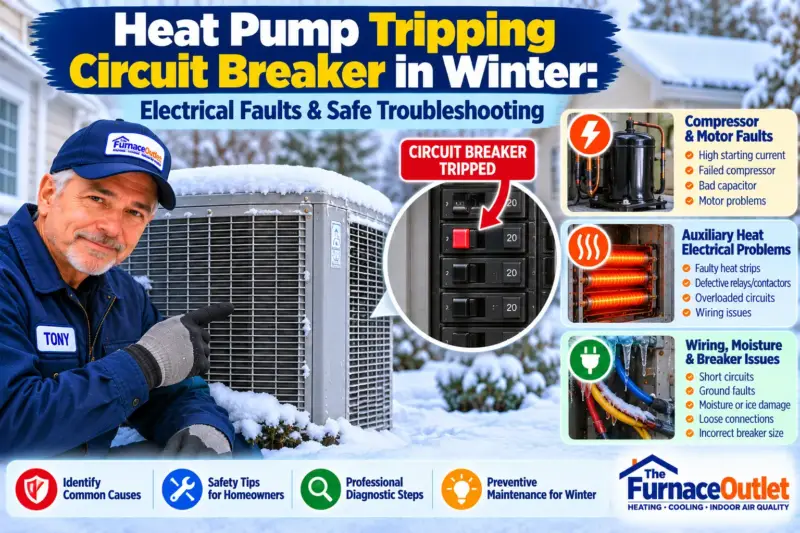
If your heat pump has completely lost power, the first step is to check your home’s main electrical panel. Locate the circuit breaker labeled for your HVAC system and ensure it’s in the “on” position. If it has tripped to the middle or “off” position, flip it all the way to “off” and then back to “on” to reset it.
Wait about 5 minutes after resetting the breaker before you try to turn the system back on at the thermostat. This delay allows the system’s internal pressure to equalize, which prevents the compressor from starting under too much strain. If the breaker trips again immediately after you turn the unit on, don’t attempt to reset it a second time. This is a sign of a deeper electrical short that requires a technician to diagnose safely.
This fix is intended for homeowners who have basic access to their electrical panel. If you’re uncomfortable working with your home’s breaker box or if the panel shows signs of charring or a burning smell, contact a licensed electrician immediately. Never attempt to remove panels from the outdoor unit to look at wires, as high-voltage capacitors can hold a lethal charge even when the power is disconnected.
Improving airflow through the system
A compressor often shuts down because it can’t move heat effectively due to blockages. Start by walking around the outdoor unit to ensure there’s at least 2 feet of clear space in every direction. Remove any tall grass, weeds, leaves, or debris that might be leaning against the metal fins.
Next, go inside and check the return air vents in your home. Ensure that furniture, curtains, or rugs aren’t covering these vents, as they need to pull in air for the system to work. Check the indoor air filter again; if you can see a thick layer of grey dust covering the material, replace it with a new one of the exact size and MERV rating recommended by your manufacturer.
This step is for anyone whose system is running but failing to cool or heat the home properly. If you clear the debris and change the filter, but the unit still struggles to reach the set temperature, you likely have a refrigerant leak or a mechanical failure. These issues require specialized tools like gauges and leak detectors. A professional technician is the only one who should handle refrigerant, as it’s regulated under environmental laws and requires specific certification to manage.
Assessing the need for professional help
When the simple fixes like checking breakers and cleaning filters don’t work, you must determine if the problem is beyond your reach. If the unit makes loud grinding or screeching noises while running, turn it off immediately at the thermostat. These sounds often indicate a mechanical failure inside the compressor itself, which means the component is likely at the end of its life.
It’s worth calling a professional if you have confirmed the unit has power and clean airflow but still refuses to run. A technician confirms whether the part has failed and checks refrigerant levels to see if there’s a leak.
Be aware that an older system may be more expensive to repair than to replace. If the technician finds that the compressor is dead, ask them for an itemized quote.
Common mistakes to avoid
Avoiding certain actions is just as important as performing the right ones. Many people try to force a system to work when it’s clearly struggling, which only causes more damage.
- Don’t spray water directly into the electrical components: While cleaning the outdoor fins, only use a gentle spray from a hose on the metal fins themselves, never the control box.
- Don’t bypass the thermostat: Some people try to touch wires together to “force” the compressor on, which can cause a dangerous short circuit or electrical shock.
- Don’t add refrigerant yourself: This is illegal in many jurisdictions without a license and can be dangerous if the system is overcharged or handled incorrectly.
- Don’t ignore strange noises: If you hear a clanking or grinding sound, leaving the unit running can turn a small, cheap repair into a complete system failure.
- Don’t reset a tripped breaker repeatedly: If a breaker trips twice in a row, it’s warning you of an electrical fault that won’t go away by simply flipping the switch.
Keeping your system running smoothly
To stop these problems from happening again, you must shift from reactive fixing to regular maintenance. The goal is to keep the system clean and the airflow unobstructed throughout the year.
| If you’re doing this | Do this instead | Why |
|---|---|---|
| Waiting for the unit to stop | Replace filters every 3 months | Keeps the indoor coil clean |
| Ignoring outdoor debris | Clear 2 feet of space | Ensures proper heat exchange |
| Ignoring strange sounds | Call a pro immediately | Prevents total motor failure |
| Resetting tripped breakers | Schedule an annual checkup | Finds electrical faults early |
Most owners mistake a minor refrigerant leak for a simple compressor glitch. If the unit runs constantly but fails to change the indoor temperature, check your refrigerant levels before replacing the motor.
If you hear a metallic grinding noise, shut the system off at the breaker immediately. This turns a simple repair into a total system replacement.
Following this schedule helps your compressor run under less stress, which extends its life significantly. By keeping the intake and output paths clear, you reduce the risk of the compressor overheating during peak summer or winter months.
Frequently asked questions
How long does a heat pump compressor last?
A heat pump compressor typically lasts 12 to 15 years with annual maintenance. Lifespan varies based on local climate, usage frequency, and timely air filter changes.
Is it safe to run a heat pump with a dirty filter?
No, you shouldn’t run your heat pump with a dirty filter because it restricts airflow and causes internal coils to freeze. Restricted air forces the compressor to work harder, leading to overheating or mechanical damage.
Why does my heat pump make a loud buzzing sound?
A loud buzzing sound indicates the compressor is struggling to start, often due to a faulty capacitor or seized motor. Turn the system off immediately to prevent the motor from burning out.
How much does it cost to replace a compressor?
Replacing a compressor typically costs $1,500 to $3,500, depending on the model, refrigerant type, and local labor rates. Costs can be higher for multi-stage or high-efficiency systems.
Can I clean the outdoor unit with a pressure washer?
No, you should never use a pressure washer on your heat pump because the high-pressure water can bend or flatten the delicate aluminum fins. Damaged fins prevent proper heat transfer, causing the compressor to overheat.
Conclusion
If your system still won’t run properly after these basic checks, it’s time to call a licensed technician. They’ll have the right tools to safely test the electrical components and refrigerant levels. Don’t wait until the weather gets extreme; getting it fixed early will keep your home comfortable all year long.