
No suction on a Hoover WindTunnel almost always means a blocked airflow path — a full bag or dirty bin, a clogged hose, or a blocked filter. Check those three before anything else. Start with the bag or bin: if it’s more than about two-thirds full, empty or replace it, then run the vacuum again. If suction comes back, you’ve found the cause. If it doesn’t, move to the hose and filter checks below. Most no-suction cases on a WindTunnel are fixed in under 15 minutes with no tools.
Why a WindTunnel loses suction
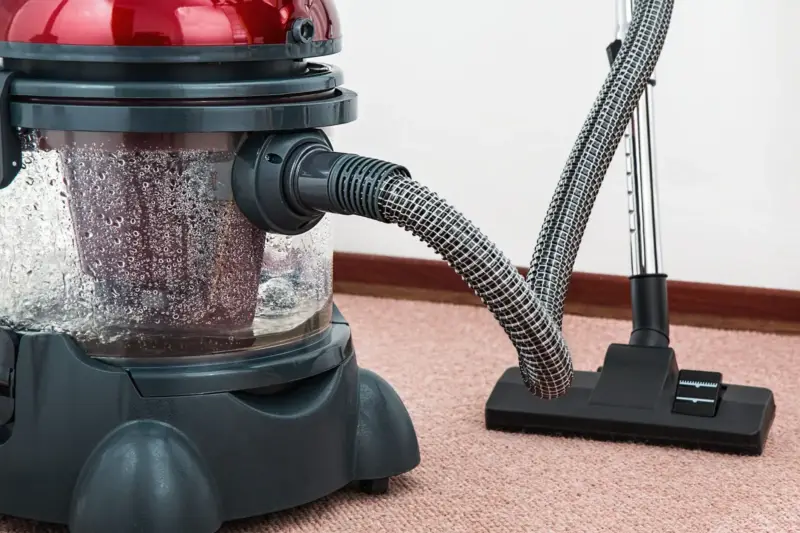
A vacuum doesn’t “lose power” in most cases. Air stops moving, and the motor sounds the same while the floor gets nothing. On a Hoover WindTunnel, three things cause that blocked airflow most often.
The bag or bin is full. On bagged WindTunnel models, a bag past about two-thirds full chokes the airflow before the motor notices. On bagless models, a bin packed to the fill line does the same. The motor keeps running, so the machine sounds fine.
The hose or wand is clogged. Coins, hair, cereal, and small toys jam in the hose bend or the wand. A clog there blocks everything downstream — the brush roll spins, but no air reaches the dirt.
The filters are dirty. WindTunnel models use a pre-motor filter and, on many models, a post-motor filter. A clogged filter is the quietest cause: no rattle, no warning light, just weak pull. Hoover’s own manual for your model lists the filter locations and cleaning schedule — check your model’s page on the Hoover site if you’re not sure which filters yours has.
Less common causes: a cracked hose or a seal that’s come loose at the hose collar. Those need a closer look, and I cover them below.
Clear the bag, bin, and hose first
This fix is for anyone whose WindTunnel still has strong motor sound but weak pickup on carpet or bare floor. It’s the first thing to try, and it costs nothing.
Step 1 — Empty or replace. On a bagged model, fit a new bag when the old one is two-thirds full. Don’t shake and reuse a paper bag; it tears. On a bagless model, empty the bin when it reaches the fill line marked on the side.
Step 2 — Check the hose. Disconnect the hose at both ends. Look through it toward a bright light. If you can’t see light, push a broom handle through from the opposite end — never a wire coat hanger, which can puncture the hose. Work the clog loose in short pushes.
Step 3 — Check the wand and floor head. Turn the machine off and unplug it. Look into the wand and the opening under the floor head. Remove hair and debris by hand or with a dull tool.
Step 4 — Test. Reconnect everything, plug in, and run the vacuum over a small patch of carpet with a few crumbs on it. If the crumbs lift in one pass, the airflow is back.
If you find a split hose or a cracked wand, stop — that’s a parts job, not a cleaning job. Hoover sells replacement hoses for most WindTunnel models through its parts page.
Wash or replace the filters
If the bag, bin, and hose are clear and suction is still weak, the filters are the next lever. This fix is for machines that pull a little but not enough — the kind where you push the vacuum over a crumb three times and it stays put.
Find your filters. Most WindTunnel models have a pre-motor filter behind the bag or bin, and many have a post-motor filter near the exhaust. Your model’s manual shows both. If you’ve lost the manual, Hoover’s support pages list filters by model number — the number is on a sticker under the bin or on the back of the machine.
Wash foam filters, don’t wash paper ones. Foam and washable filters rinse under cool water. Squeeze — don’t wring — and let them air-dry completely, at least 24 hours, before refitting. A damp filter grows mildew and smells. Paper and HEPA-style filters can’t be washed; replace them when they look grey or matted.
Replace on schedule. Hoover’s manual for your model states the replacement interval. Follow that, not a guess.
How to tell it worked. After refitting dry filters, run the vacuum over a small patch of carpet. If pickup improves, the filter was the cause. If nothing changes, move to the harder checks.
Check the belt, brush roll, and seals
This is the fix for the harder cases — when the bag, hose, and filters are all clean and suction is still weak. It’s worth the extra time if your WindTunnel is more than a few years old, or if you’ve noticed a burning smell or a squeal.
Belt and brush roll. Unplug the vacuum. Flip it over and remove the base plate per your manual. A stretched or cracked belt slips and stops driving the brush roll. On most WindTunnel uprights the belt is a user-replaceable part; Hoover lists the correct belt by model number. Clear hair wrapped around the brush roll with scissors — never pull it, which can bend the bristles.
Seals and collars. Check the rubber seal where the hose meets the body and where the wand meets the hose. A loose or torn seal leaks air and kills suction at the floor. Press each connection firmly; if it clicks and holds, the seal is fine. If it’s torn, replace it.
When to stop and call someone. If you’ve cleared the bag, hose, and filters, replaced the belt, and checked the seals, and suction is still gone, the fault is inside the motor housing. Don’t open it. That’s a job for a Hoover-authorized service center or a qualified repair technician — the motor and wiring carry a shock risk and opening the housing can void your warranty. Hoover’s support page lists authorized service centers by zip code.
Advice that makes a WindTunnel worse
Some popular fixes backfire. Skip these:
- Running the vacuum with no bag or an overfilled bin “to test it.” Dust hits the motor and filters directly, and on bagged models it can shorten motor life. Always test with a bag fitted and at least partly empty.
- Washing a paper or HEPA filter. Water destroys the media, and a damp filter blocks airflow worse than a dirty one. Only wash filters your manual labels washable.
- Poking a coat hanger through the hose. The wire snags on the hose ribs and punctures the wall. Use a broom handle or a blunt plastic rod.
- Taping over a cracked hose “for now.” Tape peels under suction and leaves a leak. Replace the hose.
- Ignoring a burning smell. A burning smell means a slipping belt or a motor problem. Unplug the machine and stop — don’t keep running it.
The bag mistake is the one that costs the most. A WindTunnel run without a bag pulls fine dust straight into the motor, and that grit doesn’t come back out. If you have already done it, fit a new bag before you judge suction again.
On bagged WindTunnels, check the bag before you touch anything else. A bag past about two-thirds full cuts suction on its own, and no amount of hose cleaning will bring it back. Swap the bag, then retest.
If suction returns after the new bag, you never had a clog. If it stays weak, move on to the hose and the filters.
Stop the clog coming back

Most repeat clogs come from how the vacuum is used, not from the machine. A few habits keep airflow strong. The table below pairs what people do with what works better.
| If you’re doing this | Do this instead | Why |
|---|---|---|
| Waiting until the bag is stuffed to change it | Change the bag at about two-thirds full | Airflow drops sharply past that point, before the motor notices |
| Vacuuming coins, Legos, and pet toys | Pick them up by hand first | They jam in the hose bend and block everything downstream |
| Skipping the filter check for months | Check filters monthly, wash or replace per your manual | A clogged filter is the quietest cause of weak suction |
| Storing the vacuum with the hose kinked | Hang or coil the hose loosely | A kink trains the hose to collapse and crack |
| Vacuuming long hair without checking the brush roll | Clear hair from the brush roll every few uses | Wrapped hair strains the belt and slows the brush |
Frequently asked questions
Why does my Hoover WindTunnel have no suction but the motor runs?
The motor running means power is fine — the problem is airflow. Check the bag or bin first, then the hose, then the filters. In most cases one of those three is blocked. If all three are clear and suction is still gone, the fault is inside the housing and needs a service center.
How long does it take to fix no suction on a WindTunnel?
About 10 to 15 minutes for a bag, hose, or filter clog — the three most common causes. A belt or seal replacement adds another 15 to 30 minutes and needs the correct part for your model. If the fix is inside the motor housing, expect a service-center turnaround of days, not minutes.
Can I use my WindTunnel without a bag?
No — on bagged WindTunnel models, running without a bag sends dust straight into the motor and filters. It can shorten motor life and won’t tell you anything useful about suction. Always test with a bag fitted.
How often should I change the bag or clean the filter?
Change the bag when it’s about two-thirds full — that’s the point where airflow drops. Check the filters monthly and clean or replace them per your model’s manual. Hoover’s manual for your model states the exact replacement interval.
Is it safe to open the vacuum to check the motor?
No. The motor and wiring carry a shock risk, and opening the housing can void your warranty. If the bag, hose, filters, belt, and seals are all clear and suction is still gone, take the machine to a Hoover-authorized service center or a qualified repair technician.
What happens if I keep running a vacuum with no suction?
You risk overheating the motor. A burning smell or a squeal means stop and unplug immediately. Keep running it and a cheap fix (bag, filter, belt) can turn into a motor replacement.
Can a cracked hose cause no suction on a WindTunnel?
Yes. A split or cracked hose leaks air and kills suction at the floor head, even when the motor sounds normal. Run your hand along the hose while the vacuum is on — if you feel air escaping, the hose needs replacing. Hoover sells replacement hoses by model number.
Conclusion
If you’ve checked the bag, hose, and filter and you’re still not getting anywhere, look at the belt and brushroll next—a worn belt or jammed brushroll can quietly kill performance. You’ll find the replacement parts online or at most hardware stores, and swapping them is a quick job you can do yourself.