Is your shower suddenly cold, or is your tap water just not heating up? When your water heater stops giving you hot water, it can disrupt your whole day.
You might feel frustrated and unsure what to do next. But don’t worry—most water heater problems can be fixed with simple troubleshooting. You’ll discover easy steps to find out why your water heater isn’t working and how you can solve the problem quickly.
Keep reading, and you’ll be back to enjoying warm water in no time.
Common Causes Of No Hot Water
Many homeowners face the problem of no hot water. This issue can have several causes. Understanding these common causes helps in quick troubleshooting. It saves time and prevents unnecessary expenses. Below are the main reasons your water heater might not produce hot water.
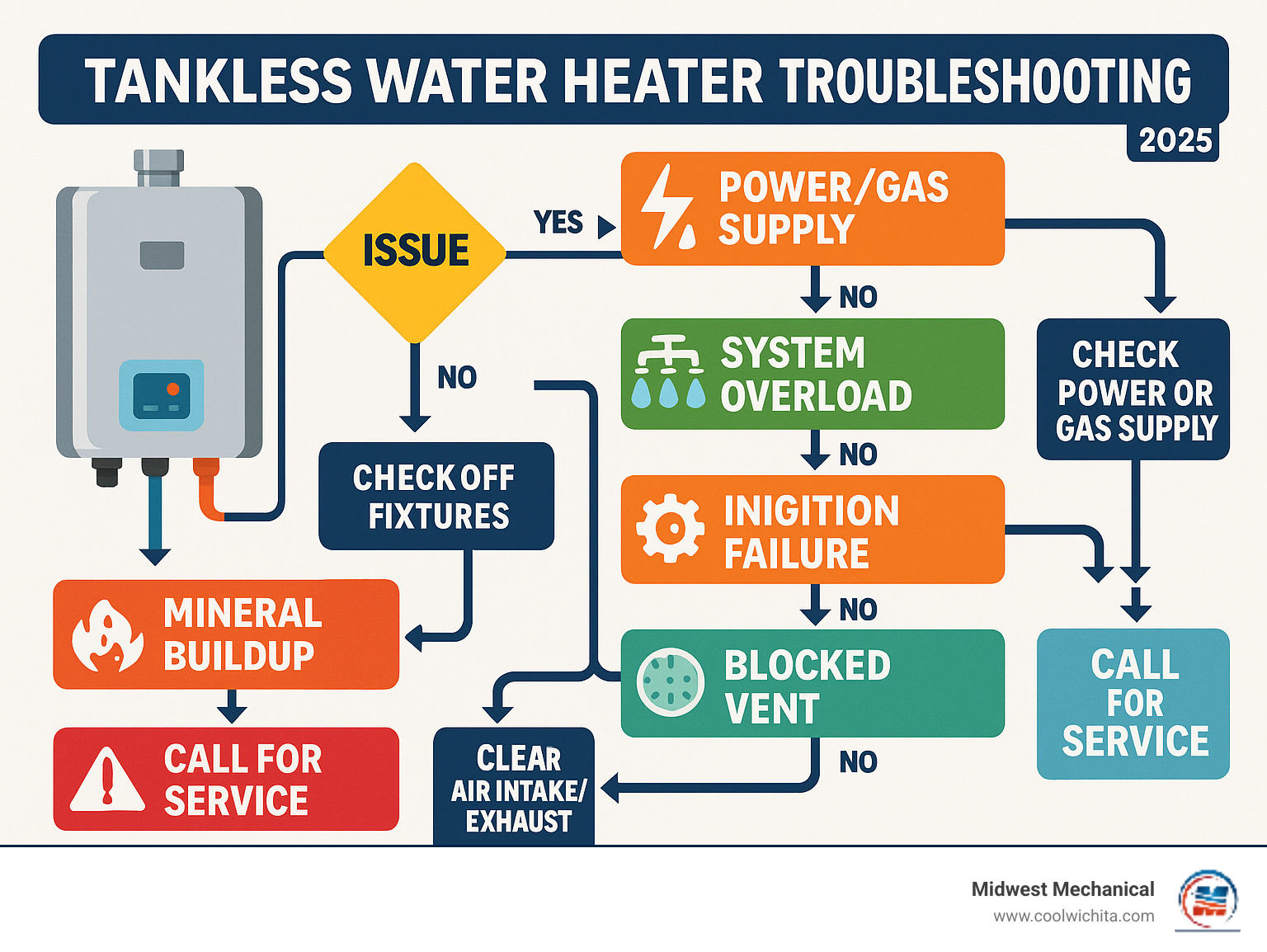
Power Supply Issues
Electric water heaters rely on power to work. A tripped circuit breaker or blown fuse can stop power flow. Check your home’s electrical panel for any issues. Sometimes, a loose wire or faulty switch causes power loss. Without electricity, the heater cannot heat water.
Thermostat Problems
The thermostat controls water temperature. If it malfunctions, water stays cold. A broken thermostat may cause inaccurate temperature settings. Sometimes, the thermostat sensor disconnects from the heater. Testing and replacing the thermostat can solve this problem.
Heating Element Failure
Electric heaters use heating elements to warm water. Over time, these elements wear out or burn out. When a heating element fails, the water stays cold. Testing with a multimeter shows if elements work properly. Replacing damaged elements restores hot water supply.
Pilot Light And Gas Supply
Gas water heaters need a pilot light to ignite the burner. If the pilot light goes out, water will not heat. Gas supply issues, such as a closed valve, also stop heating. Check the pilot light and gas valve for proper operation. Relighting the pilot or opening the valve may fix the issue.
Sediment Buildup
Over time, minerals settle at the tank bottom. This sediment reduces heating efficiency. It can also damage the heating elements. Flushing the tank removes sediment and improves performance. Regular maintenance prevents sediment buildup and keeps water hot.
Diagnosing Electrical Water Heaters
Diagnosing electrical water heaters requires careful checking of key components. These parts control the heating process and affect water temperature. Identifying the problem helps fix the issue quickly. Here are simple steps to follow.
Checking Circuit Breakers
First, check the circuit breaker panel. A tripped breaker can stop power to the heater. Look for any breakers that are switched off or in the middle position. Flip the breaker off and on to reset it. This can restore power and fix the no hot water problem.
Testing The Thermostat
The thermostat controls the water temperature inside the heater. A faulty thermostat can cause no heat. Use a multimeter to test for continuity. Turn off power before testing. Replace the thermostat if it shows no continuity or incorrect readings.
Inspecting Heating Elements
Heating elements warm the water. Over time, they may burn out or break. Turn off the power and drain some water to access the elements. Use a multimeter to check each element for continuity. Replace any broken or damaged elements to restore heat.
Resetting The Water Heater
Many electric heaters have a reset button. It shuts off the heater if it overheats. Locate the reset button on the thermostat or heating element panel. Press it firmly. This can solve minor electrical faults and get hot water flowing again.
Fixes For Gas Water Heaters
Gas water heaters often stop giving hot water due to simple issues. Many problems can be fixed without calling a professional. Basic checks and small repairs can restore hot water quickly. Understanding common fixes saves time and money.
Relighting The Pilot Light
The pilot light is a small flame that heats the water. If it goes out, no hot water will flow. Find the pilot light on your heater. Follow the instructions on the heater label to relight it safely. Use a long match or lighter. Keep the gas valve open during lighting. Wait a few minutes for the flame to stay on before closing the valve. If the pilot light won’t stay lit, the thermocouple may need replacement.
Verifying Gas Supply
Check if the gas supply is working. Make sure the gas valve is fully open. Look for other gas appliances to see if they work. A gas outage or closed valve stops the heater from working. If you smell gas, turn off the supply and call a professional immediately. Never try to fix gas leaks yourself.
Cleaning The Burner
The burner heats the water by burning gas. Dirt and dust can block the burner. Turn off the gas and power before cleaning. Remove the burner cover and clean it gently with a brush. Clear any debris from the burner holes. A clean burner burns gas efficiently and heats water well. Regular cleaning helps prevent future problems.
Adjusting The Thermostat
The thermostat controls water temperature. Set it too low, and water won’t get hot enough. Find the thermostat dial on the heater. Turn it up to at least 120°F (49°C) for warm water. Do not set it too high to avoid burns. Adjust the thermostat slowly and check water temperature after a while. Correct settings improve comfort and save energy.
Handling Sediment And Maintenance
Sediment buildup inside a water heater tank can block heat transfer. This leads to less hot water or no hot water at all. Handling sediment and doing regular maintenance helps keep your water heater working well. It also extends the life of the unit.
Cleaning the tank and replacing worn parts are key steps. These actions improve heating efficiency and prevent damage. Here are some easy ways to manage sediment and maintain your water heater.
Flushing The Tank
Flushing the tank removes sediment that settles at the bottom. Turn off power or gas to the heater first. Then, connect a hose to the drain valve. Drain water until it runs clear, showing sediment is gone. Flushing once a year helps keep the tank clean. It also stops sediment from building up and causing problems.
Replacing Anode Rod
The anode rod stops rust inside the tank. Over time, it wears out and needs replacing. Check the rod every two years. If it is corroded or less than half an inch thick, replace it. A good anode rod protects the tank from corrosion. This keeps water clean and the heater working well.
Regular Maintenance Tips
Check the temperature setting. Keep it around 120°F to save energy and avoid damage. Inspect pipes and valves for leaks or rust. Test the pressure relief valve once a year to ensure safety. Clean the area around the heater to prevent dust buildup. Regular care helps avoid no hot water issues and costly repairs.
When To Call A Professional
Knowing when to call a professional for water heater problems saves time and stress. Some issues need expert help to avoid damage or danger. Understanding the signs and risks helps you make the right choice quickly. Here is what to watch for and how to stay safe.
Signs Of Serious Issues
Water leaks around the heater show a big problem. Strange noises like banging or popping mean sediment build-up or damage. No hot water at all can point to a broken heating element or thermostat. Discolored or smelly water suggests rust or bacteria inside. Frequent pilot light outages in gas heaters need expert checks. These signs mean it is time to call a professional plumber.
Safety Precautions
Turn off power or gas before inspecting the heater. Avoid touching electrical parts or gas lines. Do not try to fix gas leaks yourself. Ventilate the area if you smell gas. Keep children and pets away from the heater. Calling a professional ensures safety and proper repair. Do not risk injury or worsen the problem.
Cost Considerations
Ignoring serious problems can lead to costly damage. Early repair saves money compared to full replacement later. Professionals find hidden problems that DIY cannot fix. Labor costs are less than damage or injury costs. A pro offers warranties on parts and work. Spending on expert help protects your home and wallet.

Frequently Asked Questions
Why Is My Water Heater Not Producing Hot Water?
A common cause is a tripped circuit breaker or blown fuse. Check your power supply and reset or replace as needed.
How Do I Reset A Water Heater Thermostat?
Locate the reset button on the thermostat panel, usually red. Press it firmly to restart the heating process.
Can Sediment Buildup Cause No Hot Water?
Yes, sediment can block heat transfer and reduce efficiency. Flushing the tank regularly helps maintain proper heating.
What Should I Check If Water Is Lukewarm Only?
Inspect the thermostat settings and temperature limit. Adjust it to a higher temperature for hotter water.
When To Call A Professional For Water Heater Issues?
Call a pro if you smell gas, see leaks, or cannot fix electrical problems. Safety first with water heaters.
Conclusion
Troubleshooting a water heater with no hot water takes patience. Check power sources, thermostat settings, and pilot lights first. Look for leaks or unusual noises that might signal issues. Sometimes, simple fixes solve the problem quickly. If problems persist, consider calling a professional for safety.
Regular maintenance can prevent future troubles. Stay calm and follow clear steps to restore your hot water. Remember, small actions often fix common water heater problems.