
When you’re out on the trail or living off-grid, your portable fridge is the heart of your camp kitchen. If you’re currently working through dometic cfx troubleshooting, you’re likely dealing with a unit that has stopped cooling, is displaying an error code, or is drawing more power than your battery bank can handle. These high-performance compressor fridges are designed for rugged conditions, but their sophisticated electronics are sensitive to voltage fluctuations and airflow restrictions. By systematically checking your power source, ventilation, and control settings, you can often restore your fridge to peak performance without needing professional repairs.
Key Takeaways
- Check your DC cable connections for corrosion or loose fitment, as voltage drops are the most common cause of “E1” error codes.
- Ensure the fridge has at least 2 inches of clearance on all sides to allow the compressor to vent heat efficiently.
- Verify your battery protection settings; if set to “High,” the fridge will cut out at a higher voltage, which may prematurely stop the unit.
- Clear any dust or debris from the condenser coils, as a clogged system forces the compressor to run longer and consume more energy.
Safety: Inside a mains-powered machine, the parts behind the outer cover can hold a dangerous electrical charge even after it has been unplugged — that’s why they sit behind a cover. Opening the housing, or testing or replacing anything behind it, is a job for a qualified technician, never a home repair.
Troubleshooting Dometic CFX Error Codes
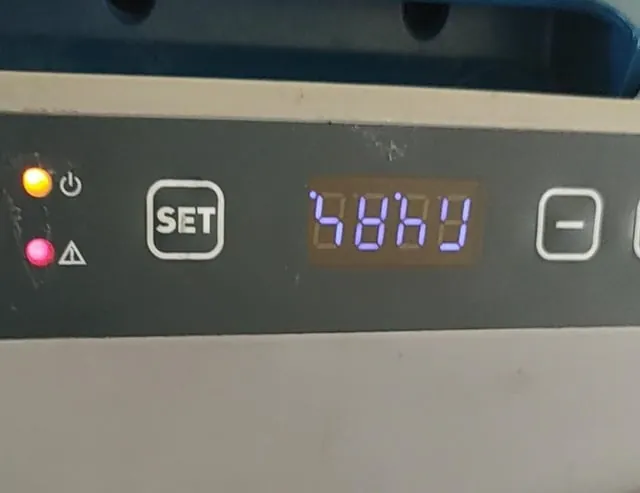
Most CFX models communicate issues through a digital display code. These codes aren’t necessarily signs of a broken compressor, but rather indicators that the system is protecting itself from damage. The most frequent errors relate to voltage levels, which prevent the fridge from draining your battery to a point where it can’t start your vehicle or power your house system.
| Error Code | Meaning | Potential Solution |
|---|---|---|
| E1 | Low Voltage | Check battery charge and cable gauge |
| E2 | Fan Fault | Remove obstructions from the fan |
| E3 | Compressor Fault | Reset unit and check for ventilation |
| E4 | Start-up Failure | Check for high ambient temperature |
| E5 | Overheating | Improve airflow or move to shade |
How to Check Power Supply
The most common culprit for cooling failure is a voltage drop. If your wiring is too thin or the connection points are oxidized, the fridge will detect a lower voltage than what your battery actually holds. This triggers the battery protection circuit. Always inspect your 12V cigarette lighter plug or the hardwired connection points for signs of melting or heat damage. Ensure you’re using the correct wire gauge—typically 12 AWG or thicker—to minimize resistance over long runs.
Why is My Fridge Not Cooling?
If the compressor is running but the fridge isn’t getting cold, you may have a ventilation restriction. These units rely on heat exchange to move thermal energy from the inside of the cabinet to the outside air.
If the unit is packed too tightly into a storage bay, the heat has nowhere to go. Always ensure the intake and exhaust vents remain unobstructed. You should also verify that the lid seal is intact; a compromised gasket allows cold air to escape, causing the fridge to run continuously.
Does the Compressor Need Cleaning?
Over time, dust and dirt can accumulate on the condenser fins, which act like a radiator. If these fins are covered in grime, the compressor can’t shed heat efficiently, leading to longer run times and higher power consumption. To clean the unit, ensure it’s disconnected from all power sources, remove the protective cover near the compressor, and use a soft brush or compressed air to gently remove debris. Avoid using water or harsh solvents on the electrical components.
Battery Protection Settings Explained
Your Dometic unit features three levels of battery protection: Low, Medium, and High. These settings dictate at what voltage the fridge will shut down to save your battery. If you’re running the fridge on a dedicated auxiliary battery, you can usually set this to “Low.”
If you’re running it off your main vehicle starter battery, “High” is the recommended setting to ensure you have enough power left to turn the engine over. You can find the specific Dometic CFX operating manual guidelines for your exact model number to see the precise voltage cut-off thresholds for each setting.
Troubleshooting the Thermostat
Sometimes the fridge may display the correct temperature but fail to reach it. This can happen if the internal sensor is covered by ice or blocked by food items. If you notice thick frost buildup on the interior walls, perform a full manual defrost.
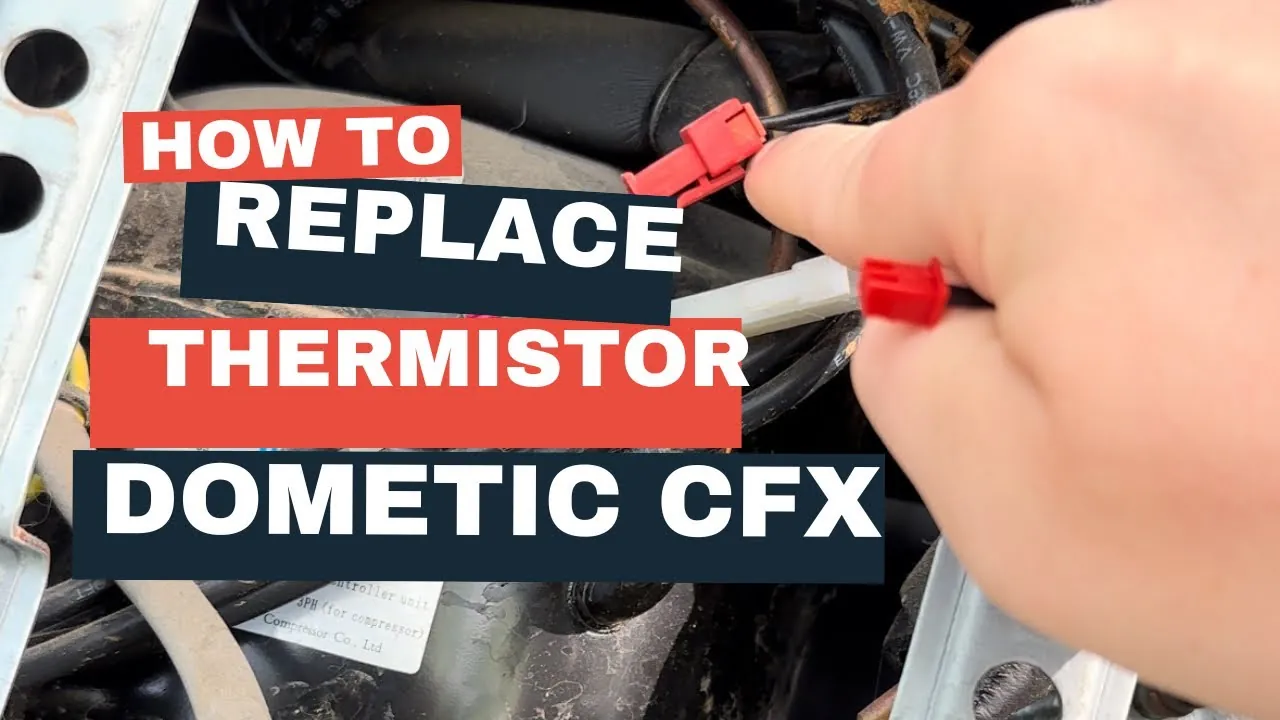
Turn the unit off, remove all contents, and leave the lid open until all ice has melted. Wipe the interior completely dry before restarting. If the fridge continues to cycle incorrectly after a deep clean and defrost, the internal thermistor may require a professional replacement.
Dealing with Excessive Noise
A Dometic fridge should operate with a low-frequency hum. If you hear a loud rattling or grinding noise, it’s often due to the unit being on an uneven surface. Ensure the fridge is level, as the compressor is mounted on rubber dampeners that can vibrate if the unit is tilted.
Additionally, check that no loose internal components or food containers are vibrating against the side walls. If the noise persists, it could indicate a failing fan bearing, which is a common wearable part that can be replaced.
Common Interior Maintenance Tasks
- Gasket Inspection: Check the rubber seal for tears or gaps by closing the lid on a piece of paper; if the paper slides out easily, the seal is loose.
- Drain Plug Check: Ensure the drain plug is screwed in tightly, as air leaks here will cause condensation and ice buildup.
- Lid Latches: Check that the latches engage firmly to maintain a vacuum-tight seal against the cabinet.
- Coil Maintenance: Use a vacuum with a brush attachment to clean the rear compressor area every six months.
When to Call a Technician
If you have verified that your power supply is stable at 12.8V, the unit is properly ventilated, and you have performed a full reset but the compressor still fails to kick in, you may have a faulty control board.
While many components are user-replaceable, the control board and compressor are specialized parts. If the unit is still under its original warranty period, avoid opening the sealed compressor housing, as this will likely void your coverage. Contact an authorized service center to perform a diagnostic test on the electronic module.
Related guides
- Dometic Fridge Troubleshooting: Quick Fixes & Tips
- Dometic RV Fridge Troubleshooting: Quick Fixes
- Dometic Rm2652 Troubleshooting: Quick Fixes and Tips
Frequently Asked Questions
Can I run my fridge on 110V and 12V simultaneously?
No, the fridge is designed to prioritize the AC input if both are connected. However, it’s best practice to use only one power source at a time to prevent potential ground loops or interference between the power supplies. The internal controller will manage the transition, but disconnecting the unused cable is the safest way to prevent long-term wear on the power input terminals.
Why does my fridge freeze everything?
If your fridge is freezing items set at a higher temperature, the internal thermistor may be misreading the temperature or the unit may be stuck in a “Max” cooling mode. Check the control panel settings to ensure you aren’t in “Turbo” or “Fast Freeze” mode. If the temperature remains too low, the sensor may be faulty and require calibration or replacement by a qualified technician.
How do I perform a hard reset?
To reset your fridge, disconnect it from all power sources—both AC and DC—for at least 15 minutes. This allows the capacitors on the control board to fully discharge and clear any stored error states. After the wait, reconnect the power and observe the display. If the error code returns immediately, the issue is likely a persistent hardware fault rather than a temporary software glitch.
Is it normal for the fridge to get hot?
Yes, the exterior of the fridge will become warm to the touch, especially near the compressor housing and the sides where the condenser coils are located. This is a normal part of the heat exchange process. However, if the surface is too hot to touch comfortably or you smell burning plastic, turn the unit off immediately and inspect the wiring for signs of melting or shorts.
Can I replace the fridge fuse myself?
Yes, most Dometic fridges have a fuse located in the DC power cord plug or near the power input terminal. If the unit has no power at all, unscrew the end of the 12V plug to check the glass fuse. If the wire inside the fuse is broken, replace it with a fuse of the exact same amperage rating. Never use a higher-rated fuse, as this risks damaging the electronics.
Conclusion
Preventative maintenance is the best way to extend the lifespan of your cooling system. By keeping your wiring connections tight, your vents clear of dust, and your seals free of debris, you ensure the compressor works only as hard as it needs to. If you’re still experiencing issues after following these steps, check your warranty status and reach out to the manufacturer for official service support.