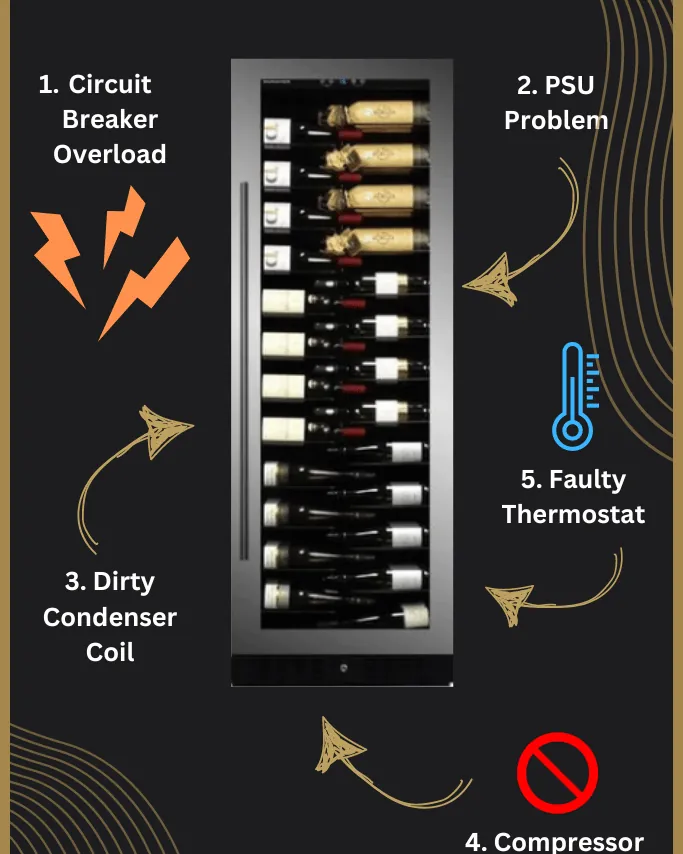
You can solve most cooling problems by checking the power supply and clearing the vents, which is the standard approach to edgestar wine cooler troubleshooting when the unit stops reaching your target temperature. If the appliance has power but doesn’t cool, the most common cause is a blocked airflow path or a dirty condenser coil. You should always ensure the unit is plugged into a dedicated outlet, as shared circuits often cause voltage drops that prevent the compressor from starting.
Why your wine cooler stops cooling
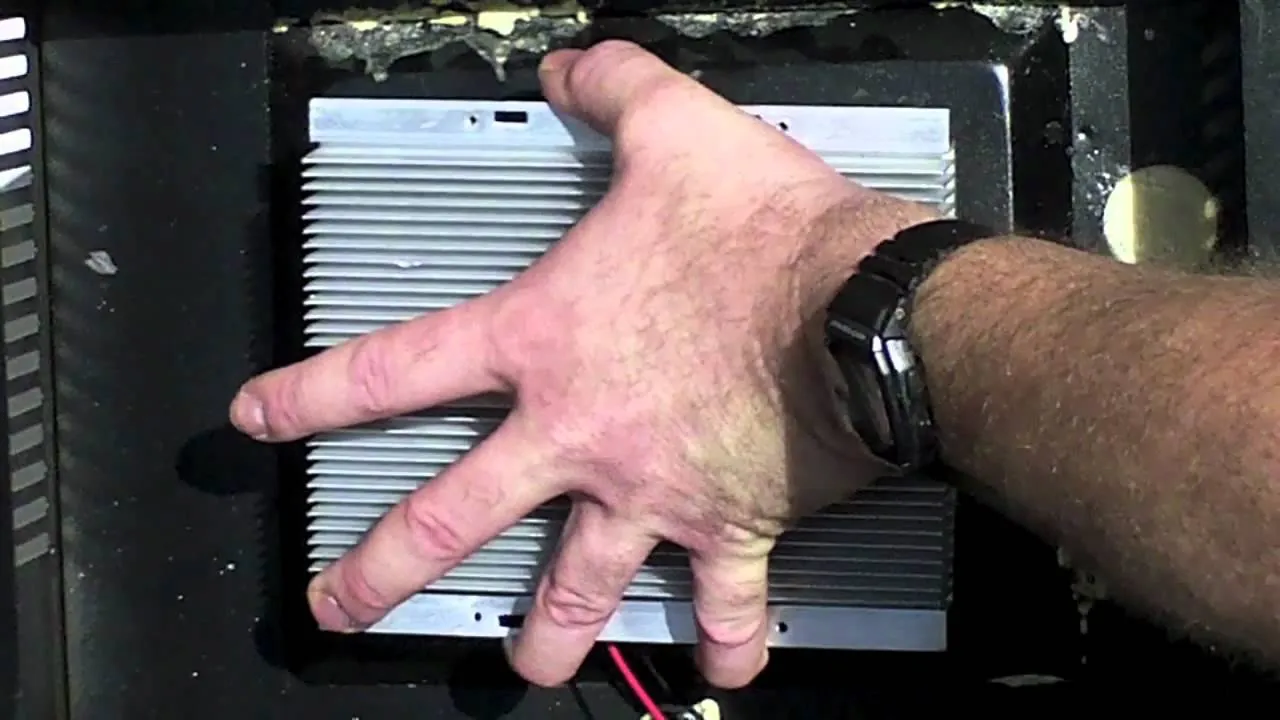
The primary reason for temperature instability in these units is poor air circulation around the cabinet. Wine coolers rely on heat exchange to pull warmth away from the bottles and move it into the room. If you place the unit against a wall or in a tight cupboard, the hot air gets trapped and recirculates. This forces the compressor to run constantly, which eventually leads to overheating or a total shutoff to protect the internal parts.
Another frequent cause is dust buildup on the condenser coils. These coils are usually located at the back or bottom of the unit. Over time, hair, dust, and pet dander create a thick blanket that acts as an insulator, keeping the heat inside the system instead of letting it escape. The Edgestar support guidelines note that keeping these coils clean is essential for efficiency and preventing the compressor from working harder than necessary.
Finally, consider the ambient environment. If you place your cooler in a garage or a room without climate control, the system will struggle during hot summer months. Most residential wine coolers are designed for indoor use within a specific temperature range. If the room is too hot, the unit can’t physically lower the temperature inside the cabinet to the level you want, regardless of the setting you choose.
Check the power and connection settings
Start by verifying the electrical connection, as loose plugs are a common reason for intermittent cooling. Unplug the unit for 60 seconds to reset the electronic thermostat, then plug it directly into a grounded wall outlet. Don’t use an extension cord or a power strip, as these can restrict the voltage the compressor needs. If the display is dark or the interior light doesn’t turn on, check your home circuit breaker to ensure the fuse hasn’t tripped.
Once you have power, look at the control panel. If the buttons are locked, you may not be able to adjust the temperature. Most models require you to hold the “Lock” button for several seconds to unlock the interface. If the display shows an error code like “E1” or “E2,” this indicates a sensor failure. In this case, you should stop trying to repair the unit yourself and contact a qualified appliance technician to replace the faulty temperature probe.
This fix is for users who have basic access to the rear of the unit. If you can’t move the cooler safely due to its weight or the location of the power cord, don’t attempt to reach behind it. If you suspect an electrical fault inside the sealed housing, you must call a professional, as opening the cabinet can void your warranty and pose an electric shock risk.
Clean the condenser and intake vents
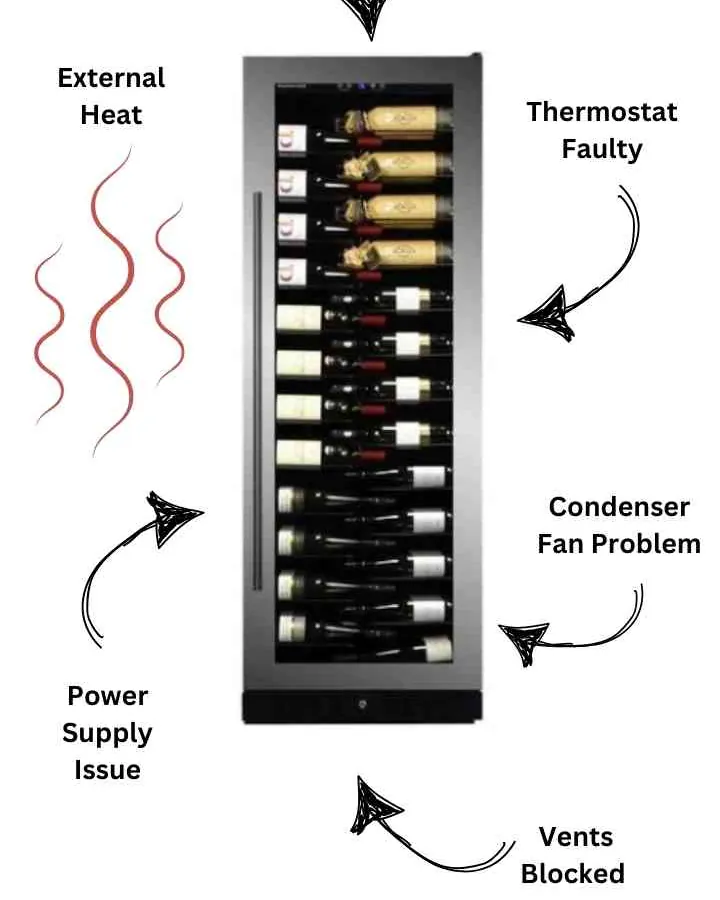
Cleaning the exterior vents and internal coils is the most effective way to restore cooling power. First, turn off the unit and unplug it from the wall. Use a soft brush or a vacuum cleaner with a hose attachment to remove all dust from the intake and exhaust vents on the front or back of the cabinet. Be gentle, as the fins on the condenser coils are thin and can bend if you press too hard.
After vacuuming, use a dry cloth to wipe away any remaining residue. Ensure there’s at least 4 to 6 inches of clearance on all sides of the unit to allow air to flow freely.
If you have been using the unit in a tight space, moving it to an open area will often show an immediate improvement in performance within 24 hours. If the coils are still warm to the touch after cleaning and providing extra space, the issue may be a mechanical failure of the fan motor.
This task is for anyone who can safely move the unit. If you have a built-in model, you may need a second person to help you slide it out of the cabinetry. If you find the fan isn’t spinning or is making a loud grinding noise, don’t attempt to lubricate or replace the motor yourself, as this requires specific tools and technical training.
Optimize the internal load and door seal
If the unit is running but the temperature remains high, you may have overloaded the shelves or damaged the door gasket. A wine cooler works best when air can move around the bottles; if you pack the racks too tightly, the cold air can’t circulate to the center of the cabinet. Try removing every second bottle to see if the temperature drops after a few hours.
Next, inspect the rubber door seal for gaps or cracks. A simple way to test the seal is to close the door on a piece of paper; if you can pull the paper out with almost no resistance, the gasket isn’t sealing properly.
You can often fix a light gap by gently warming the rubber with a hair dryer on a low setting to help it regain its shape. If the gasket is torn or brittle, it must be replaced to prevent cold air from leaking out.
This fix is ideal for high-traffic units where the door is opened frequently. If you find that the gasket is permanently deformed, you can order a replacement part from the manufacturer. If you aren’t comfortable fitting a new seal, a local handyman can usually complete the installation in under 30 minutes. Don’t use heavy adhesives to fix a seal, as this can damage the finish of the door frame.
Common Edgestar wine cooler troubleshooting mistakes
Using an extension cord: This limits the power flow to the compressor, which can cause the motor to burn out prematurely. Don’t use an extension cord under any circumstances, as they pose a fire risk and can cause voltage drops that damage the compressor. Anything thinner creates a voltage drop that fries the internal electronics.
Overloading the shelves: Blocking the airflow prevents cold air from reaching all bottles, leading to “hot spots” inside the cooler. Aim for 80 percent capacity to allow natural convection. If your labels are touching the back wall, you have gone too far.
Ignoring the door seal: A small gap lets cold air escape, forcing the compressor to run constantly and increasing your electricity bill. Test the seal by closing the door on a piece of paper. If it slides out with zero resistance, replace the gasket immediately.
Placing the unit near heat sources: Putting a cooler next to a stove or in direct sunlight makes it impossible to maintain a low temperature. Keep the unit at least four inches away from walls to ensure proper exhaust ventilation.
Cleaning with water: Never spray water directly onto the coils or electrical components. This causes short circuits or rust. Use a vacuum attachment for dust instead.
Proper care for your wine cooler
| If you’re doing this | Do this instead | Why |
|---|---|---|
| Placing unit in the sun | Move to a shaded area | Sunlight raises the internal temperature |
| Using an extension cord | Plug directly into the wall | Ensures stable voltage for the compressor |
| Ignoring dust on coils | Vacuum every 6 months | Dust prevents heat from escaping the system |
| Blocking the back vent | Provide 6 inches of space | Air needs to circulate to cool the motor |
| Leaving the door open | Close immediately after use | Keeps the cold air inside the cabinet |
Frequently Asked Questions
Can I fix a broken compressor myself?
No, you shouldn’t attempt to repair or replace a compressor yourself. It’s a sealed system containing refrigerant, and handling it requires specialized certification and tools. If the compressor isn’t running, check that the unit is getting power and that the temperature settings are correct. If these are fine, the compressor likely has a mechanical failure that requires a professional technician to diagnose and repair safely.
How long should a wine cooler last?
A well-maintained wine cooler can provide many years of service. This assumes the unit is placed in a climate-controlled room, cleaned regularly, and kept away from direct heat sources. If you notice the unit running constantly or making loud, unusual noises, it may be reaching the end of its service life. Regular maintenance helps you get the most value out of your appliance.
Why is there ice on the back wall?
Ice buildup on the back wall usually occurs because the door is opened too frequently or the gasket is leaking. When warm, humid air enters the cooler, it condenses on the cold evaporator plate and freezes. Ensure the door closes tightly and limit how often you open it to prevent this issue.
Is it safe to leave my wine cooler in a garage?
No, it’s generally not safe to leave a standard residential wine cooler in a garage unless the manufacturer specifically labels it for garage use. Garages experience extreme temperature swings that can cause the compressor to fail or the interior to become too warm. If the ambient temperature exceeds the rating in your owner’s manual, the unit will struggle to maintain the correct temperature for your wine.
What should I do if the display is flashing?
A flashing display often indicates that the temperature inside the unit has exceeded the set point for a long period. This can happen after a power outage or if you have recently loaded a large number of warm bottles into the cooler. If the display continues to flash after a few hours, check the door seal and make sure the vents aren’t blocked by dust or nearby furniture.
How often should I clean the condenser coils?
You should clean the condenser coils based on your specific usage, as recommended in your owner’s manual, to ensure the unit runs efficiently. Keeping these coils free of dust and pet hair is the single most important step you can take to prevent the compressor from overheating.
Conclusion
If you have tried these steps and the temperature doesn’t stabilize, the issue may be a failed thermostat or a refrigerant leak. These are complex repairs that require a professional with the right equipment to ensure the unit is safe to use. Contact the manufacturer’s customer service or a licensed appliance repair company to assess whether the repair cost is worth the remaining life of your cooler.