You can fix most cooling issues by checking the thermostat, cleaning the condenser coils, and ensuring the door seal is tight, but if your appliance isn’t cooling properly, performing electrolux wine cooler troubleshooting is the first step to identifying if the problem is a simple user error or a mechanical failure. Most temperature problems stem from a blocked air vent or a dirty coil that prevents heat from escaping. If the unit doesn’t respond to these basic adjustments, you’ll need to contact a professional.
Why your wine cooler isn’t cooling
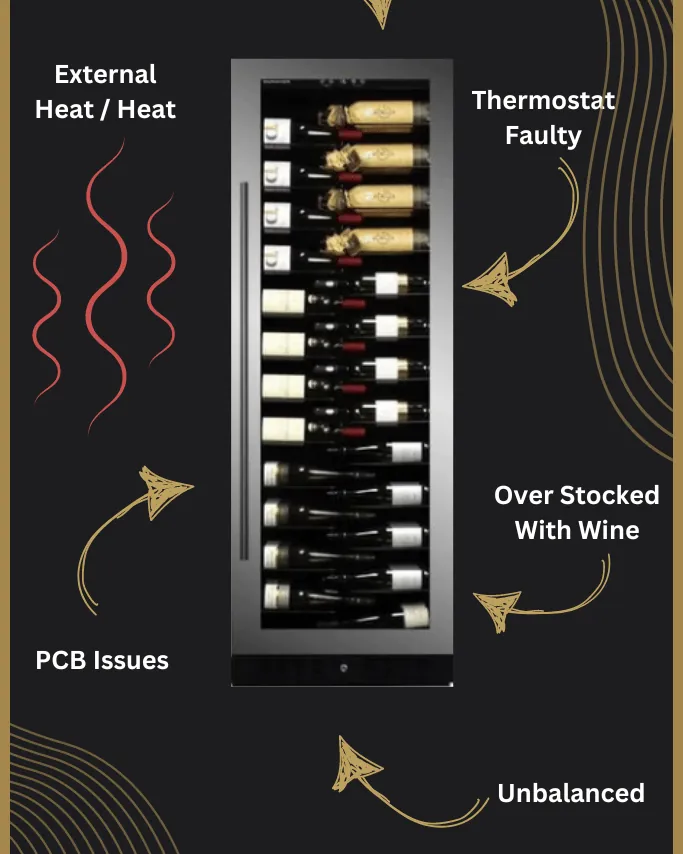
Temperature issues in wine coolers often happen because the unit can’t move heat away from the interior effectively. The most common cause is a thick layer of dust or debris on the condenser coils, which are located at the back or bottom of the unit.
These coils act like a radiator; if they’re clogged, the compressor works much harder and eventually stops cooling efficiently. You can check your owner’s manual to see the exact location of these coils for your specific model.
Another frequent cause is a poor door seal. If the rubber gasket around the door is cracked or loose, cold air escapes, and warm, humid air enters the interior. This forces the compressor to run constantly, which can lead to ice buildup on the cooling plate. If your unit is in a very hot room or in direct sunlight, it will also struggle to maintain a steady temperature.
Finally, internal air circulation is essential for a steady climate. If you pack the bottles too tightly against the back wall or cover the internal vents, the cold air can’t reach the bottles evenly. This creates “hot spots” inside the cooler.
If the unit makes a loud clicking or grinding noise, this is often a sign of a failing fan motor. If the internal light stays on even when the door is shut, the door switch may be faulty, keeping the interior warmer than it should be.
Adjust the thermostat and internal settings
This fix is for users who notice that the cooler is running but the temperature display doesn’t match the actual internal temperature. First, verify the current setting on the digital display. Many people accidentally bump the buttons or change the mode during cleaning. If the temperature is set correctly but the unit stays warm, check the surrounding environment. If the ambient temperature is higher than 90 degrees Fahrenheit, the cooler will struggle to maintain its set point.
To adjust the settings, locate the temperature control panel. Press the “up” or “down” arrows to set the desired temperature, usually between 45 and 60 degrees Fahrenheit for wine storage. After you change the setting, wait at least 24 hours for the internal air temperature to stabilize. Don’t keep opening the door to check the progress, as this releases the cold air and resets the stabilization clock.
If the unit has a “demo mode,” ensure this is turned off, as it allows the display to light up while the cooling system remains off. You can usually disable this by holding the power button or the light button for five seconds.
If the cooler still doesn’t reach the target temperature after 24 hours, the issue is likely a mechanical component like the compressor or the start relay. These parts require specialized tools and high-voltage safety precautions, so you must call a certified service technician if the problem persists.
Clear the airflow and condenser coils
This fix is for users whose wine cooler is running constantly but can’t maintain a low temperature. Start by unplugging the unit from the power outlet to ensure your safety. Move the cooler away from the wall to give yourself space to reach the back or bottom panels.
If you see a heavy buildup of dust or pet hair on the coils, use a soft-bristled vacuum attachment to gently remove the debris. Don’t use sharp tools, as you could easily puncture the refrigerant lines.
Next, check the interior of the unit for any items blocking the vents. Remove any bottles that are touching the back wall or the cooling fan. If you see frost or ice buildup on the back wall, leave the unit turned off with the door open for 24 hours to let it defrost completely. This is a simple task, but if the ice returns quickly, it indicates a failed door gasket or a faulty defrost sensor.
If you have a built-in model, ensure that the front kick plate isn’t blocked by dust or carpet. These units need a clear path for air to enter and exit at the bottom. If the fan isn’t spinning or sounds very loud, it’s likely blocked by debris. You can clear minor dust with canned air, but if the fan motor is physically damaged, it must be replaced by a professional.
Inspect the door gasket for leaks
This fix is for users who notice condensation on the glass or frost accumulating rapidly on the interior back wall. A failing door seal is a common culprit because it allows a constant stream of warm, moist air to enter the cold environment. To test the seal, take a standard sheet of paper and close the door on it. If you can pull the paper out with almost no resistance, the gasket is too loose and needs to be replaced.
If the gasket is merely dirty, clean it with a mixture of mild soap and warm water. Dry it completely before closing the door. If the gasket is visibly torn or has lost its shape, you’ll need to order a replacement part specific to your model number. You can find this number on the sticker inside the cabinet or on the back of the unit.
Replacing a door gasket is a task most homeowners can do, but it requires patience to ensure a perfect fit. Remove the old gasket by pulling it out of the channel, then press the new one into place firmly.
If the door itself is sagging or misaligned, the hinges may need adjustment. Use a screwdriver to tighten the hinge screws if they’re loose, but don’t force them, as this can strip the threads. If the door is bent, professional repair is the only way to restore the seal.
Electrolux wine cooler troubleshooting mistakes to avoid
Using a sharp object to scrape ice: This is dangerous because it can puncture the cooling lines, which will permanently break the unit and release refrigerant. If you see frost buildup, turn the unit off and let it thaw naturally for 24 hours. Using a knife or screwdriver risks an expensive repair that often exceeds the value of the cooler.
Overloading the shelves: Filling the cooler beyond its weight capacity can warp the shelves and block the internal air vents, causing uneven cooling. Keep bottles centered to ensure the weight is distributed across the support brackets.
Placing the unit in a garage: Wine coolers are designed for indoor climates. Placing them in garages where temperatures fluctuate outside a 55°F to 80°F range causes the compressor to fail prematurely.
Ignoring the power supply: Plugging the cooler into an extension cord causes voltage drops that prevent the compressor from starting. Always use a grounded wall outlet.
Blocking the ventilation space: Pushing the cooler flush against a wall prevents heat from escaping. Leave at least four inches of clearance on all sides to prevent the motor from overheating.
Prevent future cooling failures
If you’re currently struggling with temperature fluctuations, you can prevent these issues by following a simple maintenance schedule. Keeping the unit clean and well-ventilated is the best way to extend its life.
| If you’re doing this | Do this instead | Why |
|---|---|---|
| Leaving dust on coils | Vacuum coils every 6 months | Keeps heat transfer efficient |
| Blocking the back vents | Leave 3 inches of space | Allows air to circulate properly |
| Using an extension cord | Plug directly into the wall | Prevents voltage drops and fires |
| Ignoring door frost | Defrost for 24 hours | Prevents damage to the fan |
| Overloading the shelves | Follow the weight limit | Protects the door and airflow |
Frequently asked questions
How long should an electrolux wine cooler last?
Most wine coolers last between 7 and 10 years when kept in a climate-controlled indoor environment. This lifespan assumes you perform basic maintenance, such as cleaning the coils and checking the door seal twice a year. If kept in a garage, the compressor will likely fail much sooner.
Why is my wine cooler making a loud noise?
A loud noise usually indicates that the cooling fan is obstructed by dust, ice, or a loose part. Check if the fan blades are hitting anything or if there’s debris around the motor housing. If the noise persists after cleaning, contact a technician to prevent motor burnout.
Is it safe to leave a wine cooler on 24/7?
Yes, it’s safe and recommended to leave your wine cooler running constantly to maintain a stable environment for your wine. These appliances are designed to cycle on and off automatically based on the internal thermostat reading. Turning the unit off and on manually will cause stress on the compressor and prevent the wine from staying at a consistent temperature, which can affect its quality over time.
How much space does a wine cooler need?
A wine cooler typically needs at least 3 inches of clearance on the sides and back to allow heat to escape. If the unit is built into cabinetry, ensure there’s a ventilation path at the bottom or top of the enclosure. Without this space, the heat trapped behind the unit will cause the internal temperature to rise, forcing the compressor to run continuously and potentially leading to an early mechanical failure.
Can I fix a coolant leak myself?
No, you can’t fix a coolant leak yourself because it requires specialized equipment to handle refrigerant and requires a professional license. If you suspect a leak—often identified by a hissing sound or the unit running constantly without cooling—you must contact a certified appliance repair service immediately. Attempting to open the sealed cooling system is dangerous and will likely void your warranty while risking damage to your home or health.
Conclusion
Keeping your collection at the perfect temperature shouldn’t be a constant struggle. If you’ve tried these quick fixes and the unit still won’t chill, don’t wait for your wine to spoil. Reach out to a certified technician today so you can get back to enjoying your favorite bottles without any further worry.
Related guides