If you or a loved one use an Everflo oxygen concentrator, you probably rely on it every day. This device helps people with breathing problems stay active, independent, and safe at home. But what happens when your Everflo isn’t working right? Even the best machines can show errors or stop working sometimes. Knowing how to troubleshoot your oxygen concentrator can save you time, stress, and sometimes even an emergency call. In this guide, you’ll find step-by-step solutions, expert tips, and advice on when to call for help—all in clear, simple English.
Understanding The Everflo Oxygen Concentrator
The Everflo oxygen concentrator is a popular home oxygen machine, made by Philips Respironics. Unlike oxygen tanks, it doesn’t store oxygen but makes it from the air in your room. The device pulls in air, filters out nitrogen, and delivers nearly pure oxygen to you through a tube and nasal cannula.
Here are some key features:
- Lightweight: About 31 pounds (14 kg)
- Delivers up to 5 liters per minute (LPM) of oxygen
- Quiet operation (typically under 45 decibels)
- Low maintenance, with few parts to replace
The Everflo has several safety features. It uses lights and alarms to warn you if something is wrong. But many users are unsure what to do when those alarms go off. Let’s look at the most common problems and how to solve them.
Common Everflo Oxygen Concentrator Problems
Most Everflo issues fall into a few main categories. Understanding these can help you fix problems quickly.
- Machine won’t turn on
- Low oxygen flow
- No oxygen output
- Alarms or warning lights
- Unusual noises or vibrations
- Overheating
- Strange smells
- Water in tubing
Each of these problems has different possible causes and solutions. We’ll explore each one in detail.
Safety First: Before You Start Troubleshooting
Troubleshooting an oxygen concentrator is usually safe, but you should always:
- Unplug the machine before opening any covers or touching internal parts.
- Keep away from water while checking the device.
- Do not use tools unless instructed by a professional or the user manual.
- Avoid using oil, grease, or flammable materials near the machine.
- Never block vents or filters.
If you ever smell burning, see smoke, or feel heat coming from the device, unplug it right away and call your oxygen provider.
Machine Won’t Turn On
If your Everflo doesn’t power up, try these steps:
- Check the power source: Make sure the outlet is working. Plug in another device, like a lamp, to test. If it doesn’t work, try a different outlet.
- Inspect the power cord: Look for breaks, cuts, or bent prongs. A damaged cord can stop the machine from working.
- Check the power switch: Make sure it’s fully pressed to the “on” position.
- Reset the circuit breaker: Some Everflo models have a reset button on the back. If it’s popped out, press it back in.
If the machine still won’t turn on, don’t try to open it. There could be an internal electrical problem. Contact your equipment provider for help.
Low Oxygen Flow
If you notice weak airflow or the machine seems to be “struggling,” try these solutions:
- Check the flow meter: The ball inside the flow meter should match your prescribed setting. If it’s low, adjust the knob gently.
- Look for blockages: Kinks, twists, or pinched tubing can reduce flow. Straighten the tubes and check for leaks.
- Inspect the nasal cannula: Old or dirty cannulas can block oxygen. Replace them every two weeks, or sooner if they look worn.
- Check the air inlet filter: A clogged filter can slow air intake. Clean or replace the filter as instructed in your manual, usually every month.
Pro tip: Many people forget to check the humidifier bottle (if you use one). A loose or cracked lid can cause leaks and low flow. Make sure it’s tight and the bottle is not overfilled.
No Oxygen Output
If no air is coming from the cannula, but the machine is running:
- Check all connections: Tubing should be firmly attached to both the machine and the cannula.
- Replace the tubing: Sometimes internal blockages are invisible. Try a new set of tubing.
- Test without the humidifier: If you use a humidifier bottle, remove it and attach the tubing directly to the machine. If this works, the bottle or its lid may be faulty.
- Listen for machine sound: If the machine is silent, it may not be producing oxygen. Check for warning lights or alarms.
If none of these steps work, the machine may need professional repair.
Alarms And Warning Lights
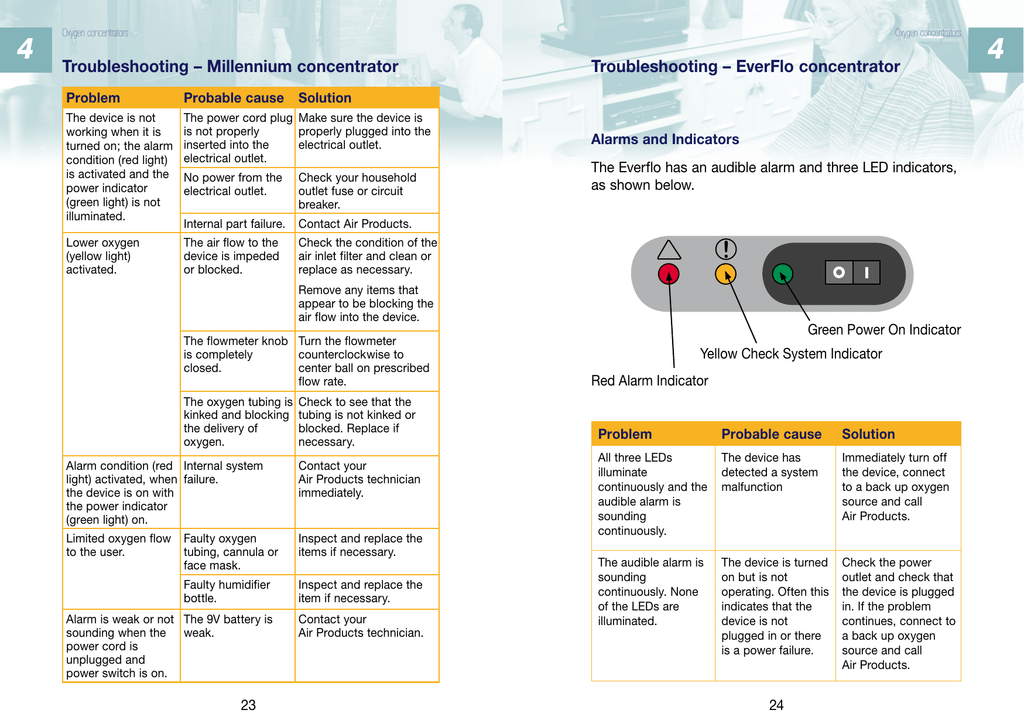
The Everflo uses light and sound alarms to show problems. Here’s what the main indicators mean and what you should do:
Power Alarm
Red power light and beeping means the machine isn’t getting electricity.
- Check your outlet and power cord.
- Try the reset switch.
Low Oxygen Purity Alarm
Yellow or orange light may mean the oxygen level is below 82%.
- Check your settings and flow meter.
- Make sure the filter is clean.
- If the light stays on for more than 15 minutes, call your provider.
General Alarm
Red light with steady or rapid beeping can mean several things, such as:
- Blocked air flow
- Overheating
- Internal failure
Unplug the device, check for blockages, and let it cool down. If the alarm continues, call for service.
Alarm Summary Table
Here’s a quick reference for Everflo’s main alarms and what they mean.
| Alarm/Light | Sound | Possible Cause | What to Do |
|---|---|---|---|
| Red Power Light | Beeping | No power | Check outlet & cord |
| Yellow/Orange Light | None or short beep | Low oxygen purity | Check filter, call provider |
| Red Light + Beep | Continuous | Serious fault | Unplug, call for service |
Unusual Noises Or Vibrations
The Everflo is designed to be quiet. If you notice new sounds, investigate:
- Rattling: May mean loose panels or screws. Check for anything touching or vibrating against the machine.
- Grinding or buzzing: Could signal a failing compressor or internal part. Turn off and call for service.
- Hissing: Often caused by leaks at tubing connections or humidifier bottle.
If tightening connections doesn’t help, stop using the device and contact your provider.
Overheating
Oxygen concentrators produce some heat, but they shouldn’t get hot to the touch. Overheating can shorten the machine’s life or create a fire hazard.
Signs of overheating:
- Hot air blowing from vents
- Warm plastic casing
- Warning light or alarm
How to prevent or fix it:
- Move the machine: Place it in an open area, at least 6 inches (15 cm) from walls or furniture.
- Clean the filter: Dust and dirt block airflow, causing heat buildup.
- Reduce room temperature: Avoid running the device in rooms above 85°F (29°C).
- Never cover the vents: Even a towel or curtain can block cooling.
If the machine shuts off or alarms from heat, let it cool for 30 minutes before restarting.
Strange Smells
You should never smell burning, chemical, or “hot” odors from your Everflo. Common safe smells include faint plastic or filtered air. But if you notice:
- Burning or smoky smell: Unplug immediately. There could be an electrical problem.
- Chemical odor: Could mean internal parts are damaged.
- Mold or musty smell: This often comes from the humidifier bottle or old tubing. Clean or replace these parts.
Never ignore strong or unusual smells. Call your provider if you’re unsure.

Water In Tubing
Some users see water droplets in their oxygen tubing. While a little condensation is normal, too much water can cause blockages or discomfort.
Causes:
- Room is humid or warm
- Humidifier bottle overfilled
- Tubing is too long or coiled
How to fix:
- Empty and refill the humidifier: Fill only to the mark.
- Use shorter tubing: The longer the tube, the more water can collect.
- Keep tubing straight: Avoid loops and kinks where water collects.
- Drain tubing daily: Disconnect and let it air dry.
If water continues, talk to your supplier about heated tubing or anti-condensation devices.
Cleaning And Maintenance Tips
Keeping your Everflo clean helps prevent many problems. Here’s a simple maintenance schedule:
- Air inlet filter: Clean every month. Replace every 6 months or as needed.
- Cabinet/exterior: Wipe with a damp cloth weekly. Avoid harsh chemicals.
- Nasal cannula and tubing: Replace every 2 weeks.
- Humidifier bottle: Wash daily with warm, soapy water. Rinse and air dry.
Never spray cleaners directly on the machine, and do not submerge any part in water.
When To Call For Professional Help
Some problems need an expert. Call your oxygen provider if you notice:
- No oxygen output, even after basic checks
- Machine does not turn on or keeps shutting off
- Warning lights or alarms that won’t stop
- Burning smells, smoke, or obvious damage
- Persistent low oxygen purity alarm
Never try to open or repair the inside of the device yourself. This could void your warranty and create safety risks.
Comparing Everflo To Other Oxygen Concentrators
Wondering how Everflo stacks up against other home oxygen concentrators? Here’s a side-by-side comparison with two popular models.
| Feature | Everflo | Invacare Platinum 5 | Drive DeVilbiss 525DS |
|---|---|---|---|
| Weight | 31 lbs (14 kg) | 52 lbs (23.6 kg) | 36 lbs (16.3 kg) |
| Noise Level | < 45 dB | 48 dB | 48 dB |
| Flow Rate | 0.5-5 LPM | 0.5-5 LPM | 0.5-5 LPM |
| Oxygen Purity | 93% ± 3% | 87-96% | 87-96% |
| Power Consumption | ~350W | ~350W | ~320W |
Everflo is lighter and quieter than most competitors, with similar oxygen delivery. This makes it a favorite for home use, especially for people who want a machine that’s easy to move and less noisy.
Non-obvious Troubleshooting Insights
Many new users overlook these important details:
- Altitude matters: The Everflo works best below 7,500 feet (2,286 meters). At higher altitudes, oxygen purity drops. If you live in the mountains, ask your provider to check the output.
- Power surges: Sudden power cuts or surges can trip the Everflo’s safety systems. If your area has unreliable power, consider a surge protector or backup battery.
Few people realize that a dusty room or blocked air vent can make the device work harder and wear out sooner. Always keep the area around your oxygen concentrator clean and uncluttered.
How To Check Oxygen Purity At Home
The Everflo has internal sensors, but if you want extra peace of mind, you can check oxygen purity yourself. Some providers offer oxygen analyzers—small devices that measure the oxygen coming from your machine.
Steps:
- Attach the analyzer to your tubing.
- Run the concentrator for 10-15 minutes before testing.
- Compare the reading to your device’s standard (usually 93% ± 3%).
If you see a much lower number, contact your supplier.

Common User Mistakes And How To Avoid Them
Many issues with oxygen concentrators come from simple mistakes. Here are some to watch for:
- Setting the wrong flow rate: Always follow your doctor’s prescription. Too high or too low can be dangerous.
- Using old or dirty tubing: Replace all parts on schedule to avoid blockages.
- Ignoring warning lights: Don’t assume alarms are “false.” Always check what they mean.
- Placing machine in a closet or under a table: This blocks airflow and causes overheating.
If you’re unsure about anything, call your equipment provider—they’re there to help.
Quick Reference Troubleshooting Table
Here’s a handy guide to common Everflo issues and their likely solutions.
| Problem | Possible Cause | Solution |
|---|---|---|
| No power | Outlet, cord, switch | Check outlet, reset, call provider |
| Low flow | Kinked tubing, dirty filter | Straighten tubing, clean/replace filter |
| No oxygen | Loose connections, faulty humidifier | Reconnect, test without humidifier |
| Red/yellow light | Low purity, internal fault | Check filter, call for service |
| Strange noise | Loose part, internal failure | Secure parts, call provider |
| Overheating | Poor airflow, dirty filter | Move machine, clean filter |
Tips For Extending The Life Of Your Everflo
Taking care of your concentrator isn’t just about solving problems. Good habits can help you avoid them.
- Keep it in a cool, open space: Avoid direct sunlight and crowded corners.
- Follow a regular cleaning schedule: Mark it on your calendar so you don’t forget.
- Use a surge protector: Protects against sudden power changes.
- Check for software updates: Some newer Everflo models can have their software updated by a technician.
What To Do In An Emergency
If your Everflo stops working and you need oxygen urgently:
- Switch to a backup supply: Many users have a portable oxygen tank for emergencies.
- Call your oxygen provider: Report the problem and request a replacement.
- If you feel short of breath or dizzy: Call 911 or go to the hospital.
Always keep your provider’s emergency number handy.
Helpful Resources
If you need more detailed instructions or want to see the official manual, visit the Philips Respironics website or ask your provider for a printed copy. For general information on home oxygen therapy, the American Lung Association is a trusted source: American Lung Association.
Frequently Asked Questions
What Should I Do If My Everflo Concentrator Keeps Beeping?
Constant beeping usually means a serious problem, such as power loss, low oxygen purity, or internal failure. Check the power cord and filter, and make sure there are no blockages. If the beeping continues, unplug the device and contact your oxygen provider immediately.
How Often Should I Clean The Filters?
The air inlet filter should be cleaned every month and replaced every 6 months or as needed. More frequent cleaning may be necessary if you live in a dusty area. Always follow the instructions in your user manual.
Can I Use My Everflo Oxygen Concentrator While Sleeping?
Yes, the Everflo is safe for overnight use if your doctor prescribed it. Make sure the tubing is not twisted or kinked, and keep the machine on a stable, open surface. If you notice alarms or low flow during the night, check the device or call your provider.
Is It Normal For Water To Collect In The Oxygen Tubing?
Small amounts of condensation can occur, especially if you use a humidifier or have long tubing. Too much water can block airflow and cause discomfort. Use shorter tubing, keep it straight, and empty the humidifier to the correct level to reduce water buildup.
What Does The Yellow Or Orange Light Mean On My Everflo?
A yellow or orange light signals that oxygen purity is lower than normal (usually below 82%). Check the air filter, tubing, and flow meter. If the light stays on for more than 15 minutes after starting, contact your supplier for service.
conclusion
Keeping your Everflo oxygen concentrator in good working order means you can breathe easy and live confidently. With the right troubleshooting steps and regular care, you’ll get the most from your machine and avoid unnecessary worry. If you have questions or run into problems you can’t fix, don’t hesitate to reach out to your oxygen provider—they’re your best partner in staying healthy at home.