
Most Fellow kettle problems stop when you reset the base, dry the electrical pins, or scrub mineral scale off the internal temperature sensor. Start your fellow kettle troubleshooting by unplugging the base from the wall for 10 minutes to clear the circuit board’s memory. The single most common cause of sudden shutoffs and display errors is water sitting in the electrical connector on top of the base.
Why your Fellow kettle stops working
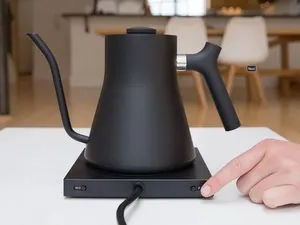
The main cause of sudden failure is moisture in the base connector. Pouring water carelessly or filling the kettle too close to the rim allows liquid to run down the outside shell.
When that water pools in the center ring of the heating base, the unit trips its internal safety switch to prevent a short circuit. If your kettle fails to turn on after an accidental spill, unplug it and use a hairdryer on a cool setting to clear the base for at least two hours.
Another common cause is heavy mineral buildup across the bottom floor. Tap water contains dissolved calcium and magnesium that bake into a hard shell over the heating element and the tiny raised temperature sensor.
When scale blankets that sensor, the kettle can’t read heat changes properly. It thinks the chamber is dry and cuts the power immediately. You can test for this by checking if the base is coated in a chalky white film; if so, a soak in a 50/50 vinegar and water solution usually restores function.
Finally, internal electronics fail over time. The kettle uses a thin thermal fuse and a printed circuit board to regulate exact brewing temperatures. Voltage spikes from a wall outlet or repeated boil-dry incidents burn out these sensitive parts. If your kettle stays totally dark on a working wall outlet, the internal thermal fuse has likely blown to prevent a house fire. At this stage, the unit is usually non-repairable and requires replacement.
Dry and clean the electrical base
This fix is for kettles that flicker, show an error code, or click off after two seconds of heating. It resets the safety switches without opening any parts. You only need a dry microfiber towel and a standard wall outlet.
First, unplug the power cord from the wall. Lift the kettle body off the base and check the brass connector rings underneath the pot. Look closely inside the matching circular socket on the base plate. If you see even a single drop of water, moisture is tripping the electrical sensor.
Wipe the kettle bottom thoroughly with the dry towel. Next, take a dry cotton swab and gently clean the circular groove in the base socket. Leave the base unplugged and upside down on a dish rack for two full hours to let hidden moisture evaporate.
Don’t use a hair dryer to speed this up. The intense heat can warp the plastic housing or melt the delicate internal spring contacts. Patience is the only way to ensure the sensor resets correctly.
Plug the base directly into a wall outlet rather than an extension cord or surge protector. Extension cords often have high resistance, which mimics a short circuit for sensitive smart kettles. Set the kettle back down firmly. You’ll know it worked when the screen stays lit without flickering and the kettle heats past 120°F without clicking off. If the error persists, the internal thermal fuse has likely blown, which requires a full unit replacement.
Descale the heating chamber and sensor
This fix is for kettles that make loud clicking noises, take too long to reach boiling, or shut down well before the target temperature. It clears hard mineral crust from the internal metal probe. White distilled vinegar or citric acid powder works best here.
Mineral scale acts like an insulating jacket over the base. The heating element gets blazing hot, but the heat can’t transfer into the liquid quickly enough. The kettle senses dangerous overheating and turns off early.
Pour 1 cup of white vinegar and 1 cup of fresh water directly into the kettle. If you use citric acid, mix 1 tablespoon with 2 cups of water. Let the cold mixture soak for 30 minutes.
Pour the liquid out and inspect the bottom. If you see remaining white spots, scrub gently with a soft sponge. Never use steel wool or harsh scouring pads. Rinse the inside three times with fresh tap water. You can review the cleaning process in the Fellow Stagg EKG safety instructions to confirm approved cleaning agents. You’ll know it worked when the kettle heats quietly and hits your set number smoothly.
Reset the electronics and safety switches
This fix is for kettles with frozen LCD displays, erratic temperature readouts, or buttons that refuse to respond. Modern electric kettles run basic firmware that can freeze during electrical surges or rapid dial turns.
Start by switching the kettle off using the main power button or dial. Turn the kettle around and locate the small toggle switches on the back of the base. These switches control the temperature scale (Fahrenheit or Celsius) and the 60-minute temperature hold mode.
Flip both switches back and forth three times, then set them firmly into your preferred positions. Loose toggle switches can sit halfway between contacts, which confuses the processor and locks the display screen.
Next, perform a hard power cycle. Unplug the thick power cord from the wall. Press and hold the main control button down for 15 seconds while the unit is completely unplugged to drain residual power from the base. Leave it alone for a full 15 minutes.
Plug the cord directly back into the wall outlet. If your base turns on, set your temperature and start a test heat with 16 ounces of cool water. However, if the screen remains black, the problem sits inside the sealed electronics. Never open the plastic base housing yourself, because a mains-powered base contains live wiring that can deliver a severe shock. When a reset fails, contact a certified small-appliance technician or reach out to the brand for warranty replacement.
Bad habits that ruin electric kettles
Many owners try quick shortcuts when an expensive pour-over kettle stops working properly. These common internet tricks actually destroy the heating elements and void your warranty.
Don’t soak the kettle body in a sink full of soapy water. Water will leak into the base cavity and permanently ruin the heating coils. If you accidentally submerge the base, unplug it immediately and contact the manufacturer, as the unit may no longer be safe to operate.
Never scrub the internal base plate with wire brushes or metal scouring pads. These scratch off the protective non-stick coating and cause rapid rusting. If you see white mineral buildup, use a mixture of one part white vinegar to three parts water instead.
Don’t turn the kettle on when it’s empty to “burn off” mineral smells. Heating an empty chamber bends the bottom plate and trips the safety fuse permanently. This mistake costs you the entire unit, as most fuses are soldered directly to the motherboard.
Avoid using outdoor extension cords or loose power strips. These starve the heating element of power and cause early board failure. Always plug the device directly into a wall outlet, as electrical testing and repairs are jobs for a qualified technician.
Never run baking soda through a heating cycle. Alkaline powders leave a heavy chalky film on the probe that makes temperature readings inaccurate. Use citric acid crystals if you need a deep, food-safe clean.
How to stop kettle failures permanently
Preventing future electronic and heating faults comes down to proper daily handling and water management. Most kettle breakdowns happen because of everyday user habits rather than defective manufacturing parts.
| If you’re doing this | Do this instead | Why |
|---|---|---|
| Leaving leftover water in the pot overnight | Empty the kettle completely after your morning brew | Standing water speeds up scale build-up and slowly corrodes the bottom seals |
| Filling the pot directly under a rushing sink faucet | Pour water inside using a separate clean pitcher | Splashing water runs down the outer shell and shorts the electrical connector |
| Using hard, unsoftened well or tap water | Brew with filtered water or a simple mineral recipe | High mineral content insulates the sensor and triggers early boil-dry shutoffs |
| Rinsing the kettle base plate under running tap water | Wipe the exterior base using a barely damp cloth | Water easily bypasses the plastic rim and destroys the circuit board |
| Leaving the hold mode switch on all day | Turn the hold toggle off when you finish your coffee | Continuous heating cooks the internal electronics and shortens element life |
Frequently asked questions
Can I repair a dead Fellow kettle base myself?
No, you shouldn’t open the kettle base yourself. The base contains high-voltage mains wiring that presents a severe risk of electric shock even when unplugged. Opening the base also breaks the watertight seal and voids your warranty. If simple resets and drying steps don’t restore power, contact the manufacturer or a licensed small-appliance repair shop.
Why does my kettle display an error code?
An error code usually appears because the internal temperature sensor detects sudden overheating. This happens when you start a heating cycle without enough water in the pot, or when heavy mineral scale blocks heat transfer. Empty the pot, let it cool completely for 15 minutes, descale the chamber, and refill with fresh water.
How often should I descale an electric kettle?
You should descale your kettle based on your frequency of use and the hardness of your local water supply; consult your owner’s manual for specific guidance. Regular descaling prevents mineral crust from blinding the heat sensor, which stops sudden shutoffs and keeps your water heating at normal speed.
Is it safe to leave water inside the kettle?
No, leaving standing water inside the kettle between uses isn’t a safe long-term habit. Stagnant water encourages rapid mineral scale formation along the base element and around the internal silicone seal. Over time, mineral scale buildup can interfere with the proper seating of components, potentially leading to leaks.
What happens if I boil vinegar in the kettle?
Boiling a vinegar solution can produce strong odors; ensure the area is well-ventilated during the descaling process. Always use diluted vinegar or room-temperature citric acid mixtures, and let them soak cold rather than bringing them to a boil.
Conclusion
Your kettle is a precise piece of counter equipment that needs clean water and dry electrical contacts to operate safely. If you clear the scale and keep the base completely dry, the unit will maintain stable brewing temperatures for thousands of mornings. When a kettle refuses to show signs of life after a thorough dry-out and power reset, stop troubleshooting and let a qualified professional handle the internal electrical repairs.