You can resolve most performance issues with your ge water softener gxsh40v troubleshooting by checking the salt level, the bypass valve position, and the brine line connection. The most common cause of hard water is a salt bridge, which creates a gap between the salt and the water below. If you notice your unit isn’t softening correctly, start by inspecting the salt tank for these obstructions. For further guidance on specific error codes, you should check the GE Appliances product support page to see the official manual for your model.
Common reasons for softener failure
The primary reason your system stops working is often related to the salt supply or the water flow. When the salt forms a hard crust at the top, the water can’t reach the resin beads to undergo the ion exchange process. This leaves you with hard water despite the unit appearing to run its cycle.
Another frequent cause involves the bypass valve. If this valve was bumped or accidentally switched to the bypass position, water flows directly into your home pipes without ever touching the resin inside the unit. You should always ensure the valve is set to the service position before you assume a mechanical failure of the internal motor or timer.
Finally, air leaks in the brine line can prevent the unit from drawing salt water into the resin tank. If the O-rings are worn or the tube is cracked, the system can’t create the vacuum needed to recharge the resin. This results in the unit running through its cycles but failing to actually clean the beads, eventually leading to a complete loss of soft water.
Check the salt tank and brine levels
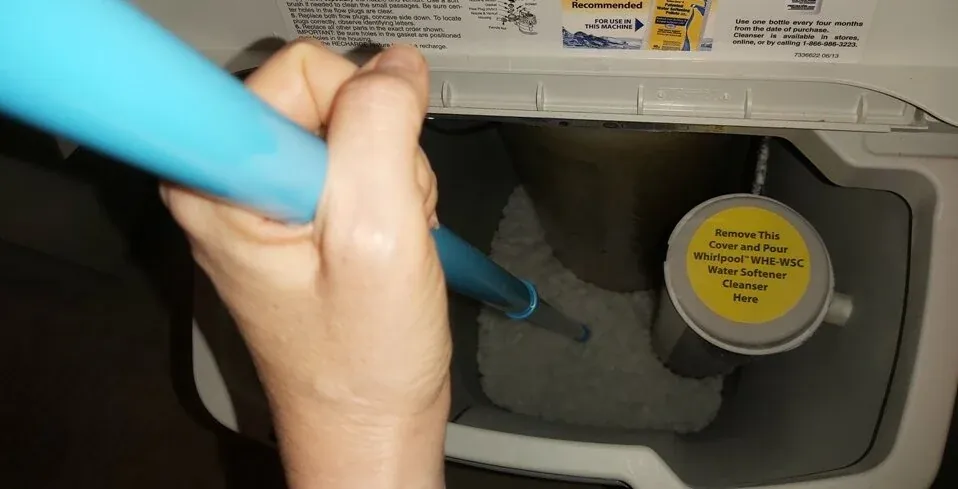
If you have hard water, first check if there’s a salt bridge inside your tank. Use a broom handle or a similar long, blunt tool to gently push down on the salt surface. If the tool hits a hard layer that doesn’t move, you have a bridge; break it up carefully and then initiate a manual recharge cycle.
Next, verify that the salt level is at least three inches above the water level in the brine tank. If the salt is too low, the water can’t dissolve enough mineral to clean the resin properly. Conversely, if you see standing water covering the salt, it may indicate a clog in the drain line or a failure of the float switch to shut off the water.
This fix is intended for users who can safely reach and inspect their salt tank. If you suspect an internal electrical fault or if the display shows an error code that doesn’t clear after a power cycle, don’t attempt to open the control head. Contact a licensed plumber or a certified water technician, as these systems involve pressurized water and electrical components that can be dangerous to handle without training.
Inspect the bypass valve and drain line
The bypass valve is the easiest component to verify when you lose soft water pressure or quality. Locate the valve on the back of your unit where the water lines connect. If the handles are pointing toward each other or in the bypass position, turn them back to the service position so that water is forced through the softener tank.
Check the drain line for any kinks, pinches, or clogs that might prevent water from leaving the system during the regeneration cycle. If the drain hose is obstructed, the unit can’t flush out the brine, and the resin will become saturated with minerals. Ensure the hose isn’t submerged in a floor drain or standing water, as this can cause a siphon effect that disrupts the cycle.
If you find the hose is clear but the unit still doesn’t drain, the issue likely lies within the internal valve assembly. This part manages the water flow through the different stages of cleaning. Because this assembly is complex and requires specialized tools to service, it’s best to call a professional if you confirm the drain is clear but no water exits during the regeneration phase.
Adjust settings for water hardness
If your water remains hard, you may need to adjust the hardness setting on the controller to match your supply. The system requires an accurate grains-per-gallon measurement to calculate the correct regeneration frequency. You can determine these levels by checking a municipal water report or using a test kit.
Once you have the correct hardness number, input it into the controller settings. If the number is set too low, the unit won’t regenerate often enough, and the resin will become exhausted before the next cycle. If you live in an area with extremely high iron content, the unit may require more frequent regeneration than the default settings suggest to prevent the resin from fouling.
This adjustment is straightforward for most users but requires a basic understanding of your home’s water quality. If you’re unsure about your water hardness, don’t guess, as incorrect settings can lead to premature resin failure. Consult a professional water treatment specialist if you can’t determine your baseline hardness, as they can perform a professional test to provide the exact value your system requires.
Common mistakes during maintenance
Using the wrong type of salt, such as block salt in a unit designed for pellets, causes the brine tank to clog or bridge. Block salt lacks the surface area required for consistent dissolution, leading to a hardened mass that prevents water flow.
Adding too much salt at once makes it harder to detect a bridge and causes the salt to cake against the tank walls. Keep the salt level at least four inches below the top of the brine tank to prevent this compaction.
Forgetting to reset the timer after a power outage causes the unit to regenerate at the wrong time or not at all. If your clock flashes, the system can’t trigger its cleaning cycle, which will eventually lead to hard water entering your home.
Ignoring brine line connections is a common error. Even a tiny air leak prevents the vacuum needed to draw brine into the resin bed. If your unit runs but the salt level never drops, check these fittings first.
Attempting to lubricate internal gears with petroleum-based grease damages plastic components and voids your warranty. Always use food-grade silicone grease to ensure longevity.
How to manage your water softener
| If you’re doing this | Do this instead | Why |
|---|---|---|
| Ignoring salt levels | Check salt once a month | Prevents salt bridges and hard water |
| Forcing the bypass valve | Move handles firmly but slowly | Protects the valve seals from tearing |
| Adding salt to a full tank | Keep salt below the fill line | Allows for easier inspection of bridges |
| Using unapproved salt | Use standard solar or pellet salt | Ensures consistent dissolving rates |
| Ignoring error codes | Note the code and power cycle | Helps technicians diagnose the fault |
Check your salt level whenever you refill the brine tank. If the salt sits higher than the water line, you risk a salt bridge, which creates a hollow space where salt stops dissolving. This leaves your home with hard water despite a full tank.
When inspecting the tank, look for a crusty layer at the top. If you see one, gently break it with a broom handle. Never force the bypass valve if it feels stuck. Mineral buildup often jams the internal O-rings, and applying sudden pressure will tear those seals, leading to costly leaks.
If your system shows an error code, note the specific number before unplugging the unit. A power cycle clears the memory, but it also erases the diagnostic data your technician needs. If the code persists after a reboot, the resin bed may be exhausted or the control head motor is failing.
Frequently asked questions
Can I fix a ge water softener gxsh40v error code myself?
You can often clear an error code by unplugging the unit for 30 seconds to perform a hard reset. This clears the control board’s temporary memory. If the code returns immediately, it indicates a persistent mechanical or electrical issue requiring professional repair.
How long does the resin last in a water softener?
Resin beads typically last between 10 and 15 years, depending on water quality and regeneration frequency. High levels of iron or chlorine can shorten this lifespan significantly. You’ll know the resin is exhausted when the system regenerates but the water remains hard.
Why is there standing water in my salt tank?
A small amount of water in the salt tank is normal, but it shouldn’t cover the salt completely. A rising water level usually indicates a blocked drain line or a faulty brine valve. Check your drain hose for obstructions or kinks first.
Is it safe to use a water softener with a septic system?
It’s safe for most septic systems if your softener is tuned to use the minimum salt necessary. Modern, high-efficiency models are designed to minimize the impact of salt discharge on bacterial balance. Ensure your drain line isn’t dumping excessive backwash water into the system.
How often should I check for salt bridges?
Check for salt bridges once a month or whenever you add a new bag of salt. Probe the salt bed with a blunt tool before filling to ensure the salt is loose. Breaking a bridge early prevents the unit from running empty and causing hard water.
What happens if I use the wrong salt?
Use high-quality solar salt or pellets specifically labeled for water softeners to prevent brine tank clogs. Impurities from incorrect salt types can coat resin beads and reduce their effectiveness. Always avoid block salt or salt with excessive additives to protect your system’s internal components.
Conclusion
If your system still isn’t performing as expected after these checks, don’t hesitate to reach out to a local plumber for professional help. They’ll be able to spot hidden issues you might’ve missed. Keeping your unit in top shape ensures you’ll always have soft, clean water flowing throughout your home.
Related guides