The Dometic RM1350SLMX is a high-capacity, four-door absorption refrigerator often found in large luxury motorhomes and fifth-wheel trailers. When you’re looking for dometic rm1350slmx troubleshooting help, you’re likely dealing with cooling efficiency issues, error codes on the eyebrow control panel, or power supply failures. Because this unit relies on a heat-driven chemical cycle rather than a traditional compressor, it’s sensitive to environmental conditions and levelness. Repair costs for this specific model typically range from $150 to $850 depending on whether the issue requires a simple reset, a new thermistor, or a complete replacement of the cooling unit. Understanding the specific fault codes and power requirements can save significant time and money during the maintenance process.
Key Takeaways
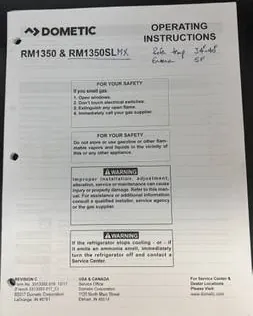
- Always verify that the RV is perfectly level, as absorption units rely on gravity for the internal fluid cycle.
- Clear any error codes by cycling the power switch off and on or by checking the status of the thermal fuse.
- Ensure the exterior vents are free of debris, wasp nests, or bird nests to maintain proper airflow across the coils.
Safety: Inside a mains-powered machine, the parts behind the outer cover can hold a dangerous electrical charge even after it has been unplugged — that’s why they sit behind a cover. Opening the housing, or testing or replacing anything behind it, is a job for a qualified technician, never a home repair.
Why is my refrigerator not cooling?
Absorption refrigerators function by heating a solution of ammonia, water, and hydrogen. If the heat source is blocked or the cooling fins are obstructed, the internal temperature will rise quickly. The RM1350SLMX is particularly prone to cooling loss if the ventilation path is blocked or if the ambient temperature exceeds the unit’s operating capacity.
Check the Cooling Unit
If the refrigerator is running but not cooling, check the back of the unit. A failing cooling unit often exhibits signs of yellow dust or residue near the burner or boiler tubes, which indicates a leak. If you see signs of a leak, the cooling unit is non-repairable and requires a full replacement.
Inspect the Thermistor
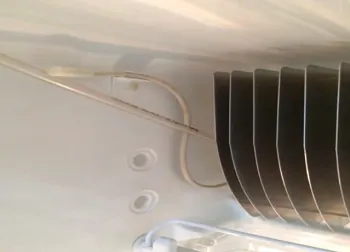
The thermistor is the sensor that monitors the temperature inside the fridge cabinet. If it becomes disconnected or faulty, the control board may fail to signal the cooling cycle to start. Ensure the thermistor is securely clipped to the fin inside the refrigerator compartment.
Dometic RM1350SLMX troubleshooting error codes
The RM1350SLMX uses an LED display to communicate faults. Understanding these codes is the first step in successful troubleshooting.
| Error Code | Meaning | Immediate Action |
|---|---|---|
| E0 | Sensor failure | Check thermistor connection |
| E1 | AC power failure | Check shore power and breaker |
| E2 | Gas ignition failure | Check propane level and valve |
| E3 | DC voltage low | Check battery and converter |
| E4 | Cooling unit error | Reset board and check fans |
How to perform a hard reset
Troubleshooting the propane system
When the unit fails to operate on propane, the system usually enters an “E2” error state. This typically happens because air is trapped in the gas lines or the burner assembly is dirty.
- Propane Supply: Verify that the main tank valve is fully open and that other gas appliances, such as the stove, are functioning.
- Burner Assembly: Inspect the burner tube for spider webs or rust flakes. These can disrupt the flame pattern, causing the igniter to fail to sense a flame.
- Flame Sensor: The sensor must be positioned directly in the flame path. If it’s bent or corroded, it won’t signal the board to stop the ignition sequence.
Is my 12V power supply adequate?
Electrical component testing steps
Testing Heating Elements
- Locate the heating elements connected to the control board.
- Disconnect the leads for the AC heaters.
- Measure the resistance between the two leads.
- If the meter shows an open circuit (OL), the heating element is burnt out and must be replaced.
Pro Tip: Always record the wire positions before disconnecting them, as the RM1350SLMX has multiple heating elements that are easily confused during reinstallation.
Inspecting the exterior ventilation
The RM1350SLMX requires specific airflow to function. If the roof vent or side wall vents are obstructed, heat will build up in the enclosure, preventing the refrigerator from cooling properly. Ensure that the baffles are correctly installed to direct air across the condenser coils. If you notice a high-pitched whistling sound during operation, it may indicate an obstruction in the flue that’s forcing exhaust gas back into the burner area.
Cleaning the flue and burner
The flue is the chimney that carries heat away from the boiler. Over time, soot builds up inside the flue, which acts as an insulator and prevents the heat from reaching the cooling solution.
- Flue Cleaning: Remove the burner cover and use a specialized flue brush to dislodge soot. Use a vacuum to catch the debris falling from the top of the flue.
- Burner Cleaning: Use compressed air to blow out the burner tube. Never use a wire brush or metal object to clean the orifice, as this can enlarge the opening and cause an improper gas-to-air mixture.
When to call a technician
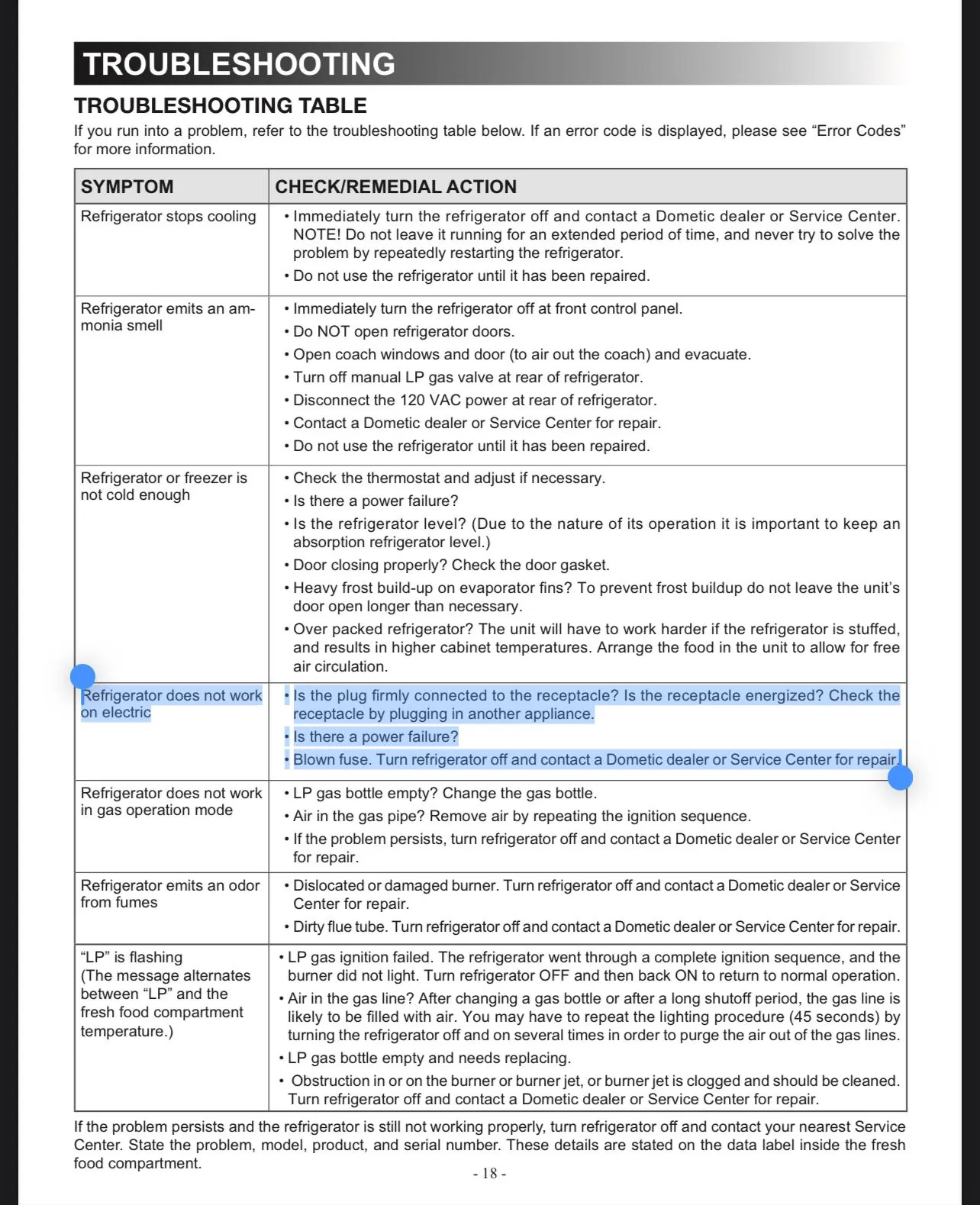
While many troubleshooting tasks can be performed by the RV owner, certain issues require professional intervention. If the smell of ammonia is present, turn off the refrigerator immediately and evacuate the area. This indicates a ruptured cooling unit, which poses a fire risk and isn’t a DIY repair. Additionally, if the circuit board shows signs of scorched components or burnt wiring, replace the board rather than attempting to solder it, as this is a fire hazard.
Maintenance schedule for longevity
To prevent future issues, follow a seasonal maintenance schedule for your refrigerator.
| Task | Frequency | Purpose |
|---|---|---|
| Clean exterior vents | Twice per year | Ensure proper airflow |
| Inspect propane burner | Once per year | Prevent ignition errors |
| Check door seals | Twice per year | Maintain cabinet temperature |
| Vacuum behind unit | Once per year | Remove dust and debris |
Warning: Never attempt to bypass the thermal fuse or the high-limit switch on the cooling unit. These are critical safety devices designed to shut the refrigerator down if the boiler overheats, preventing potential fire damage to your vehicle.
Frequently Asked Questions
Why does my fridge beep constantly?
The RM1350SLMX beeps to alert you of a fault condition, such as a loss of power, a failed ignition, or an open door. Check the control panel display for an error code. If the display is blank but the unit is beeping, check your 12V supply and the main fuse on the control board. Silence the alarm by turning the unit off or addressing the underlying fault.
How do I change the thermistor?
To replace the thermistor, locate the sensor wire inside the refrigerator compartment, typically attached to the fins. Unclip it, follow the wire through the back wall, and disconnect it from the control board. Plug in the new thermistor, route the wire through the same path, and clip it onto the fins. Ensure the sensor isn’t touching the rear wall to get an accurate reading.
Can I run the fridge while driving?
Yes, you can operate the RM1350SLMX while driving, provided your RV’s gas system is designed for it and local laws permit it. Most modern RVs are equipped with auto-changeover regulators that allow the fridge to switch between propane and AC power automatically. Ensure your propane tanks are securely mounted and that you turn off the gas at the tank before entering tunnels or refueling stations.
Why is there frost on the fins?
Excessive frost on the cooling fins indicates that warm, moist air is entering the refrigerator cabinet. This is usually caused by worn or damaged door gaskets. Inspect the seal around all four doors for gaps or cracked rubber. If the gaskets are in good condition, check that the doors are closing tightly and that you aren’t leaving the doors open for extended periods while loading food.
How long does it take to cool?
An absorption refrigerator isn’t as fast as a residential compressor model. Upon initial startup, it can take 12 to 24 hours to reach the proper operating temperature. For the best results, start the refrigerator empty and set it to the coldest setting. Once the unit reaches the target temperature, you can load it with pre-chilled food to help maintain the internal climate.
Conclusion
Regular maintenance remains the most effective way to keep your appliance running for years. If you have exhausted these troubleshooting steps and the unit still fails to maintain temperature, contact a certified RV technician to inspect the cooling unit’s integrity. Keeping the vents clean and the power supply stable will prevent most common failures associated with this model.