Is your electric pressure washer not working the way it should? You rely on it to tackle tough cleaning jobs quickly, but when it stalls or loses power, frustration sets in.
Don’t worry—you’re not alone, and most issues have simple fixes. In this guide, you’ll discover easy troubleshooting tips that can get your pressure washer back to peak performance fast. Keep reading to save time, avoid costly repairs, and make your cleaning tasks easier than ever.
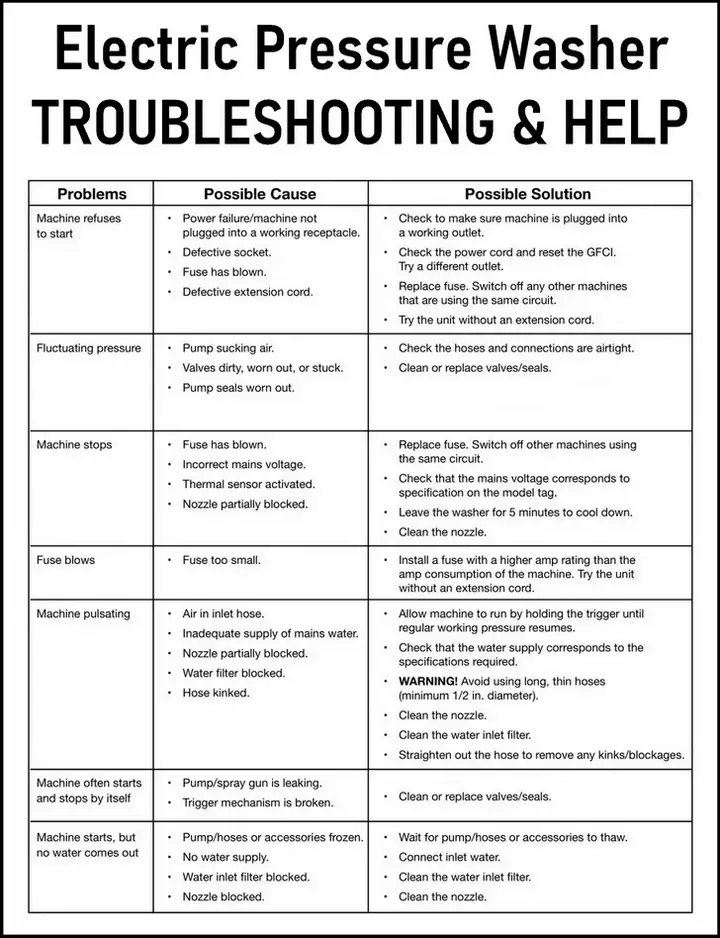
Common Issues
Electric pressure washers are helpful tools for cleaning many surfaces. Sometimes, they stop working correctly. Knowing common problems helps fix them fast. This saves time and money. Here are some usual issues users face.
No Power Or Won’t Start
The pressure washer might not turn on at all. Check the power source first. The plug might be loose or the outlet faulty. Look at the power cord for cuts or damage. A blown fuse or tripped breaker can also stop power. Make sure the machine’s switch is in the ON position.
Low Water Pressure
Low pressure reduces cleaning power. This may happen if the water supply is weak. Check if the garden hose is kinked or blocked. The inlet filter might be dirty or clogged. The spray nozzle could be partly blocked. Clean or replace these parts to restore pressure.
Water Leaks
Leaks waste water and lower pressure. Check all connections and hoses for tightness. Cracks in the hose or seals cause leaks. Inspect the pump for damage. Replace worn or broken seals to stop leaks. Avoid using the washer if leaks continue.
Strange Noises
Unusual sounds suggest a problem. A loud grinding noise may mean worn pump parts. Whining or rattling can come from loose components. Check the motor and pump for loose bolts. Lubricate moving parts if needed. Stop using the washer if noises persist.
Overheating Problems
The machine may shut off due to heat. This happens when used for too long without breaks. Poor ventilation blocks cooling air. Dirty filters or blocked water flow cause overheating. Let the washer cool down regularly. Clean filters and keep vents clear to avoid heat issues.
Basic Checks
Basic checks are the first step in solving electric pressure washer problems. These checks help identify simple issues before moving to complex fixes. They save time and prevent damage to the washer. Start with the power source, then check water supply and hose connections. Finish by inspecting the nozzle and spray gun. Each of these areas can cause problems if not working right.
Power Source And Cord Inspection
Confirm the pressure washer is plugged into a working outlet. Check the power cord for cuts, cracks, or damage. A damaged cord can stop the washer from turning on. Make sure the plug fits tightly in the socket. Try another outlet to rule out power supply issues. If the washer has a reset button, press it to restore power.
Water Supply And Hose Connections
Ensure the water source is turned on and flowing freely. Check the hose for kinks, leaks, or blockages. A blocked hose reduces water flow and pressure. Tighten all hose connections securely to avoid leaks. Use a clean hose to prevent dirt from clogging the system. Low water flow can cause the washer to stop working properly.
Nozzle And Spray Gun Condition
Inspect the nozzle for dirt, debris, or damage. A clogged nozzle lowers spray pressure or stops water flow. Clean the nozzle with a small brush or needle. Check the spray gun for cracks or leaks. Replace any damaged parts to keep water pressure strong. Proper nozzle and gun condition ensures effective cleaning.
Quick Fixes
Electric pressure washers can stop working correctly at times. Many issues have simple solutions. Quick fixes save time and help avoid costly repairs. Knowing basic troubleshooting steps keeps your washer running smoothly.
Resetting The Machine
Many electric washers have a reset button. Press it to clear minor errors. Unplug the machine first for safety. Wait a few minutes before pressing reset. This step often restores normal function fast.
Clearing Clogs
Clogs block water flow and reduce pressure. Check the nozzle and hose for debris. Remove dirt using a small brush or needle. Rinse parts with water to clear residues. Clear passages improve performance instantly.
Replacing Filters
Filters trap dirt and protect your washer. Dirty filters cause poor water flow. Remove old filters carefully. Insert new ones that match your model. Clean filters extend your machine’s life.
Tightening Loose Parts
Vibrations can loosen screws and fittings. Inspect all visible parts regularly. Use a screwdriver to tighten any loose screws. Secure hoses and connections firmly. Tight parts prevent leaks and maintain pressure.

Maintenance Tips
Proper maintenance keeps your electric pressure washer working well. It helps avoid common problems. Simple care steps extend the machine’s life. Follow these key tips to maintain your washer.
Regular Cleaning
Clean the pressure washer after every use. Remove dirt and debris from the nozzle and hose. Wipe the machine’s exterior with a damp cloth. Clear any clogged spray tips to keep pressure strong. Regular cleaning prevents damage and keeps performance steady.
Proper Storage
Store the pressure washer in a dry place. Avoid areas with extreme temperatures or moisture. Drain water from the pump and hose before storing. Use a cover to protect from dust and dirt. Proper storage prevents rust and frozen parts.
Lubrication Points
Check the manufacturer’s guide for lubrication spots. Apply oil or grease to the pump and moving parts. Lubrication reduces friction and wear. Regular oiling helps the machine run smoothly and last longer.
When To Call A Professional
Electric pressure washers are great tools for cleaning tasks. Some problems are easy to fix. Others need expert help. Knowing when to call a professional saves time and money. It keeps you safe too. Here are key signs to watch for.
Electrical Issues
Electric pressure washers depend on electricity. Faulty wiring or motor problems can be dangerous. If the washer does not start or trips breakers often, call an expert. Professionals can test and repair electrical parts safely. Avoid opening electrical components yourself.
Pump Repairs
The pump is the heart of the pressure washer. Strange noises, leaks, or no pressure might mean pump damage. Pumps have many small parts that need special tools to fix. A professional will check seals, valves, and pistons. Let them handle pump repairs to avoid more damage.
Warranty Considerations
Many washers come with a warranty. Trying to fix major problems yourself may void it. Professionals know how to repair without breaking warranty rules. Always check warranty terms before attempting big repairs. Calling a certified technician protects your warranty and your machine.

Frequently Asked Questions
Why Is My Electric Pressure Washer Not Starting?
Check if the power cord is plugged in and the outlet works. Ensure the safety switch is on and water supply is connected.
What Causes Low Pressure In Electric Pressure Washers?
Low pressure often comes from clogged nozzles or dirty filters. Also, check for leaks in hoses or loose connections.
How To Fix Electric Pressure Washer Spraying Unevenly?
Uneven spray usually means the nozzle is dirty or worn out. Clean or replace the nozzle to restore even spray.
Why Does My Electric Pressure Washer Keep Shutting Off?
Overheating or power overload can cause auto shut-off. Let the washer cool down and avoid using an extension cord.
How To Prevent Electric Pressure Washer From Freezing In Winter?
Drain all water from the unit and hoses before cold weather. Store the washer indoors or use antifreeze to protect it.
Conclusion
Electric pressure washers can stop working for many reasons. Checking the power source and hose is the first step. Cleaning the nozzle and filters often solves common issues. Regular care helps keep the washer in good shape. Knowing simple fixes saves time and money.
Small problems do not need expert help always. Keep this guide nearby for quick troubleshooting. Your washer will run better with these tips. Stay patient and try each step carefully. This way, you can enjoy a clean home easily.