Managing your power supply requires a reliable unit, and when your system begins to falter, performing freedom combi invertercharger troubleshooting is the first step toward restoring your off-grid independence. These units are complex pieces of power electronics that combine an inverter, a battery charger, and an automatic transfer switch into a single housing. Because they’re responsible for both converting DC battery power into usable AC electricity and replenishing your battery bank when shore power is present, identifying the root cause of a failure requires a systematic approach. Whether you’re dealing with a total lack of output or intermittent charging cycles, understanding the internal logic of your hardware will help you decide if the issue is a simple configuration error or a component failure.
Key Takeaways
- Always verify your battery bank voltage before assuming the inverter is faulty.
- Check all DC terminal connections for signs of corrosion or heat damage.
- Reset the unit using the manual procedure to clear temporary logic errors.
- Ensure the remote control panel is properly seated and the cables are intact.
- Consult the Xantrex Freedom Combi manual for specific error code definitions.
Safety: Inside a mains-powered machine, the parts behind the outer cover can hold a dangerous electrical charge even after it has been unplugged — that’s why they sit behind a cover. Opening the housing, or testing or replacing anything behind it, is a job for a qualified technician, never a home repair.
Common Inverter Power Failures
If your unit is failing to provide power, start by checking the DC input voltage. If the battery bank drops below the low-voltage cutoff threshold, the inverter will automatically shut down to protect your batteries. Ensure your battery disconnect switch is in the “on” position and that no fuses have blown between the battery and the inverter.
Another frequent cause is a tripped internal circuit breaker. Many inverter-chargers feature a push-button breaker on the chassis itself. If you have recently overloaded the system with high-draw appliances like a microwave or coffee maker, this breaker may have popped. Allow the unit to cool for ten minutes before attempting to reset it.
| Symptom | Primary Cause | Immediate Action |
|---|---|---|
| No AC output | Low battery voltage | Check battery state of charge |
| Unit clicks repeatedly | Weak DC connection | Tighten terminal lugs |
| Overload light blinking | Excessive appliance load | Unplug non-essential devices |
| No display lights | Blown internal fuse | Inspect DC input fuse |
Why Is the Charger Not Working?
If the input power is stable, check the charger settings. Some units have a “charger disable” mode that might have been accidentally activated via the remote panel. Additionally, if the battery temperature sensor is faulty or disconnected, the charger may refuse to operate to prevent overheating the battery bank.
Is the Transfer Switch Failing?
The transfer switch is the component that allows the unit to seamlessly switch between battery power and shore power. If your appliances work when the inverter is on but fail when you plug into shore power, the transfer relay may be stuck. This is often caused by arcing within the relay contacts, which can occur if the transfer happened while a heavy load was running.
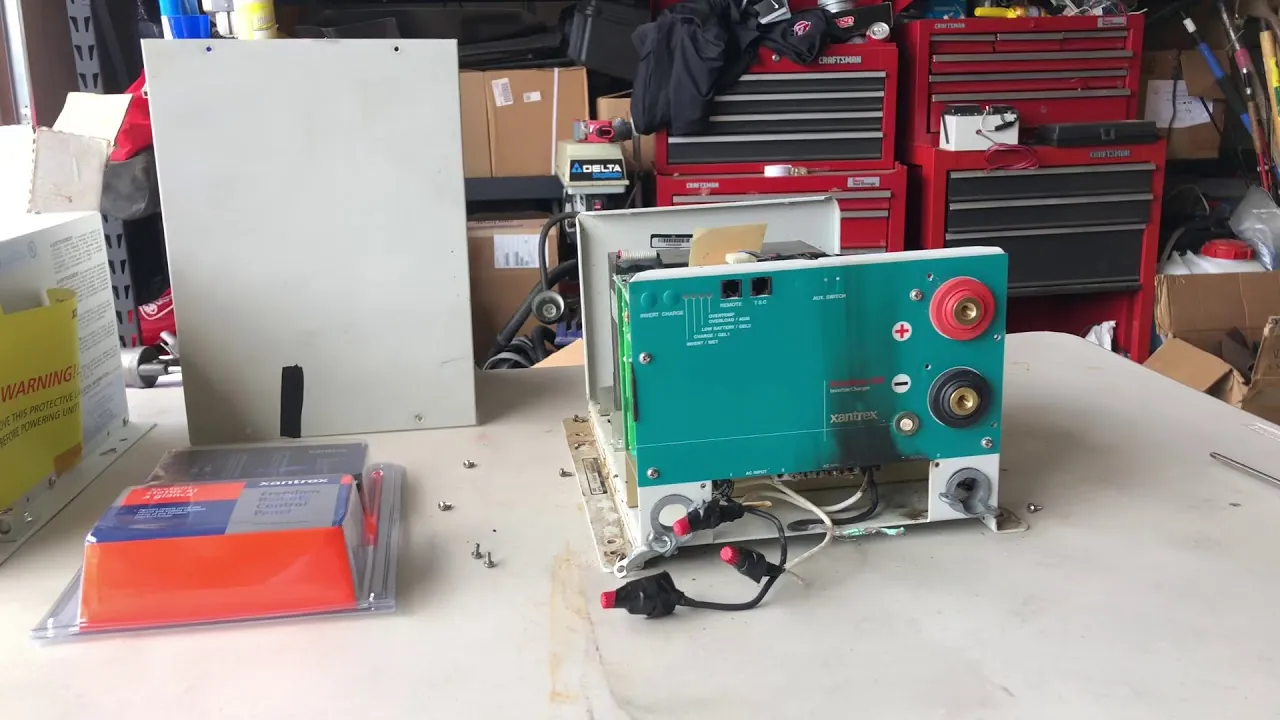
Warning: Always disconnect all power sources—both AC and DC—before opening the chassis to inspect internal components. Failure to do so can result in severe electrical shock or damage to the delicate control boards.
Troubleshooting the Remote Panel
The remote control panel is the primary interface for your system, and it’s prone to communication errors. If the panel is unresponsive or displays garbled text, the data cable might be damaged or poorly seated. Inspect the phone-style jack on both the back of the remote and the inverter unit. Corrosion on these pins is a common culprit in marine environments.
If the panel is functional but shows a “Fault” or “Error” light, note the specific flash pattern. These patterns are designed to point you toward the exact subsystem that has triggered the protection mode.
How to Reset Your System?
Sometimes the internal processor simply needs a “hard reboot” to clear a software glitch. To perform a full system reset, follow these steps:
- Turn off the inverter using the remote panel.
- Disconnect the positive DC cable from the battery.
- Wait for at least five minutes to allow the internal capacitors to discharge completely.
- Reconnect the DC cable, ensuring a solid, spark-free connection.
- Turn the unit back on and observe the startup sequence.
Checking DC Terminal Connections
Your inverter draws significant amperage under load. If the terminal lugs are loose, they create resistance, which generates heat. This heat can melt the wire insulation or trigger a thermal shutdown. Check these connections every six months. If you see white or blue oxidation on the copper, clean the terminals with a wire brush and apply a thin coat of dielectric grease before reattaching.
Troubleshooting Inverter Loading Issues
If the inverter shuts down when you turn on a specific device, you may have an inrush current problem. Motors, such as those found in refrigerators or air conditioners, require a brief surge of power that’s much higher than their running wattage. If this surge exceeds the inverter’s peak capacity, it will enter an overload state. Try starting high-draw appliances one at a time to prevent stacking these surges.
Battery Bank Maintenance Basics
The health of your inverter is inextricably linked to the health of your battery bank. If your batteries are old or have high internal resistance, they will experience a massive voltage sag the moment the inverter draws power. This sag triggers the low-voltage alarm prematurely. Use a hydrometer for lead-acid batteries or a battery monitor for lithium systems to ensure your bank is actually capable of holding a charge.
Understanding the Cooling Fan
The cooling fan is a vital component that prevents the internal electronics from frying during heavy use. If the fan is obstructed by dust or debris, the unit will overheat and shut down. Use compressed air to blow out the intake and exhaust vents. If the fan makes a grinding noise, it may be failing and should be replaced to prevent an over-temperature shutdown.
Comparing Freedom Combi InverterCharger Troubleshooting Modes
| Failure Type | Complexity | Repairability |
|---|---|---|
| Blown Fuse | Low | Easy (User Replaceable) |
| Loose Connection | Low | Easy (Tightening Required) |
| Faulty Relay | Medium | Professional Service Required |
| Main Board Failure | High | Unit Replacement Likely |
Frequently Asked Questions
Why does my inverter beep continuously?
A continuous beeping sound usually indicates a critical fault, such as a low battery voltage warning, a high-temperature alarm, or an output overload. Check your remote panel for a specific error code or light pattern. If the battery voltage is below 10.5V, the inverter will beep to alert you that it’s about to shut down to prevent permanent battery damage.
How do I know if my inverter is dead?
If the unit shows no lights, makes no sound when turned on, and you have confirmed that 12V DC is present at the input terminals with a multimeter, the internal logic board or power supply has likely failed. Check the main DC fuse one last time. If the fuse is intact but the unit remains completely unresponsive, professional repair or replacement is typically the only remaining option.
Can I replace the internal cooling fan?
Yes, the cooling fan is a standard component that can often be replaced if you have basic soldering skills and access to the internal chassis. However, ensure you purchase a fan with the exact same voltage, size, and CFM (cubic feet per minute) rating. Using an incorrect fan may cause the unit to overheat even if the new fan is spinning.
What is the difference between an overload and a short circuit?
An overload occurs when you attempt to draw more wattage than the inverter is rated for, such as running a space heater and a blender simultaneously. A short circuit is a direct connection between positive and negative lines, which is a dangerous fire hazard. The inverter will usually shut down instantly during a short circuit to prevent the wiring from melting.
Is my battery bank too small for this inverter?
If your battery bank is too small, it won’t be able to provide the high current required by the inverter during peak loads. This leads to voltage drops that trigger the low-voltage shutdown. A good rule of thumb is to ensure your battery bank has a capacity of at least 200Ah for a 2000W inverter to maintain stable performance during high-draw events.
Conclusion
If you have performed these checks and the unit remains non-functional, it’s time to consult with a qualified marine or mobile technician to avoid further damage to your electrical system. Document the sequence of lights or error codes you observed during your testing, as this information will significantly reduce diagnostic time and help determine if the unit can be repaired or requires a full replacement.