You can resolve most connection issues when you perform frontier internet troubleshooting by power cycling your modem and router to clear temporary data errors. The most common cause for a drop in service is a loose cable or a temporary signal interruption from the provider’s network. If your lights are blinking orange or red, your equipment is likely struggling to handshake with the central office. You should check your physical connections first before you try to change any software settings on your devices.
Troubleshooting frontier internet connection drops
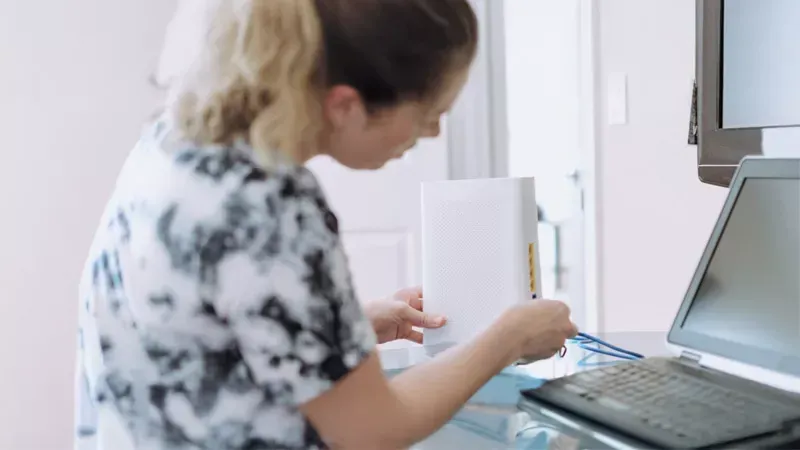
The primary reason for connectivity loss is often a signal mismatch between your home equipment and the provider’s local node. When your modem loses the digital signal, it attempts to reboot itself, which causes the internet to cut out while it searches for a new path to the network. This is common during peak traffic hours when the local hardware is under heavy load.
A second cause involves hardware overheating or outdated firmware. If your modem is tucked away in a closed cabinet without airflow, the internal components can get hot and trigger a protective shutdown. Dust buildup inside the vents makes this worse. You can check the status of your local network health through the official Frontier support portal to see if there’s a known service outage in your specific area.
Finally, signal interference often plagues wireless connections. If you have many devices running on the same frequency or thick walls blocking the path, the signal quality will drop significantly. This isn’t a failure of the internet line itself, but rather a failure of the local distribution inside your home. If the problem persists after you move your devices closer to the router, the issue might be a damaged incoming fiber or copper line outside your house.
Power cycle your modem and router
This method is the first step for anyone experiencing a sudden loss of data, as it forces the hardware to re-establish a fresh session with the network. You should unplug the power cord from the back of the modem and the router, leaving them disconnected for at least 60 seconds. This time allows the capacitors to fully discharge so the device loses its memory of the old, broken connection.
After the minute has passed, plug the modem back into the wall outlet first. Wait about three to five minutes for the status lights to turn solid green or white, which indicates it has successfully locked onto the signal. If you have a separate wireless router, plug that in next and wait for it to broadcast your network name.
This fix is for users who see specific “no internet” or “sync” errors on their hardware. If you have a professional-grade setup with static IP addresses or custom VLAN tagging, a hard reboot might reset your specialized configurations, so save those settings first.
If the status lights remain red or blinking after a full reboot, don’t attempt to open the casing or tamper with the internal boards. At this point, the issue is likely a line fault that requires a technician from the provider to investigate the exterior wiring.
Tighten all physical cable connections
Loose cables are a common point of failure that people often overlook. You need to check the coaxial or fiber optic line running from the wall jack to your modem. Ensure the connector is screwed in tight or clicked firmly into the port. A loose connection causes “flapping,” where the signal intermittently drops as the cable vibrates or shifts slightly.
Check the Ethernet cables that connect your modem to your router or computer as well. Look for any visible kinks, fraying, or crushed spots in the cable jacket. If you have a spare Ethernet cable, swap the current one to see if the connection stabilizes. This is a quick way to rule out a simple cable failure without needing any specialized tools.
This step is ideal for households with pets or high-traffic areas where cables might get bumped or pulled. If you find that the cable is damaged, replace it with a new Cat5e or Cat6 cable. Never attempt to splice or repair a broken fiber optic cable yourself, as the glass strands are extremely fragile and require specialized splicing equipment to join properly. If the fiber line itself is snapped, contact your service provider immediately to arrange for a professional repair.
Update your wireless channel settings
If your internet works fine on a wired connection but fails on Wi-Fi, you likely have interference from neighboring networks. Most routers broadcast on the 2.4GHz or 5GHz bands. When too many routers in your neighborhood use the same channel, your signal quality degrades and your speed will crash. You can log into your router’s web interface to manually switch your Wi-Fi channel to a less crowded frequency.
To do this, type the IP address found on the sticker of your router into a web browser. Log in using the default credentials printed on the device. Look for the “Wireless” or “Wi-Fi” tab and change the channel setting from “Auto” to a specific number like 1, 6, or 11 for the 2.4GHz band. This is a great fix for people living in apartment buildings where dozens of Wi-Fi signals overlap.
This process isn’t for everyone, as it requires basic knowledge of network administration. If you aren’t comfortable accessing the router interface, don’t change these settings, as you could accidentally lock yourself out of your own network. If you can’t find the login credentials or the interface is unresponsive, perform a factory reset by holding the reset button for 15 seconds. Note that this will erase your custom Wi-Fi name and password, so you’ll need to reconnect all your home devices.
Common troubleshooting mistakes
Resetting the device too quickly: Many people unplug and replug their modem in under five seconds, which isn’t enough time to clear the internal cache. Always wait at least 60 seconds to ensure the capacitors fully discharge. Failing to wait forces the device to reboot using corrupted memory, meaning you haven’t actually solved the underlying glitch.
Ignoring the status lights: Users often assume the internet is down without checking the light patterns on the modem. These indicators are the most accurate diagnostic tools available. If the “online” light is flashing rather than solid, the issue is an external signal fault, not your local hardware. Stop restarting your equipment if the light indicates a provider-side outage.
Using a power strip for the modem: Plugging your modem into a cheap power strip can cause voltage drops that lead to intermittent instability. Always plug the modem directly into a wall outlet. If you must use a surge protector, choose one rated for high-speed electronics to avoid signal noise.
Moving the router too far: Placing your router behind a television or inside a metal cabinet creates a “Faraday cage” effect that blocks your signal. Keep the router in an open, elevated space. If you’re in a home with thick masonry walls, you’re likely in a dead zone where a single router will never suffice; in this case, invest in a mesh system rather than moving the unit repeatedly.
Improving your network stability
If you’re currently struggling with slow or dropping speeds, you should compare your current setup against the recommended configuration to ensure you’re getting the best performance.
| If you’re doing this | Do this instead | Why |
|---|---|---|
| Using an old router | Upgrade to a modern unit | Newer units handle traffic better |
| Hiding the router | Keep it in open air | Prevents overheating issues |
| Using a long cable | Use the shortest cable possible | Reduces signal degradation |
| Connecting via Wi-Fi | Use a wired Ethernet cable | Wired connections are always faster |
| Auto-channel selection | Pick a static, quiet channel | Avoids interference from neighbors |
Most users make the mistake of placing their router inside a cabinet or behind a television. This choice can degrade signal strength by up to 30% due to physical obstructions. If your router feels hot to the touch, move it to an elevated, central location immediately.
When choosing a static channel, use a free Wi-Fi analyzer app to identify which frequency is least congested. If you see more than five networks on your current channel, switch to a less crowded one to prevent packet loss. If you work with high-bandwidth video, always prioritize an Ethernet connection over 5GHz Wi-Fi.
Frequently asked questions
Can I fix a red light on my modem?
You can often fix a red light by power cycling the device and ensuring the wall cable is secure. A red light indicates the modem can’t find a signal from the provider. If the light remains red after rebooting, there may be a service outage or a physical line break.
How long does it take for a modem to reset?
It takes about 3 to 5 minutes for a modem to complete its full boot sequence and establish a connection. During this time, you’ll see various lights flash as it performs a self-test and syncs with the provider’s local hardware. Don’t unplug the device while these lights are cycling, as this can interrupt the firmware update process and potentially cause the device to hang in a loop.
Is it safe to reset my router?
It’s safe to reset your router, but a factory reset will erase your custom Wi-Fi name and password. A standard reboot doesn’t erase your settings. If you perform a factory reset, you must use the default information on the bottom sticker to set up your network again.
Why is my internet slow only at night?
Internet speeds often drop at night because local network usage is at its highest, leading to congestion. This is common in neighborhoods where many users share the same distribution node. There’s no user-side setting to fix this, as it’s a limitation of the local infrastructure.
How do I know if my router is broken?
Your router is likely broken if it fails to power on or the status lights remain dark despite being plugged into a working outlet. Try plugging another device into the outlet to confirm it provides power. If the router remains unresponsive, it has suffered an internal failure and needs replacement.
Conclusion
If these simple fixes don’t restore your service, don’t hesitate to reach out to their support team for further help. They can run a remote diagnostic test to see if there’s a deeper issue on the line. Getting back online shouldn’t be a struggle, so let them handle it if you’re still stuck.