If your Kohler engine suddenly won’t start and you discover there’s no spark, it can be frustrating—especially if you rely on your mower, generator, or other outdoor equipment to keep things running smoothly. Electrical problems, especially a missing spark, often feel mysterious. But with the right approach, you can solve most no-spark issues yourself and avoid unnecessary costs or downtime.
This article will walk you step-by-step through Kohler engine troubleshooting for no spark. You’ll learn how the ignition system works, what usually goes wrong, and how to test and fix the problem. You’ll find plain explanations, practical tips, and checklists that even non-experts can follow. By the end, you’ll know what to do the next time your Kohler engine refuses to fire up.
Understanding The Kohler Engine Ignition System
Before you begin troubleshooting, it helps to know how Kohler’s ignition system works. Most modern small Kohler engines use a magneto ignition system—a design that generates spark without a battery. Some newer models may use solid-state ignition or have extra safety circuits, but the basics are similar.
When you pull the starter rope or turn the key, the flywheel spins. Magnets on the flywheel pass by the ignition coil (also called an armature). This creates a magnetic field, producing electricity. The coil sends a high-voltage pulse to the spark plug at exactly the right moment, igniting the fuel-air mixture.
The main parts of the system are:
- Flywheel (with magnets)
- Ignition coil (armature)
- Spark plug
- Kill switch / safety circuits
- Wiring and connectors
If any of these parts fail—or if something interrupts the circuit—you’ll get no spark. Understanding this simple flow will help you track down the real problem.
Common Causes Of No Spark In Kohler Engines
Over the years, Kohler engines have earned a reputation for reliability. However, no-spark problems still happen. Most of the time, the cause is one of a few common issues:
- Faulty ignition coil: The coil is responsible for creating spark. If it’s bad, you’ll get nothing at the plug.
- Bad spark plug: Plugs can fail, especially if old or fouled.
- Shorted kill switch or safety circuit: If the kill switch is stuck or a safety device is tripped, it will ground out the spark.
- Damaged flywheel magnet: If the magnet breaks or loses strength, the coil won’t generate enough voltage.
- Wiring problems: Broken, corroded, or disconnected wires can interrupt the ignition system.
- Incorrect air gap: The gap between the coil and flywheel must be set properly, or spark will be weak or absent.
In rare cases, other things (like a failed control module) can cause no spark, but these are the most likely suspects.
Step-by-step Troubleshooting: Finding And Fixing No Spark
When facing a Kohler engine no spark situation, always start with the basics. Here’s a practical troubleshooting path, designed for most small Kohler engines—whether on a lawn tractor, generator, or other equipment.
1. Confirm There’s Really No Spark
Before digging deeper, make sure the problem is truly “no spark,” not a fuel or mechanical issue.
- Remove the spark plug from the engine.
- Reconnect the plug wire to the plug.
- Hold the metal part of the plug against the engine block (use insulated pliers).
- Crank the engine. Look for a strong blue spark at the tip.
If you see a spark, your issue is likely fuel-related. If there’s no spark, continue with the steps below.
Tip: Weak, yellow, or inconsistent spark can also cause starting problems. Always look for a crisp blue spark.
2. Inspect The Spark Plug
A worn or fouled spark plug is a common cause of no spark.
- Check the plug for carbon deposits, oil, or damage.
- Clean with a wire brush or replace with a new plug (always use the recommended type for your engine).
- Check the gap—refer to your Kohler manual for the correct measurement (usually 0.030″–0.040″).
- Try starting the engine again.
Practical insight: Even new spark plugs can be defective. Always test with a known-good plug if possible.
3. Check The Kill Switch And Safety Circuits
Many Kohler engines have a kill switch or safety features (seat switch, brake switch, etc.) that stop the spark if triggered.
- Locate the kill switch wire (often black) leading to the ignition coil.
- Disconnect this wire from the coil. This isolates the coil from the rest of the equipment wiring.
- Try starting the engine.
If you now have spark, the problem is in the equipment’s kill circuit or a safety switch. If still no spark, the issue is likely with the coil or flywheel.
Non-obvious insight: On riding mowers, seat and brake switches are often the hidden cause of no spark after winter storage. Mice or corrosion can short these circuits.
4. Test The Ignition Coil
If the plug and kill circuit are good, the ignition coil is your next suspect.
- Use a multimeter to check the coil’s resistance. Compare your readings with the Kohler specs (usually found in the service manual).
- Typical readings: Primary resistance (between small terminals) is often 0.5–1.5 ohms; secondary resistance (from plug wire to ground) is several thousand ohms.
- If resistance is way off, replace the coil.
- If you don’t have a meter, try replacing the coil with a known-good one.
Practical tip: Coils can fail only when hot. If your engine loses spark after warming up, cool the coil and retest.
5. Inspect The Flywheel Magnet
The flywheel magnet must be strong and unbroken.
- Remove the blower housing to access the flywheel.
- Check for cracks, chips, or rust on the magnet.
- Hold a screwdriver near the magnet—the pull should be strong.
- Clean the magnet and the coil face with fine sandpaper if dirty or rusty.
Data point: Loss of magnetism is rare but can happen if the flywheel is dropped or hit.
6. Examine Wiring And Connectors
Faulty wiring can interrupt the spark path.
- Inspect all wires from the coil to the plug, kill switch, and safety circuits.
- Look for broken, corroded, or disconnected wires.
- Check all connectors—clean and tighten as needed.
- Repair or replace any damaged wiring.
7. Set The Coil Air Gap
The air gap between the ignition coil and flywheel is critical. Too wide or too narrow, and you may lose spark.
- Loosen the coil mounting bolts.
- Insert a non-magnetic feeler gauge (usually 0.010″–0.014″ for Kohler engines) between the coil and flywheel.
- Tighten the bolts while keeping the gap.
- Remove the gauge and spin the flywheel to check for rubbing.
Non-obvious insight: A business card is often the perfect thickness for setting the air gap if you lack a gauge.
8. Check For Rare Issues
If you’ve tried all the above and still have no spark, you may have a less common problem:
- Faulty ignition module (on some electronic ignition models)
- Damaged keyway (flywheel not aligned, so timing is off)
- Internal engine damage (rare, but possible if the engine suffered a severe impact)
If you reach this point, consult a professional or refer to your Kohler service manual for advanced diagnostics.
Kohler Engine Models And Ignition Systems: Key Differences
Kohler produces a wide range of engines for mowers, generators, and industrial equipment. While most use magneto ignition, some differences in design can affect troubleshooting.
Here’s a comparison of common Kohler engine series and their ignition systems:
| Engine Series | Ignition Type | Kill Switch Location | Common Weak Points |
|---|---|---|---|
| Kohler Courage | Magneto (solid-state) | Coil side | Coil failure, kill wire shorts |
| Kohler Command | Magneto (solid-state) | Coil side | Safety switches, coil failure |
| Kohler K-series | Points/condenser (older) | Engine block | Points wear, condenser failure |
| Kohler 7000 Series | Electronic ignition | Control module | Module failure, seat switch |
Tip: Always check your engine’s model and serial number. Parts and wiring can differ even within the same series.

Testing Tools: What You Need For Proper Diagnosis
Having the right tools will make Kohler engine troubleshooting faster and safer. Here are essentials for diagnosing no spark:
- Spark tester: Shows if voltage is reaching the plug.
- Multimeter: Measures resistance, voltage, and continuity.
- Feeler gauge: For setting coil air gap.
- Insulated pliers: For safely handling spark plugs.
- Service manual: Reference for wiring diagrams and specifications.
For most homeowners, a basic spark tester and multimeter will solve 90% of problems.
Step-by-step Checklist: What To Do When You Have No Spark
For quick reference, here’s a troubleshooting checklist you can follow:
- Remove and inspect the spark plug.
- Test for spark with the plug grounded.
- Replace with a known-good plug if unsure.
- Disconnect the kill wire from the coil; retest.
- Check wiring and connectors for damage.
- Test the coil with a multimeter.
- Inspect and clean the flywheel magnet.
- Set or check the coil air gap.
- Consider rare causes (module, keyway) if all else fails.
Real-world Example: Kohler Courage 20 Hp Engine Won’t Start
Imagine you have a Kohler Courage 20 HP engine on your riding mower. It cranks, but there’s no spark.
Here’s how you’d tackle it:
- You remove the spark plug, see it’s fouled, replace it—still no spark.
- You disconnect the black kill wire from the coil and try again—still nothing.
- Using a multimeter, you find the coil has infinite resistance (open circuit).
- You replace the coil, set the air gap with a business card, reassemble, and now have a strong blue spark.
- The mower starts on the first try.
This sequence shows the value of systematic troubleshooting: you avoided replacing unnecessary parts and fixed the problem efficiently.
Common Pitfalls And Mistakes In Kohler No Spark Troubleshooting
Even experienced mechanics sometimes miss simple things. Here are some mistakes to avoid:
- Skipping the spark plug check: Always test with a known-good plug first.
- Not isolating the kill switch circuit: This step quickly tells you if the problem is in the engine or the equipment wiring.
- Forgetting to set the coil air gap: A new coil won’t work well if the gap is wrong.
- Overlooking hidden safety switches: On riding mowers, seat or blade switches are often the root cause.
- Assuming the coil is always the problem: Many “bad coils” are actually caused by wiring or kill switch faults.
Non-obvious tip: Sometimes, aftermarket (non-OEM) coils can cause weak or no spark. Stick with Kohler-branded or high-quality parts for best results.
How To Prevent No-spark Problems In The Future
Maintenance goes a long way toward avoiding no-spark headaches:
- Replace the spark plug every season or as recommended.
- Keep the flywheel area clean and free of debris.
- Check and clean wiring connections during oil changes.
- Inspect safety switches periodically, especially after winter storage.
- Use the right parts and set the coil gap correctly when making repairs.
A little preventive care saves time and money in the long run.
What To Do If You Can’t Solve The No Spark Problem
If you’ve followed all the steps and your Kohler engine still has no spark, it may be time for professional help. Here’s how to proceed:
- Gather your observations: What you’ve tested, parts replaced, and any unusual symptoms.
- Contact a certified Kohler dealer or small engine repair shop.
- Bring your service manual and engine serial number for faster troubleshooting.
- Sometimes, advanced diagnostic tools or experience with rare failures are needed.
Extra insight: On some newer engines, the ignition system may be tied to electronic control modules. These require dealer-level diagnostics.
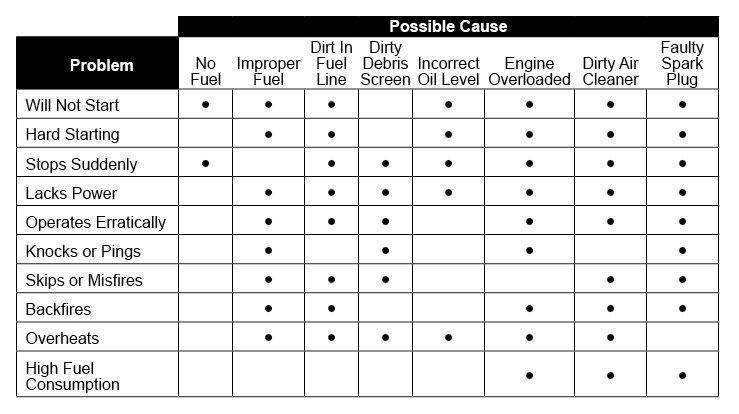
Credit: www.engines.rehlko.com
Kohler Engine Ignition Parts Comparison
When replacing parts, quality matters. Here’s a comparison of original Kohler vs. aftermarket ignition parts:
| Part Type | OEM Kohler | Aftermarket | Typical Price Range | Reliability |
|---|---|---|---|---|
| Ignition Coil | High quality, exact fit | Varies: some good, some poor | $30–$80 | Excellent (OEM), Mixed (Aftermarket) |
| Spark Plug | NGK/Champion spec | Many brands | $4–$8 | Very good (OEM), Good (Aftermarket) |
| Kill Switch | Engineered for model | Generic available | $10–$25 | Excellent (OEM), Varies (Aftermarket) |
Tip: If buying aftermarket, choose parts with good reviews and strong return policies. Avoid the cheapest options—they often fail early or cause new problems.
Advanced Troubleshooting For Intermittent No Spark
Sometimes, the engine starts when cold but loses spark after running for a while. This is usually due to a failing ignition coil that breaks down with heat. Here’s how to diagnose:
- Run the engine until it stops.
- Immediately check for spark.
- If spark is missing, cool the coil with compressed air or ice for a few minutes.
- Retest for spark. If spark returns, the coil is heat-sensitive and should be replaced.
In rare cases, a failing kill switch or loose wiring can cause intermittent loss of spark as vibrations shift the connection.

How Kohler’s Ignition System Compares To Other Brands
Kohler engines are often compared to Briggs & Stratton, Honda, and Kawasaki engines. While the principles are the same, there are some differences:
| Brand | Ignition Type | Typical Weak Point | Part Cost (Coil) |
|---|---|---|---|
| Kohler | Solid-state magneto | Kill circuit, coil | $30–$80 |
| Briggs & Stratton | Magnetron (similar) | Coil, flywheel key | $25–$60 |
| Honda | Digital CDI, magneto | Coil, CDI box | $40–$120 |
| Kawasaki | Digital ignition | Module, switches | $50–$130 |
Kohler’s ignition systems are generally robust and easy to service compared to some competitors, which may use more complex electronic modules.
The Importance Of Proper Grounding
A final but often missed point: engine grounding. The ignition coil relies on a good ground to the engine block. If the coil’s mounting bolts are loose or there’s corrosion, spark can disappear.
- Always clean the coil mounting area before installation.
- Tighten bolts securely.
- Check for rust or paint under the coil’s feet—bare metal is best.
Pro tip: When diagnosing stubborn no-spark problems, run a temporary ground wire from the coil mounting bolt to the engine block to test for a bad ground.
Frequently Asked Questions
Why Does My Kohler Engine Lose Spark After Warming Up?
This usually means the ignition coil is breaking down when hot. As the coil heats, internal insulation can fail, causing loss of spark. Cooling the coil temporarily restores function, confirming it needs replacement.
How Can I Tell If The Kill Switch Is The Problem?
Disconnect the kill wire from the ignition coil. If you now have spark, the kill circuit (including any safety switches) is shorting to ground. Trace wiring and test each switch to find the fault.
Can A Bad Battery Cause No Spark On My Kohler Engine?
On most magneto-ignition Kohler engines, the battery is not needed for spark. However, some newer models with electronic ignition or safety modules may depend on battery power. Check your engine’s manual to confirm.
What Gap Should I Set Between The Coil And Flywheel?
The air gap is usually 0.010″–0.014″ for Kohler engines. Always check your specific model’s service manual. A business card is often about the right thickness for setting this gap if you lack a feeler gauge.
Where Can I Find An Official Kohler Engine Service Manual?
You can download service manuals and technical guides from the Kohler Engines official website. These resources include wiring diagrams, specifications, and troubleshooting charts.
CONCLUSION
Getting your Kohler engine running again after a no-spark problem is usually a matter of following the right steps, using simple tools, and knowing where to look. With the guidance above, you’ll be back to mowing, generating power, or working in no time—without unnecessary frustration. Remember, patience and careful testing are your best tools for any engine troubleshooting task.