Rinnai Troubleshooting: A Complete Guide to Diagnosing and Fixing Common Issues
Rinnai water heaters and home appliances are well-known for their efficiency and reliability. Many homeowners choose Rinnai because they want hot water on demand, low energy bills, and a trusted brand. But even the best devices can run into problems over time. When your Rinnai unit starts acting up, you might worry about cold showers, error codes, or confusing noises. The good news? Many Rinnai issues have clear causes and can be fixed with some careful troubleshooting.
This guide gives you a clear, step-by-step approach to Rinnai troubleshooting. You’ll learn how to identify common problems, fix simple issues yourself, and know when you should call a professional. Whether you own a tankless water heater, gas heater, or another Rinnai product, you’ll find practical advice and tips to keep your system running smoothly.
How Rinnai Systems Work
Before you start troubleshooting, it helps to know the basics of how Rinnai products operate. Most Rinnai units, especially tankless water heaters, use advanced sensors and electronics to heat water only when you need it. Key parts include:
- Heat exchanger: Transfers heat to the water
- Gas burner or electric element: Heats the water quickly
- Fan and venting system: Removes exhaust gases
- Control board: Manages sensors, ignition, and safety features
- Water flow sensor: Detects when you turn on a tap
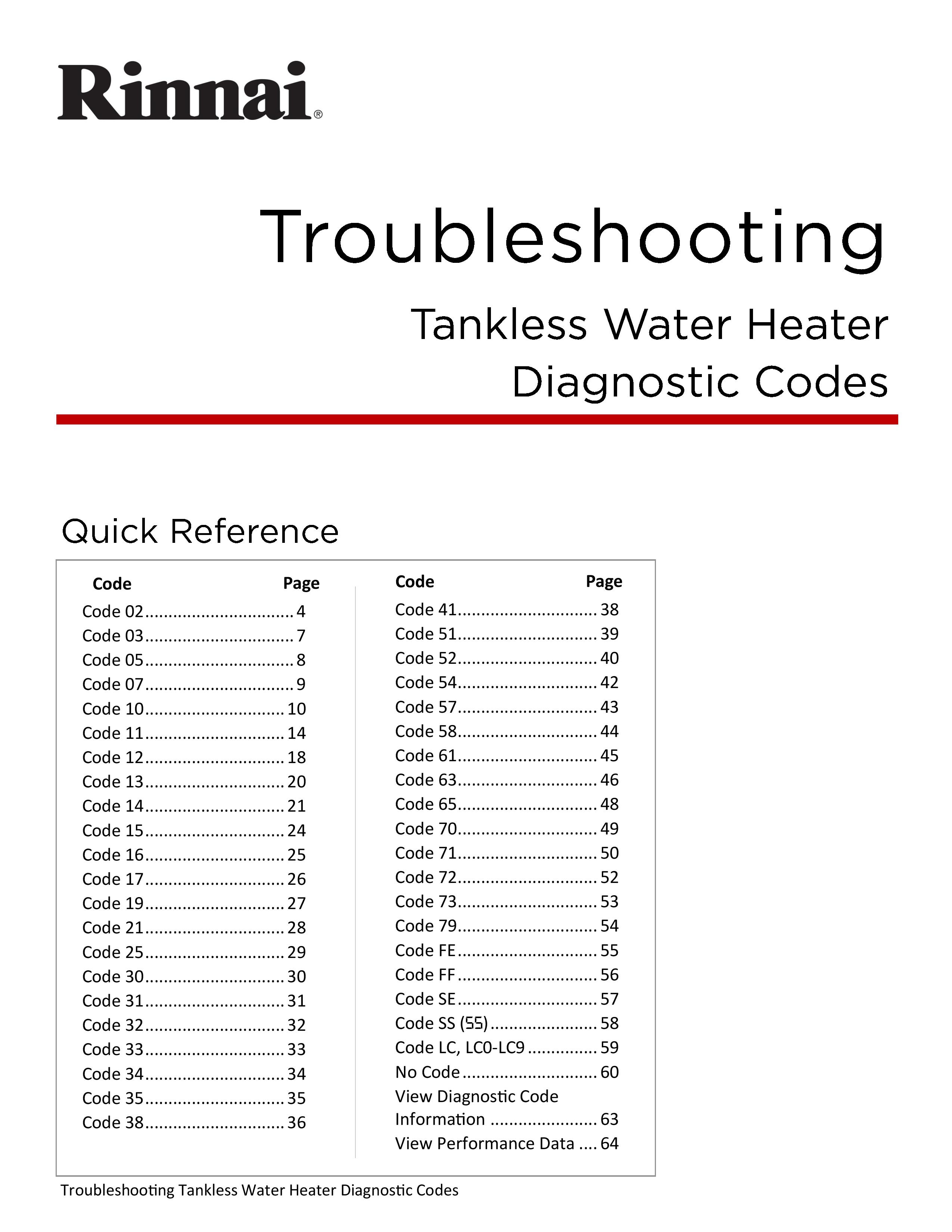
Modern Rinnai units display error codes when something goes wrong. These codes help you find the source of the problem much faster than guessing.
Safety First: Before You Begin
Whenever you work on a gas or electric appliance, safety should come first. Here are a few rules to keep in mind:
- Turn off power before opening any covers or panels.
- For gas units, shut off the gas supply at the main valve.
- Never try to repair gas lines or major electrical parts yourself.
- If you smell gas or see water leaks, stop immediately and call a licensed technician.
Simple maintenance and basic troubleshooting are usually safe. But never take risks with gas or high voltage.
Decoding Rinnai Error Codes
One of Rinnai’s most helpful features is the digital error code display. When your unit detects a problem, it shows a two-digit or three-digit code on the display or remote controller. Each code points to a specific issue.
Here’s a table with common Rinnai error codes and their meanings:
| Error Code | What It Means | Basic Action |
|---|---|---|
| 11 | No ignition | Check gas supply and ignitor |
| 12 | Flame failure | Inspect gas, venting, and burner |
| 16 | Overtemperature | Check for blockages or sensor failure |
| 61 | Fan motor problem | Look for debris or motor failure |
| 65 | Water flow sensor error | Clean or replace sensor |
| 99 | Flame sensing device issue | Check flame rod and wiring |
You can find the full list of error codes in your Rinnai manual or on the official Rinnai Error Code Resource.
How To Reset A Rinnai Unit
If you see an error code, try a simple reset first:
- Turn off the unit using the power button.
- Wait 30 seconds.
- Turn the unit back on.
If the code returns, continue with the troubleshooting steps below.
Troubleshooting No Hot Water
One of the most common Rinnai complaints is no hot water. This can be caused by several issues, from a simple water flow problem to a failed gas supply.
Step 1: Check Power And Display
- Make sure the unit is plugged in and switched on.
- Look for any blinking lights or error codes on the display.
Step 2: Inspect The Gas Or Power Supply
- For gas models: Is the gas valve open? Do you smell gas? If you do, leave the area and call for help.
- For electric models: Check the circuit breaker or fuse.
Step 3: Test The Water Flow
- Open a hot water tap fully.
- Tankless units need a minimum flow rate (often 0.5 gallons per minute) to start.
- If the flow is weak, clean faucet aerators and showerheads.
Step 4: Look For Frozen Pipes
- In cold weather, pipes or the heater itself may freeze.
- Warm the area gently and insulate pipes to prevent future freezing.
Step 5: Examine The Unit For Error Codes
- Use the display to check for any errors.
- Follow the code troubleshooting steps above.
Non-obvious Insight
Many users forget that tankless heaters need enough water pressure to activate. If your tap’s flow is too slow, the heater won’t turn on. Low pressure can be caused by clogged filters or plumbing issues.
Credit: zorgenondersteuning.com
Fixing Temperature Fluctuations
If you notice hot water suddenly going cold or temperature swings, several factors might be at play.
Common Causes
- Multiple fixtures running: If two showers or taps use hot water at the same time, the temperature may drop.
- Dirty water filter: Rinnai units have inlet filters that can get blocked.
- Mineral buildup: Hard water can cause scaling inside the heat exchanger.
- Incorrect temperature setting: The set temperature may be too low for your needs.
Solutions
- Clean the inlet water filter (usually at the cold water connection).
- Descale the unit with a vinegar flush every 1–2 years.
- Adjust the temperature setting using the remote controller.
- Stagger hot water use if possible.
Non-obvious Insight
In some homes, old or undersized plumbing limits water flow to the heater. Even a perfect Rinnai unit can struggle if the pipes are too narrow, especially in older houses.
Diagnosing Error Codes In Detail
Let’s look at some of the most frequent Rinnai error codes and how to deal with them.
Error Code 11: No Ignition
This means the unit tried to light the burner but failed.
- Possible causes: Closed gas valve, air in gas line, faulty ignitor, or clogged burner.
- Fixes: Open the gas valve, check for leaks, and reset the unit. If the problem returns, call a technician.
Error Code 12: Flame Failure
The flame started but did not stay on.
- Possible causes: Weak gas supply, dirty burner, blocked vent.
- Fixes: Check gas pressure, clean burner, and clear the vent. If you can’t find the issue, get professional help.
Error Code 16: Overtemperature Warning
The water temperature is too high.
- Possible causes: Blocked heat exchanger, failed sensor, or restricted water flow.
- Fixes: Clean the filter, descale the unit, and make sure the set temperature isn’t too high.
Error Code 65: Water Flow Sensor Issue
The unit can’t detect water flow properly.
- Possible causes: Dirty or damaged flow sensor.
- Fixes: Shut off power and water, remove and clean the sensor. Replace if needed.
Error Code 99: Flame Sensing Device Problem
The flame rod isn’t detecting a stable flame.
Common Rinnai Tankless Water Heater Problems
Rinnai makes various models, but most tankless water heater problems share similar symptoms. Here are the top issues and what usually causes them.
1. No Ignition Or Flame
- Gas valve closed or empty propane tank
- Faulty ignitor or flame rod
- Blocked burner or vent
2. Water Too Hot Or Too Cold
- Thermostat set incorrectly
- Dirty water filter or heat exchanger
- Flow sensor malfunction
3. Unit Won’t Power On
- Blown fuse or tripped breaker
- Loose power cord
- Faulty control board
4. Exhaust Or Vent Blockage
- Debris in vent pipe (leaves, nests)
- Snow or ice buildup outside
Regular maintenance can prevent most of these issues.
Rinnai Gas Heater Troubleshooting
Rinnai also makes gas space heaters. Many troubleshooting steps are similar, but a few are unique.
Typical Problems
- No heat output: Thermostat off, pilot out, or gas supply issue.
- Strange smells: Dust burning off or a gas leak (call for help if you smell gas).
- Heater won’t turn on: Power supply, control board, or thermostat problem.
Easy Fixes
- Replace old batteries in remote controllers.
- Clean air filters monthly.
- Check air intake and vent for blockages.
Maintenance Tips For Reliable Operation
Simple maintenance can prevent most Rinnai problems. Here’s a list of tasks to keep your unit healthy:
- Flush the heat exchanger with vinegar every year to remove scale.
- Clean the water filter every 6–12 months (more often in hard water areas).
- Check the venting system for obstructions.
- Inspect the gas line for leaks and damage.
- Test the temperature setting and adjust as needed.
- Replace remote control batteries yearly.
Maintenance Schedule Table
Here’s an example schedule for a typical Rinnai tankless water heater:
| Task | Frequency | Why It Matters |
|---|---|---|
| Clean water filter | 6–12 months | Prevents blockages, keeps flow strong |
| Descale heat exchanger | 1 year | Removes mineral buildup, improves efficiency |
| Check venting | 1 year | Ensures safe exhaust, prevents error codes |
| Inspect gas line | 1 year | Finds leaks or damage early |
| Replace controller batteries | 1 year | Prevents remote failures |
When To Call A Professional
Some Rinnai problems are DIY-friendly. But others require a licensed technician. Call for help if you experience:
- Gas leaks (smell of rotten eggs)
- Major water leaks inside the unit
- Repeated error codes that don’t clear with resets
- Burner or ignition failures after basic checks
- Electrical issues (burnt smells, tripped breakers)
Trying to fix advanced problems yourself can be dangerous and may void your warranty.
Step-by-step Troubleshooting Examples
Here are some real-world examples to help you practice Rinnai troubleshooting.
Example 1: Error Code 12 And No Hot Water
A homeowner sees Error 12 and no hot water.
- Checks gas supply — valve is open, no smell of gas.
- Resets the unit — error returns.
- Inspects vent outside — finds a bird’s nest blocking airflow.
- Removes nest, resets unit, and hot water returns.
Lesson: Always check both inside and outside the house for vent blockages.
Example 2: Water Too Hot
User reports scalding water from taps.
- Temperature set to 140°F — too high for most homes.
- Lowers setting to 120°F via remote controller.
- Checks water filter — finds some debris, cleans it.
- Water temperature normalizes.
Lesson: High settings and dirty filters can cause overheating.
Example 3: Unit Won’t Power On
Display is blank, and the unit is silent.
- Checks power cord — plugged in properly.
- Tests wall outlet with another device — outlet is dead.
- Resets the circuit breaker — power returns to outlet and Rinnai unit.
- Unit turns on and works normally.
Lesson: Sometimes the problem is with your home’s power, not the unit.
Comparing Rinnai Troubleshooting With Other Brands
Rinnai is not the only tankless water heater brand. How does its troubleshooting compare to others like Noritz, Navien, or Rheem?
| Brand | Error Code Display | DIY Friendliness | Parts Availability |
|---|---|---|---|
| Rinnai | Digital, easy to read | Moderate | Widely available |
| Noritz | Digital, some codes harder to interpret | Moderate | Good |
| Navien | Digital, includes help messages | Moderate to advanced | Good |
| Rheem | Lights/blinking codes | Easy | Excellent |
Rinnai’s clear error codes and strong online support make troubleshooting more accessible than with some brands.
Advanced Tips For Experienced Users
If you’re comfortable with basic repairs, these tips can help you go further:
- Install a sediment filter before the unit to reduce scaling.
- Use a surge protector to prevent control board damage from power spikes.
- Check for software updates on newer models using the Rinnai app or website.
- Keep a maintenance log to track filter changes and flushes.
Remember: Opening sealed gas or electrical components should be left to pros.
Preventing Future Problems
The best troubleshooting is prevention. Here’s how to avoid common Rinnai issues:
- Use softened water if you have hard water problems.
- Schedule annual professional service for a complete check-up.
- Keep vents and air intakes clear of leaves, snow, or pests.
- Teach all family members how to reset the unit and identify error codes.
Frequently Asked Questions
What Does Error Code 11 Mean On My Rinnai Water Heater?
Error Code 11 means there is a problem with ignition — the unit tried to start but didn’t light the burner. This is often caused by a closed gas valve, air in the gas line, or a faulty ignitor. Check the gas supply first, then reset the unit. If the code returns, call a professional.
How Often Should I Flush My Rinnai Tankless Water Heater?
For most homes, flushing the heat exchanger once a year is enough. If you have hard water, you may need to do this every 6 months to prevent mineral buildup and maintain efficiency.
Why Does My Rinnai Heater Shut Off During Use?
This could be due to overheating, vent blockages, dirty filters, or insufficient water flow. Check for error codes, clean the filter, and make sure the vent is clear. If the problem continues, call a technician.
Can I Fix A Rinnai Water Heater Myself?
You can handle basic troubleshooting, such as resetting the unit, cleaning filters, or checking the power. For gas leaks, electrical issues, or repeated error codes, always contact a licensed technician.
Where Can I Find Official Rinnai Troubleshooting Resources?
The best place is the official Rinnai website’s support page. Here, you’ll find manuals, error code guides, and service contacts. Visit the Rinnai Support Resources for more information.
conclusion
Rinnai troubleshooting doesn’t have to be stressful. With a little knowledge and regular maintenance, you can keep your heater or appliance running reliably for years. Always put safety first, follow the steps in this guide, and don’t hesitate to call in a pro when needed.
Staying proactive will save you time, money, and cold showers in the long run.