If your RV adventures are starting to feel less comfortable because of electrical issues, you might have a problem with your RV power converter. This device is the heart of your RV’s electrical system. It charges your batteries and powers your lights, water pump, and other 12V appliances when plugged into shore power. When the converter starts to fail, you’ll notice flickering lights, dead batteries, or appliances that stop working. Knowing how to troubleshoot and fix these problems can save you money and keep your trips stress-free.
This guide will walk you through everything you need to know about RV power converter troubleshooting. You’ll learn how the converter works, the most common symptoms of failure, step-by-step diagnostic methods, and practical repair tips. Even if you’re not an electrician, you’ll be able to understand and follow the instructions. Let’s get your RV’s electrical system running smoothly again.
What Is An Rv Power Converter?
An RV power converter is a device that changes 120V AC (alternating current) from shore power or a generator into 12V DC (direct current). Most RV appliances like lights, fans, and water pumps use 12V DC. The converter also charges the RV’s house battery while you’re plugged in.
Without a working converter, your RV’s 12V systems would quickly drain the battery, and you’d lose basic comforts. Some RVs have a combination converter/charger, while others use separate units.
Main Functions
- Convert AC to DC power for 12V appliances
- Charge house batteries when plugged into AC power
- Stabilize voltage to prevent damage to electronics
Where Is It Located?
You’ll usually find the converter:
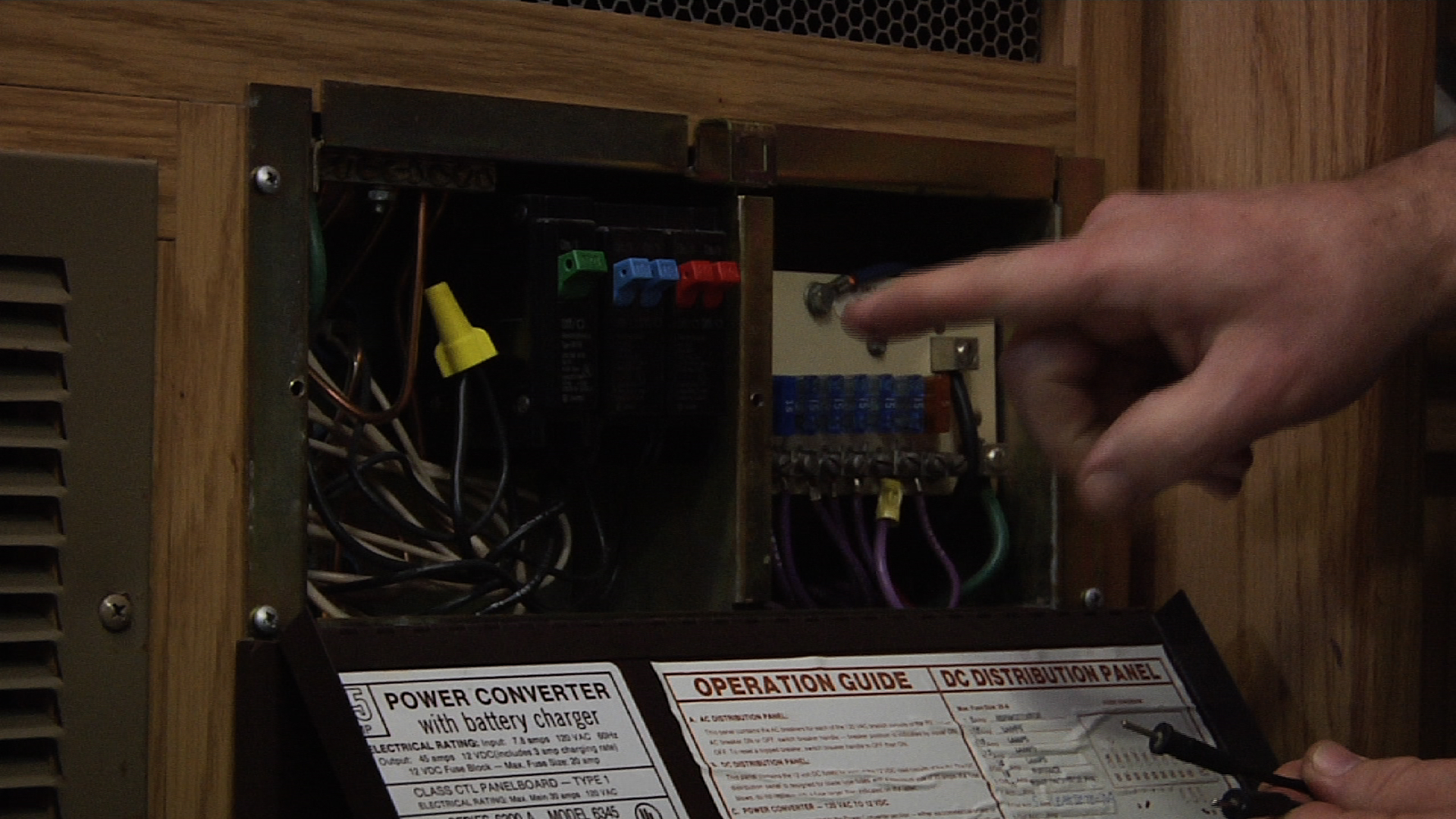
- Behind the main fuse or breaker panel
- Under the dinette seats or beds
- Inside a cabinet near the entry door
Check your RV’s manual if you can’t find it easily.
How Does The Converter Fit Into The Rv Electrical System?
Your RV has two electrical systems: a 120V AC system and a 12V DC system. The converter is the bridge between these.
- 120V AC powers outlets, microwave, and air conditioner directly from shore power or generator.
- 12V DC powers lights, fans, water pump, furnace, and control boards on appliances.
When you plug your RV into shore power:
- AC power enters the converter.
- The converter supplies steady 12V DC to your appliances.
- The converter charges your house battery at the same time.
If the converter fails, the battery does all the work. Once it’s empty, 12V systems shut down.
Simple Rv Electrical Flow Diagram
| Source | Device | Power Supplied |
|---|---|---|
| Shore Power (120V AC) | AC Outlets, Converter | 120V AC |
| Converter | 12V DC Appliances, Battery | 12V DC |
| Battery | 12V DC Appliances | 12V DC (when no shore power) |
Common Symptoms Of A Bad Rv Power Converter
Recognizing a problem early can help you avoid bigger headaches on the road. Here are the most common signs that your RV power converter may be failing:
- Flickering or dim 12V lights – If your interior lights are dim or flicker when using shore power, the converter isn’t supplying steady voltage.
- RV battery not charging – Even when plugged in, the battery stays low or dies quickly.
- 12V appliances stop working – Fans, water pump, or furnace blower don’t turn on when connected to AC power.
- Blown fuses – Fuses in the converter panel blow often, pointing to possible overload or short circuit.
- Burning smell or hot converter – This can signal an internal failure, which is a fire risk.
- AC power is fine, but DC is dead – Outlets work, but lights and pumps do not.
Not-so-obvious Signs
- Battery overcharging – Converter might supply too much voltage, causing battery to boil or swell.
- Strange noises – Humming or buzzing from the converter could mean a failing fan or transformer.
Most beginners overlook the possibility that a single failed fuse or a loose wire can mimic a converter problem. Always check the basics first!
Safety Precautions Before Troubleshooting
Working with electricity is dangerous if you don’t take precautions. Here’s what you should always do before starting:
- Disconnect shore power – Unplug the RV from the pedestal.
- Turn off the generator – If your RV has one, make sure it’s off.
- Remove the battery fuse or disconnect the negative battery cable – This prevents accidental shorts or shocks.
- Use insulated tools – Reduce risk of accidental contact.
- Wear safety glasses – Protect your eyes from sparks or debris.
Never skip these steps—even experienced RV owners make mistakes.
Essential Tools For Rv Power Converter Troubleshooting
Having the right tools makes troubleshooting easier and safer. Here’s what you’ll need:
- Digital multimeter – To measure voltage and check continuity.
- Screwdrivers – Phillips and flathead for panel access.
- Insulated pliers – For removing fuses or wires.
- Flashlight – For dark or hard-to-see spaces.
- Replacement fuses – Common sizes are 15A, 20A, and 30A.
- Wire brush or sandpaper – For cleaning battery terminals.
Optional but helpful:
- Clamp meter – For measuring current draw.
- Thermal camera – To spot overheating components.
Step-by-step Rv Power Converter Troubleshooting
Let’s walk through a systematic approach to diagnosing RV power converter problems. Each step narrows down the possible cause.
1. Check Shore Power And Circuit Breakers
Start With The Basics. Is Your Rv Actually Getting Power?
- Test the power pedestal with a plug-in tester.
- Check the main breaker in your RV. Reset if tripped.
- Inspect the converter’s breaker or fuse.
If shore power is off or a breaker is tripped, your converter won’t work.
2. Test Ac Power At The Converter
- Set your multimeter to AC voltage.
- Locate the converter’s AC input wires (usually black and white).
- Carefully measure voltage between hot and neutral. You should see 110-130V AC.
No voltage? The problem is upstream—cable, breaker, or wiring.
3. Inspect The Dc Output
- Switch the multimeter to DC voltage.
- Measure at the converter’s DC output terminals (often red and black).
- A healthy converter should show 13.2–14.4V DC when plugged in.
If you see less than 12. 6V (or zero), the converter is not working.
4. Test Battery Voltage
- With shore power ON, check battery voltage.
- A working converter will keep the battery at 13.2–14.4V.
- If voltage is the same as when unplugged (12.0–12.6V), the converter isn’t charging.
5. Inspect Fuses And Connections
- Remove the converter panel cover.
- Look for blown fuses (glass is black or filament is broken).
- Check for loose, corroded, or burnt wires.
Replace any blown fuses with the same rating. Tighten all connections.
6. Listen And Feel
- Turn on several 12V appliances.
- Stand near the converter—listen for humming or fan noise.
- Feel the case. Warm is normal, but very hot means trouble.
7. Disconnect Battery And Retest
Some converters only work with a battery connected. Others should work with battery disconnected.
- Remove the negative battery cable.
- Test DC voltage at the converter again.
- If voltage drops or disappears, the converter may be weak or dying.
8. Test With A Known Good Battery
A bad battery can overload the converter, causing strange symptoms.
- Temporarily connect a fully charged battery.
- See if problems disappear.
- If so, replace the old battery.
9. Check For Parasitic Loads
Sometimes, hidden loads drain the system.
- With all appliances off, measure current draw from the battery (use a clamp meter).
- More than 0.5A at rest is suspicious.
- Track down and disconnect unnecessary loads.
10. Remove And Bench Test The Converter
If all else fails, remove the converter and test it on a workbench using an AC cord and dummy load.
- If it won’t output correct voltage, it’s likely bad.
Common Rv Power Converter Problems And Solutions
Converter Won’t Power On
- Check AC input – Is there 120V at the converter?
- Blown main fuse – Replace with correct size.
- Loose or broken wire – Repair as needed.
- Failed internal component – Replace converter.
Converter Powers On But No Dc Output
- Blown output fuse – Replace it.
- Short circuit on DC side – Trace and fix short before replacing fuse.
- Failed rectifier or board – Replace converter.
Battery Not Charging
- Bad battery – Test and replace if needed.
- Loose battery cables – Clean and tighten.
- Converter too small – Upgrade to higher amp unit.
Overcharging Battery
- Faulty voltage regulator – Converter must be replaced.
- Old style converter – Replace with modern smart charger.
Converter Overheats Or Smells
- Blocked airflow – Clear dust and debris from vents.
- Fan not working – Replace fan.
- Overloaded converter – Reduce DC loads or upgrade.
Appliances Work, But Lights Flicker
- Loose DC connections – Check all wiring.
- Undersized wires – Upgrade wire gauge.
- Converter failing under load – Replace if needed.
Modern Converter Features And Upgrades
Today’s RV converters are smarter and safer than older units. If you’re troubleshooting often or your converter is over 10 years old, consider an upgrade.
Benefits Of Modern Converters
- Multi-stage charging – Safely charges batteries faster and extends life.
- Thermal protection – Shuts off if too hot.
- Reverse polarity protection – Prevents damage from wrong battery connection.
- Quiet operation – Improved fans and design.
Comparison: Old Vs Modern Converters
| Feature | Old Converter | Modern Converter |
|---|---|---|
| Charging Stages | Single | 3 or 4 (smart charging) |
| Efficiency | Low | High |
| Noise | Loud fan | Quiet |
| Protection Features | Minimal | Thermal, polarity, overload |
Upgrading is usually plug-and-play in newer RVs, but older models may need adapter plates or wiring changes.
When To Replace Vs. Repair Your Rv Converter
Repairing a converter is sometimes possible if the problem is simple (like a blown fuse or broken fan). But if the internal electronics fail, replacement is often more cost-effective.
Replace If:
- The converter is over 10 years old.
- You see burn marks or melted parts inside.
- It won’t output correct voltage, even after fuse replacement.
- You want safer, faster battery charging.
Repair If:
- Only the fan or fuse is bad.
- Wiring connections are loose.
- You have the skill and tools for simple repairs.
Labor at an RV shop can be expensive. If you’re handy, replacing a converter is a 1-2 hour DIY job.
Typical Costs For Converter Troubleshooting And Replacement
Understanding costs can help you decide between DIY and professional help.
Diy Troubleshooting
- Multimeter: $20–$40
- Basic hand tools: $30–$50
- Fuses/wires: $10–$20
Professional Rv Service
- Diagnosis fee: $100–$150
- Labor (per hour): $100–$150
- Parts (converter): $100–$300
Total replacement cost at a shop: $250–$500 (including parts and labor).
How To Choose The Right Replacement Rv Power Converter
If you need a new converter, here are the main things to consider:
- Output amperage – Match or exceed your old unit (typical: 30A–60A).
- Battery compatibility – AGM, flooded, or lithium (smart converters support all).
- Physical size – Make sure it fits in your space.
- Plug-and-play wiring – Some brands are easier to install.
- Quality and warranty – Reputable brands last longer.
Popular Rv Converter Brands
- Progressive Dynamics
- WFCO
- PowerMax
- IOTA
Don’t buy the cheapest option—quality matters for safety and battery health.
Real-world Example: Diagnosing A 12v Power Outage
Let’s say you return from a hike and the lights are out, but the microwave works. Here’s how you might solve it:
- Check if plugged into shore power (AC working, so yes).
- Test a 12V light – No light.
- Test AC outlets – They work.
- Check main panel fuses – 12V fuse is blown.
- Replace fuse – Lights work for 30 seconds, then fuse blows again.
- Disconnect all 12V loads – Replace fuse, it holds.
- Reconnect appliances one by one – Water pump blows fuse.
- Replace water pump motor – Problem solved.
Key insight: A converter problem can sometimes be caused by a faulty appliance drawing too much current.
Preventive Maintenance Tips For Rv Power Converters
A little attention can keep your converter running for years.
- Clean vents regularly – Dust buildup causes overheating.
- Tighten all connections every season.
- Test battery voltage monthly with shore power on and off.
- Replace fuses with correct ratings only.
- Inspect for corrosion on battery terminals and wiring.
- Operate within limits – Don’t overload with too many 12V appliances.
Many RVers forget that converters can fail slowly—catching early signs saves money.
Two Insights Most Owners Miss
- Low voltage can damage electronics – If your converter outputs less than 12.6V, you risk damaging LED lights, control boards, and fans. Always check voltage with a meter, not just by eye.
- Parasitic loads drain batteries even with a good converter – Devices like propane detectors, clocks, and stereo memory use power all the time. If your battery dies fast, check for hidden draws even if the converter is fine.
Troubleshooting Vs. Upgrading: Making The Best Choice
Sometimes, ongoing converter trouble is a sign to upgrade, not just fix. Modern converters offer better battery charging, more protection, and quieter operation. Think long-term: the right upgrade can add years to your battery and cut down on RV shop visits.
If you’re uncertain, ask questions in owner forums, read manuals, or contact a specialist. There are plenty of resources, like this RV Travel guide, to help you compare options.
Frequently Asked Questions
Why Does My Rv Battery Keep Dying Even When Plugged In?
This usually means your RV power converter isn’t charging the battery. Common causes are a failed converter, blown fuse, loose battery connection, or a bad battery. Test with a multimeter—if you don’t see 13.2–14.4V at the battery when plugged in, the converter isn’t working properly.
Can I Run My Rv Without A Converter?
Yes, but only until the battery runs out. The converter is needed to supply 12V power and charge the battery when using shore power. Without it, your lights, water pump, and other 12V devices will stop working once the battery is empty.
Is It Safe To Replace My Rv Power Converter Myself?
If you’re comfortable working with electricity, replacing a converter is a moderate DIY job. Always disconnect shore power and the battery before starting. Follow the manufacturer’s instructions and use the same fuse ratings. If you’re unsure, hire a professional.
How Long Do Rv Power Converters Last?
A quality converter should last 8–12 years with normal use. Dust, overheating, and electrical surges can shorten its life. Newer “smart” converters often last longer due to better protection features.
Do I Need A Special Converter For Lithium Batteries?
Yes. Lithium batteries need a different charging profile than lead-acid types. Use a smart converter with a lithium setting or one designed specifically for lithium batteries. Using the wrong converter can damage your battery or reduce its life.
conclusion
When your RV’s lights flicker or the battery dies too soon, it’s tempting to panic. But with a little knowledge and the right tools, most RV power converter troubleshooting is within reach for careful owners. Take your time, test methodically, and don’t skip safety steps. If you upgrade to a modern converter, you’ll enjoy more reliable power, longer battery life, and fewer surprises on your adventures. Happy travels!