The fastest way to perform electric forklift troubleshooting is to check the battery charge status and the emergency disconnect switch before looking at any other mechanical components. Most lift issues start because the battery isn’t fully seated or the emergency stop button is accidentally engaged. If you’re stuck, check these two items first to see if the power connection is restored.
Troubleshooting an unresponsive electric forklift
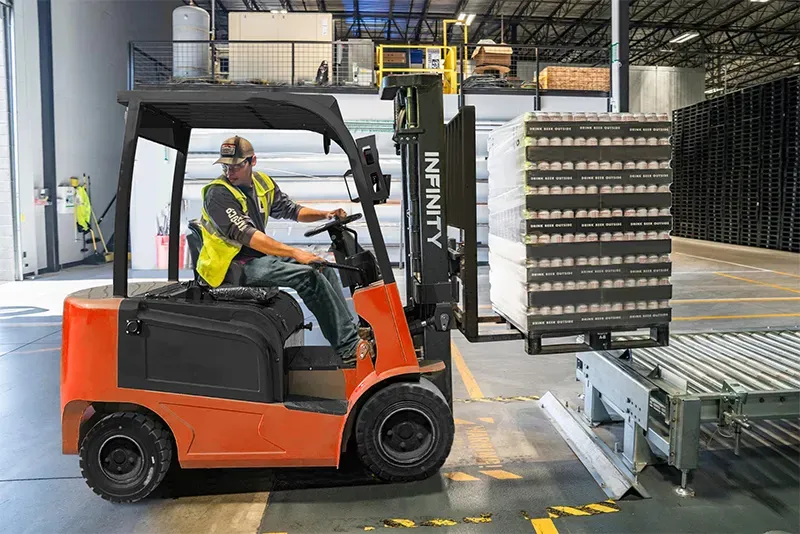
When a machine fails to move or lift, the cause is often a simple interruption in the power flow rather than a major engine failure. The most frequent issue is a low state of charge in the battery, which prevents the contactors from closing.
If the battery is drained below the manufacturer’s recommended threshold, the motor won’t receive enough voltage to engage the drive system. You can verify the current charge level by looking at the dash display or checking the voltage reading on a compatible meter.
Another common cause is an improperly set emergency disconnect button. These buttons are designed to cut all power for safety, but they’re easily bumped by operators or cargo. If the button is even slightly depressed, the circuit remains open and the lift won’t turn on. You must ensure the button is pulled fully out to close the safety loop.
Finally, check for debris or loose cables around the battery terminals. A build-up of corrosion or a loose connection can create high resistance, which mimics a dead battery even when the charge is sufficient. Keep in mind that for OSHA-regulated industrial truck operation, you must perform a pre-shift inspection to ensure all cables are intact and secure. If you find frayed wires or damaged insulation, don’t attempt to operate the machine.
Inspecting the battery connections
This fix is for operators who notice the display panel is dark or the machine refuses to start despite a full charge. Start by turning the key to the off position. Open the battery compartment cover carefully, as the weight of the lid can be significant. Look for the main power cable that connects the battery to the lift controller. Ensure the plug is pushed in all the way; if there’s a gap, the machine won’t receive power.
If the plug looks secure, check the terminals for white or blue powder, which indicates corrosion. You can clean this off with a stiff wire brush and a mixture of water and baking soda, provided you’re wearing safety glasses and gloves.
If you see signs of melting, burning, or deep cuts in the battery cables, stop immediately. These repairs require a qualified technician, as the high amperage in a forklift battery can cause severe electrical burns or fire if handled incorrectly.
To verify this worked, reconnect the battery plug firmly, close the compartment, and turn the key to the “on” position. If the dashboard lights up and the horn works, the connection issue is resolved. If the machine still doesn’t move, the problem is likely internal to the motor controller or the drive motor itself, which falls outside the scope of safe DIY troubleshooting.
Checking the safety interlocks
This fix is for lifts that turn on but refuse to move or raise the forks. Modern equipment has safety interlocks on the seat, the parking brake, and the operator presence pedal. If the seat switch doesn’t detect weight, or if the parking brake is engaged, the computer will disable the drive motor to prevent accidental movement. Sit firmly in the seat and ensure your feet are in the correct position on the floorboard.
If you’re seated correctly, check the parking brake lever. Some models have a sensor that prevents the lift from driving if the brake is still locked in the “on” position. Try releasing and re-engaging the brake to ensure the sensor registers the change. If the lift still doesn’t move, check the direction selector switch. It should be in neutral before you can select forward or reverse.
This process is only for machines where the safety lights on the dash remain on. If the lights are flashing a specific error code, consult your manual to see what that code represents. If you need to replace a faulty switch, you must contact an authorized service dealer. Attempting to bypass these safety interlocks is a violation of safety standards and creates a massive risk of crushing injuries for the operator or bystanders.
Resetting the control system
Use this method when the machine is unresponsive or acting erratically despite having full battery power. Electronic control units can sometimes experience “glitches” that require a hard reboot. Turn the key to the off position and disconnect the main battery plug from the machine. Wait for at least 60 seconds to allow the capacitors in the controller to discharge completely.
After the waiting period, reconnect the battery plug and turn the key back on. This simple power-cycle can clear temporary faults in the logic board. If the lift starts working correctly, the issue was likely a minor communication error between the sensors and the controller. However, if the error persists, it usually points to a failing component that needs professional diagnostic tools.
Don’t attempt this reset if you smell burning plastic or see smoke coming from the motor housing. If you see any signs of heat damage, the machine must be tagged out of service immediately. The cost of a professional repair is much lower than the cost of replacing a fried controller or a damaged motor caused by continuing to force a failing system to operate.
What not to do
Never bypass the emergency stop button with wire or tape, as this removes the only way to kill power in an accident. If you can’t reach the stop button, you lose the ability to prevent a crush injury during a mechanical failure.
Don’t attempt to open the motor housing or the controller box. These areas contain high-voltage capacitors that can remain energized after the battery is unplugged. Touching these terminals can cause a fatal discharge.
Avoid using water or pressure washers near electrical components. Moisture causes short circuits that lead to permanent damage to logic boards. If a board gets wet, don’t attempt to power the unit; it must be inspected and professionally cleaned to prevent corrosion and short circuits.
Don’t try to jump-start an electric forklift with another vehicle. The voltage spike will destroy the sensitive electronic control system instantly, resulting in repair costs that are quite expensive compared to using a proper charger. Always use a dedicated, compatible charger for the specific battery type.
How to stop it happening again
To ensure your equipment stays in top shape, focus on a strict routine of daily checks. Small issues are almost always the result of skipping the visual inspection. The following table summarizes the most common ways to manage your forklift health.
| If you’re doing this | Do this instead | Why |
|---|---|---|
| Charging at 0% | Charge at 20% | Deep discharge ruins battery chemistry. |
| Ignoring small sparks | Clean the terminals | Sparks indicate loose, dangerous connections. |
| Leaving it outside | Use a dry warehouse | Moisture corrodes the internal electronics. |
| Forcing the lift | Call for service | Forcing it leads to expensive motor failure. |
Most operators fail by waiting for a total breakdown before acting. This mistake often triples your repair costs and doubles the time the machine sits idle.
Use this decision rule: if the forklift makes a new, rhythmic sound or shows a minor fluid leak, tag it out immediately. If the issue is purely cosmetic, like a faded sticker or a scratched panel, you can safely log it for the next scheduled maintenance cycle. Always prioritize mechanical integrity over output speed.
Frequently asked questions
How long does a forklift battery last?
Industrial lead-acid batteries typically last 1,500 to 2,000 charge cycles, or about five years of daily use. This lifespan assumes you follow manufacturer charging instructions and avoid deep discharges. Note that frequent full drainage will significantly reduce your battery’s total capacity.
Is it safe to use a forklift with a frayed cable?
No, it’s never safe to operate a machine with damaged cables, as high current can cause electrical arcs or fires. Frayed insulation exposes wiring, creating a risk of shorting against the frame. You must tag the equipment out of service and call maintenance immediately.
Why is my forklift making a loud humming noise?
A loud humming sound usually indicates that the contactor is failing to engage or the drive motor is struggling against a locked brake. First, ensure the parking brake is fully released. If the noise persists in neutral, turn off the machine and contact a technician.
How often should I check the battery water levels?
Check water levels every 5 to 10 charging cycles, depending on usage intensity. Only add distilled water to the cells after a full charge, unless the plates are exposed. Never overfill, as expanding acid during charging creates a significant chemical burn hazard.
What happens if I disconnect the battery while it’s running?
Never disconnect the battery while the forklift is running, as this causes a power surge that can destroy the electronic controller. The battery acts as a necessary buffer for the electrical load. Always turn the key off and remove it before unplugging the battery.
Can I use a regular battery charger for a forklift?
No, you must use the charger specifically designed for your forklift model, as standard automotive chargers lack the necessary power capacity. Forklift batteries require a specific charging profile to prevent overheating and sulfation. Always verify voltage and amperage requirements on the battery data plate.
Conclusion
If your equipment still won’t start after these quick checks, don’t hesitate to contact a certified technician. They’ve got the specialized tools needed to diagnose complex electrical faults safely. It’s better to get professional help early, so you don’t accidentally cause further damage to the lift’s internal components.