The Ford 8N tractor remains a legendary workhorse, but its mechanical engine management system can be finicky after seventy years of service. When your engine refuses to maintain a steady speed under load or fluctuates wildly at idle, you’re likely dealing with ford 8n governor troubleshooting issues. This mechanical component relies on centrifugal force to adjust the throttle linkage, and while it’s remarkably robust, wear and tear on internal components, oil contamination, or linkage misalignment can lead to erratic engine behavior that hampers your daily tasks on the farm or in the field.
Key Takeaways
- Check the external linkage for binding or excessive play before opening the governor housing.
- The governor requires clean, thin oil to function without sluggishness or hesitation.
- Internal wear on the flyweights and the thrust bearing is the most common cause of permanent failure.
- Proper adjustment of the throttle rod is critical for reaching full engine RPMs.
- Always inspect the governor drive gear for stripped teeth or excessive backlash during maintenance.
How the Governor Functions
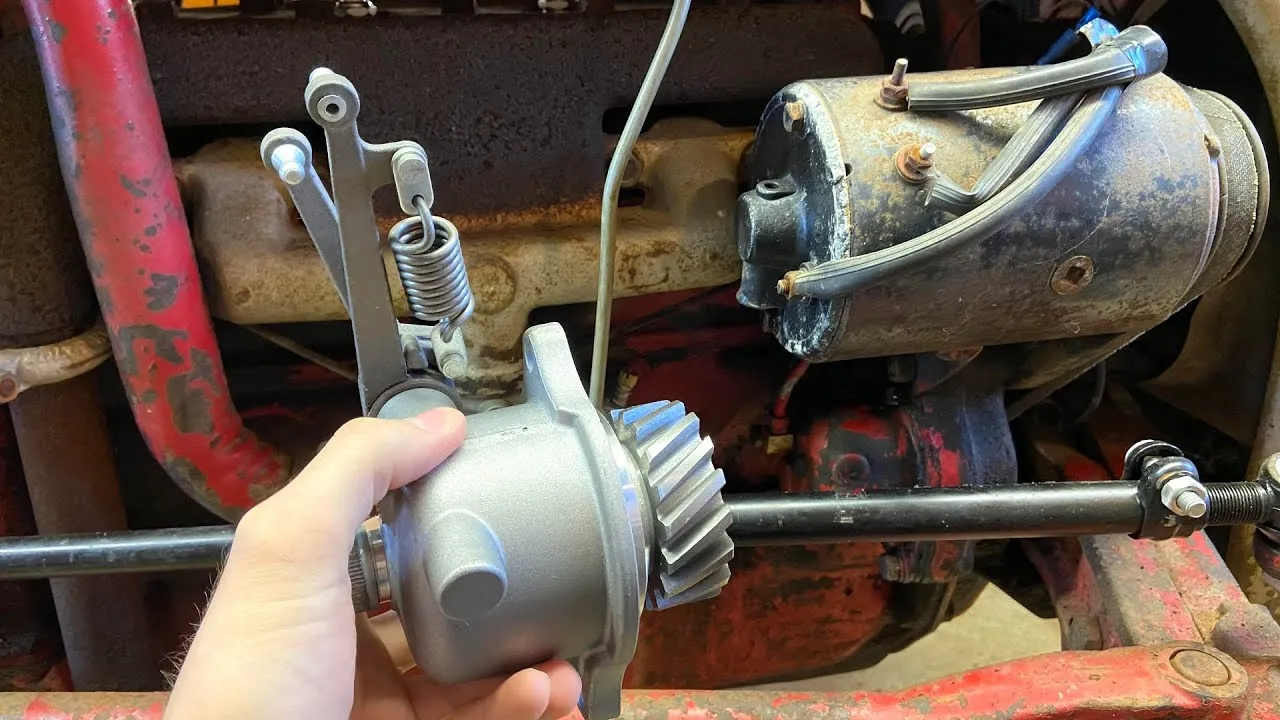
The Ford 8N governor is a centrifugal device driven by the camshaft gear. As the engine spins faster, flyweights inside the housing swing outward, pushing a control arm that moves the carburetor throttle linkage. When the engine load increases and slows the crankshaft, the weights collapse, and a spring pulls the throttle open to compensate. This constant balance is what maintains your desired engine speed regardless of the resistance encountered by the tractor.
Common Governor Symptoms
If you’re experiencing inconsistent engine performance, pay attention to how the tractor reacts when you engage the clutch or hit a patch of thick grass. These symptoms often point toward a specific mechanical failure within the governor assembly.
| Symptom | Likely Cause |
|---|---|
| Surging at idle | Weak spring or dry linkage |
| Lack of power under load | Stretched spring or worn flyweights |
| Engine hunts for speed | Sticky control arm or debris |
| No response to throttle lever | Broken internal drive pin |
Troubleshooting Ford Governor Linkage
Before assuming the internal components are damaged, you must examine the external connections. The governor is connected to the carburetor via a series of rods and springs. If these are bent, rusted, or loose, the governor can’t effectively communicate with the engine. Ensure the throttle rod moves freely through its entire range of motion without catching on the fuel line or the engine block.
Pro Tip: Clean all pivot points with a penetrating oil and check for oval-shaped holes in the metal links, which indicate significant wear that can cause “slop” in the response.
Is the Internal Spring Weak?
The governor spring is responsible for pulling the throttle open against the force of the flyweights. Over time, these springs lose their tension, leading to a tractor that can’t hold an RPM or fails to reach full power. You can test the spring by manually pulling the throttle lever while the engine is running. If the engine reaches full power only when you manually assist the linkage, your spring is likely stretched or fatigued and requires replacement.
Inspecting the Drive Gear
The governor is driven by a gear on the camshaft. If this gear is worn, the governor won’t receive a consistent signal of the engine’s true speed. To inspect this, you must remove the governor assembly from the side of the engine block.
Look for chipped teeth or excessive “play” between the governor drive gear and the camshaft gear. If you find metal shavings in the oil housing, the gear is likely failing and will need to be replaced to prevent catastrophic engine timing issues.
Addressing Internal Wear Items
If the external links and springs are in good condition but the governor still fails to regulate speed, the problem lies inside the casting. The flyweights, pins, and the thrust bearing are subject to high-speed friction. Over decades, the pins holding the flyweights can wear into the housing, and the thrust bearing can become pitted. These parts are often sold in overhaul kits through specialty agricultural parts suppliers.
Replacing the Flyweights
The flyweights are the “brains” of the operation. If the pins are grooved, they will stick rather than swing smoothly. When replacing these, ensure they move freely on their pivots before reassembling the housing.
Thrust Bearing Condition
The thrust bearing sits between the spinning weights and the stationary control arm. If this bearing is seized or loose, it will cause the throttle to jump erratically. Always use a high-quality grease or oil compatible with the Ford Motor Company service specifications for vintage tractor maintenance.
Why is it Surging?
Surging, or “hunting,” is a classic sign that the governor is fighting the carburetor. When the engine speed rises, the governor closes the throttle; the engine slows, the governor opens the throttle, and the cycle repeats.
This often happens if the carburetor mixture is too lean or if the governor itself isn’t lubricated properly. Before rebuilding the governor, ensure your carburetor is tuned correctly, as a lean mixture will cause the engine to struggle even if the governor is functioning perfectly.
Lubrication and Maintenance
The Ford 8N governor relies on a shared oil supply with the engine. If the oil is old, thick, or contaminated with sludge, the internal components will move sluggishly. Regular oil changes are the simplest form of troubleshooting. If you notice that your governor performance improves significantly after an engine oil change, you should consider flushing the engine to remove internal deposits that may be clogging the governor oil passage.
Governor Adjustment Steps
Once you have verified that the components are sound, you must perform a proper adjustment to ensure the governor can reach its full range of operation. Follow these steps to calibrate the system:
- Loosen the clamp bolt on the governor control arm.
- Push the throttle lever to the full “open” position.
- Move the governor arm until the carburetor butterfly is wide open.
- Tighten the clamp bolt securely while holding the arm in this position.
- Start the engine and verify that the speed increases smoothly as you advance the throttle lever.
When to Replace the Unit
Sometimes, the cost and time of a rebuild outweigh the benefit of repairing a severely damaged housing. If the main shaft is bent or the casting is cracked, you should look for a replacement unit. While original parts are preferred, several aftermarket manufacturers produce reliable replacements for the 8N. When shopping, ensure the replacement unit is designed specifically for the 8N, as the 9N and 2N units share similar appearances but have different internal gear ratios.
Troubleshooting Summary Table
| Step | Action | Expected Result |
|---|---|---|
| 1 | Check Linkage | No sticking or resistance |
| 2 | Test Spring | Firm resistance to movement |
| 3 | Inspect Oil | Clean, thin, and free of grit |
| 4 | Adjust Throttle | Full butterfly opening |
| 5 | Check Timing | Consistent engine RPM response |
Related guides
- 2007 Ford Focus Troubleshooting: Ultimate Fixes & Expert Tips
- 2002 Ford F150 Troubleshooting: Quick Fixes for Common Issues
- Ford Focus Troubleshooting: Quick Fixes for Common Issues
Frequently Asked Questions
Can I rebuild the governor myself?
Yes, if you have basic mechanical skills and a set of standard hand tools. You’ll need a service manual to reference the specific internal tolerances. The process involves removing the unit from the engine, splitting the housing, and replacing worn pins, weights, and the thrust bearing. It’s a manageable task, but keep your workspace clean to prevent debris from entering the engine block.
Why does the tractor die at idle?
If the tractor dies when you pull the throttle back, the idle speed screw on the carburetor may be set too low, or the governor linkage may be adjusted so that it closes the throttle butterfly completely. Adjust the idle stop screw on the carburetor first. If that doesn’t solve the issue, check the governor linkage to ensure it doesn’t force the butterfly to a fully closed position.
How often should I lubricate it?
The governor is lubricated by the engine’s oiling system. As long as you maintain your engine oil level and perform regular oil changes according to the manufacturer’s recommended schedule, the governor will receive the lubrication it needs. If the tractor has been sitting for a long period, it’s a good idea to ensure the oil is fresh before starting the engine to prevent internal scoring.
Does the governor affect timing?
No, the governor doesn’t control ignition timing; it only controls the throttle butterfly position to maintain engine speed. Ignition timing is controlled by the distributor. If you’re experiencing backfiring or rough running, focus on the distributor and spark plugs. If you’re experiencing erratic speed control, then the governor is the correct place to focus your mechanical investigation and troubleshooting efforts.
What causes a “runaway” engine?
A runaway engine occurs when the throttle linkage is stuck in the open position or the internal governor components have failed in a way that prevents the throttle from closing. If your engine begins to race uncontrollably, immediately kill the ignition or pull the choke to starve the engine of air. Never attempt to adjust the linkage while the engine is running at a dangerously high speed.
Conclusion
Troubleshooting the governor on your Ford 8N is a rewarding process that restores the reliability of your tractor. By methodically checking your linkages, ensuring proper lubrication, and adjusting the throttle range, you can resolve most performance issues. Your next step should be to perform a thorough cleaning of all external linkages and verify your engine oil quality before opening the governor housing.