Managing a forklift propane fuel system troubleshooting process effectively requires a methodical approach to safety and mechanical inspection. When your lift truck refuses to start or loses power mid-shift, the culprit is often found within the pressurized fuel delivery path. Because liquefied petroleum gas (LPG) remains under high pressure, you must always approach the system with extreme caution, ensuring that you wear personal protective equipment and operate in a well-ventilated environment away from ignition sources.
Key Takeaways
- Always close the cylinder service valve before attempting to disconnect any fuel lines or fittings.
- Inspect the fuel lock-off solenoid for electrical continuity to ensure it opens when the ignition is engaged.
- Check for frost buildup on the regulator, which indicates a restriction in the coolant flow preventing proper vaporization.
- Replace fuel filters every 500 to 1,000 hours of operation to prevent sediment buildup in the vaporizer.
- Ensure all hose connections are secure and free of cracks to prevent dangerous LPG leaks.
How to safely inspect fuel lines
Before you begin any mechanical work, you must ensure the environment is safe. The most common point of failure in an LPG system is the high-pressure hose connecting the tank to the regulator. Check for dry rot, deep cracks, or soft spots in the rubber housing. If you notice any visible damage, don’t attempt a repair; replace the entire hose assembly immediately with an Industrial Truck Association compliant fuel hose.
Pressure testing is the safest way to identify leaks. Using a soapy water solution, spray all joints and fittings while the system is under pressure. If you see bubbles forming, that fitting is compromised. Always tighten from the source outward, but never overtighten brass fittings, as you risk stripping the threads or cracking the housing.
Troubleshooting common forklift propane fuel system components
The fuel system consists of several critical stages that convert liquid propane into a combustible gas. If the engine cranks but doesn’t fire, the issue often resides in the electrical signal sent to the fuel lock-off.
| Component | Function | Potential Failure Mode |
|---|---|---|
| Tank Valve | Controls fuel flow | Clogged or stuck internally |
| Fuel Lock-off | Electrical shut-off | Coil burnout or debris |
| Regulator | Pressure reduction | Diaphragm tear or icing |
| Vaporizer | Converts liquid to gas | Coolant flow obstruction |
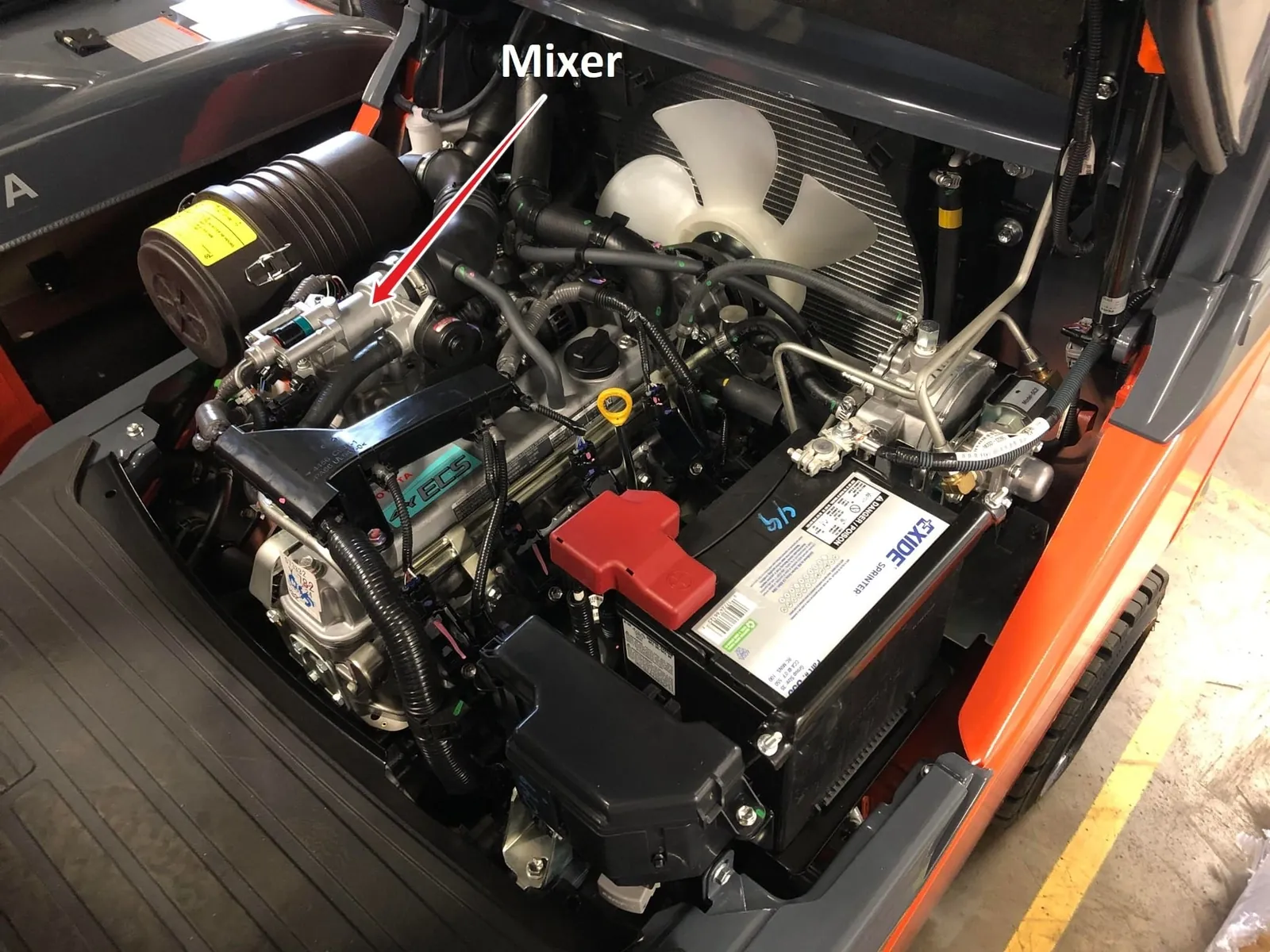
| Mixer | Mixes gas with air | Clogged air intake filter |
Electrical continuity at the lock-off solenoid is essential. If you don’t hear a distinct “click” when turning the ignition key to the “on” position, use a multimeter to verify that 12 volts are reaching the solenoid connector. If power is present but there’s no click, the solenoid coil is likely burnt out.
Is the regulator freezing up?
A frozen regulator is a classic sign of a cooling system issue. The vaporizer relies on engine coolant to heat the liquid propane, allowing it to transition into a vapor state. If the engine is cold or the coolant level is low, the propane will remain liquid, causing the regulator to ice over.
Warning: Never attempt to thaw an iced regulator with an open flame or high-heat industrial torch, as the pressure inside the housing could lead to a catastrophic rupture.
Check your coolant reservoir levels first. If the coolant is full, inspect the hoses running to the vaporizer for kinks or blockages. If the hoses are warm, the blockage may be internal to the vaporizer itself, requiring a rebuild kit or a complete component replacement.
How do you test fuel pressure?
Testing the pressure requires a specialized gauge designed for LPG systems. You should typically see a pressure reading between 10 psi and 25 psi at the regulator outlet during idle. If the pressure is significantly lower, the tank valve may be partially closed or the internal fuel filter is severely clogged.
System diagnostics should always include checking the vacuum lines. Many modern forklift propane systems use a vacuum-actuated signal to open the secondary stage of the regulator. If the rubber vacuum hose is cracked or disconnected, the engine will receive insufficient fuel, leading to a lean-running condition that manifests as stalling under load or rough idling.
Steps for replacing fuel filters
Sediment and oily deposits can accumulate in the fuel filter over time, eventually choking off the fuel supply. Replacing this filter is a routine maintenance task that can solve many power-loss issues.
- Close the cylinder service valve completely.
- Run the engine until it stalls to depressurize the fuel lines.
- Remove the filter housing cap using a socket wrench.
- Extract the old filter element and inspect the housing for debris.
- Install the new filter, ensuring the O-ring is seated correctly.
- Reassemble and perform a leak test with soapy water.
Maintenance intervals for these filters should be strictly adhered to. Ignoring a filter replacement can force the regulator to work harder, accelerating the wear on internal diaphragms and leading to more expensive repairs down the line.
Why does the engine stall?
If your forklift stalls specifically when you engage the hydraulics, the issue is often related to the load-sensing circuit or an improperly adjusted idle mixture. When the hydraulic pump engages, it puts a sudden load on the engine. If the fuel system can’t compensate for this load increase, the engine rpm will drop and stall.
Check the idle mixture screw on the mixer. A lean mixture—where there’s too much air and not enough fuel—will cause the engine to stumble when asked to perform work. Conversely, a rich mixture will cause black smoke and poor fuel economy. Minor adjustments to the mixture screw can often stabilize the engine, but ensure you’re operating within the manufacturer’s recommended specifications for your specific engine model.
Troubleshooting the tank connection
The quick-connect coupling on the propane tank is a frequent point of frustration. If the coupler doesn’t seat properly, the check valve won’t open, preventing fuel from reaching the engine. Always ensure the tank is oriented correctly, with the pin in the tank collar aligned with the slot on the mounting bracket.
Physical alignment is vital for the safety relief valve to function as intended. If you’re struggling to connect the tank, don’t force it. Inspect the threads on the coupler for burrs or damage. If the hose connection feels loose or wobbles, the O-ring inside the coupler may be worn out, which would cause a slow leak even while the tank is connected.
Can you clean the mixer?
The mixer is the heart of the air-fuel induction process. Over thousands of hours, the air filter can allow fine dust to pass through, which then mixes with the oily residue inherent in propane. This creates a gummy buildup on the mixer diaphragm and the butterfly valve.
- Remove the air intake hose from the mixer.
- Use a carburetor cleaner that’s safe for rubber components.
- Wipe the butterfly valve with a lint-free cloth.
- Check that the throttle linkage moves freely without binding.
Component cleaning should be done carefully. Avoid using harsh solvents that might degrade the sensitive diaphragm material inside the mixer, as a damaged diaphragm will prevent the engine from idling correctly or responding to throttle input.
How to check for vacuum leaks
Vacuum leaks are silent performance killers. A small crack in a vacuum line will allow unmetered air into the intake manifold, throwing off the fuel-to-air ratio. This usually results in a “hunting” idle, where the engine rpm fluctuates up and down without any input from the operator.
Use a spray bottle with water to mist the vacuum lines while the engine is running at idle. If the engine rpm changes or the idle smooths out when you spray a specific section of hose, you have found a leak. Replace the entire length of the hose rather than trying to patch it with electrical tape, which will fail under heat and pressure.
Troubleshooting the start-up sequence
When you turn the key, several things must happen in milliseconds. The fuel lock-off must open, the regulator must receive a vacuum signal, and the ignition system must provide a spark. If you have verified fuel flow but the engine still won’t start, the issue might be electrical.
Ignition timing and spark plug health are just as important as the fuel system. If your propane system is delivering fuel properly, but the spark is weak or mistimed, you’ll experience backfiring through the intake. Ensure your spark plugs are gapped to the factory specification, typically between 0.025 and 0.035 inches for most industrial propane engines.
Related guides
Frequently Asked Questions
Why does my forklift smell like propane?
A smell of propane around the forklift usually indicates a leak in the high-pressure side of the system. This often occurs at the tank connection, the hose fittings, or the lock-off solenoid. Because propane is heavier than air, it will settle near the floor. Never ignore this smell; shut off the tank valve immediately and identify the source of the leak before restarting the engine.
How do I know if the tank is empty?
The most reliable way to check the fuel level is by using a digital scale to weigh the tank or by checking the fuel gauge if your tank is equipped with one. Don’t rely on the engine performance, as a dying engine could be caused by a fuel restriction rather than an empty tank. If the tank feels light and the engine is sputtering, swap it for a full one.
Can I use automotive propane parts?
While some components may look identical, industrial forklifts require parts rated for high-vibration environments and specific pressures. Using automotive-grade parts can lead to safety hazards or premature component failure. Always source parts that are specifically designated for your forklift’s make and model to ensure that the pressure ratings and flow characteristics match the engine’s requirements.
How often should the fuel system be serviced?
A thorough inspection of the fuel system should be part of every 500-hour preventative maintenance cycle. This includes checking all hoses for cracks, verifying the integrity of the lock-off solenoid, and replacing the fuel filter. If you operate in dusty or harsh environments, you should increase the frequency of your filter replacements to prevent debris from entering the regulator and causing internal damage.
What causes backfiring in the mixer?
Backfiring through the mixer is typically caused by a lean fuel mixture or an ignition timing issue. If the engine is running too lean, the combustion process is slower, which can cause the intake valve to open while the flame is still present in the cylinder. Adjusting the mixture screw on the mixer or checking the vacuum lines for leaks will often resolve this issue effectively.
Conclusion
To ensure your equipment remains operational and safe, perform a visual inspection of all visible hoses and connections before every shift. If you notice any signs of wear or hear an unusual hiss, take the unit out of service immediately and consult your service manual to identify the specific part numbers required for your model’s fuel delivery system.