You can resolve most issues by checking the power supply, door latch, and water supply lines, which are the most common points of failure for frigidaire laundry center troubleshooting. When these units stop working, the error is often simple, such as a tripped circuit breaker or a door that isn’t fully clicked into place. Start your inspection by confirming the unit has power and that the water valves are fully open behind the machine.
Common Frigidaire laundry center troubleshooting reasons
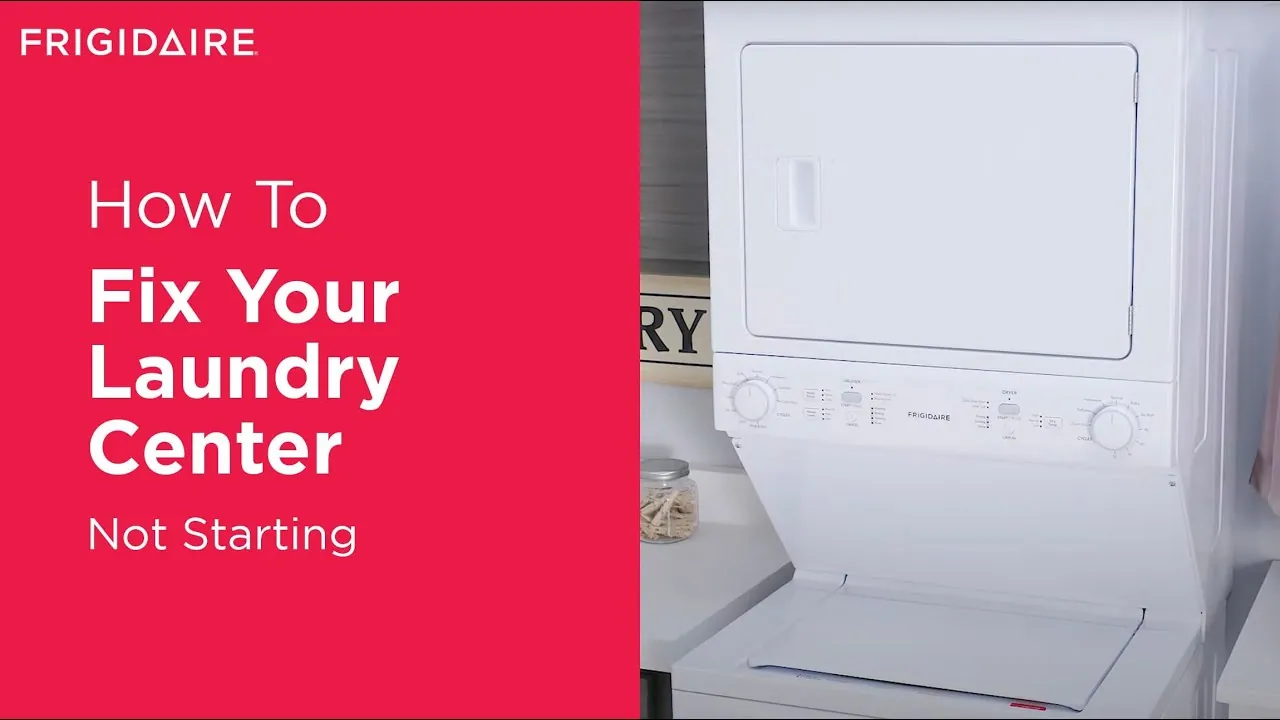
Most problems with these stacked units stem from three main areas: electrical connectivity, water flow, or safety sensors. If your machine fails to start, the most common cause is a door switch that doesn’t register as closed. These switches act as a safety lock; if the door is even slightly ajar, the control board will prevent the motor from starting to avoid water leaks or spinning hazards.
Another frequent issue is a lack of water flow. If the machine hums but no water enters, check the intake hoses for kinks or clogs. You should also inspect the screens inside the hose connections where they attach to the wall valves. Over time, mineral deposits or sediment from your pipes can block these small filters, causing the machine to time out during the fill cycle.
Finally, electrical issues often occur because laundry centers pull significant power. If the unit shuts down mid-cycle, check your home’s breaker panel. A dedicated circuit is required for these machines, and if other heavy appliances are on the same line, the breaker may trip. If you have confirmed power and water but the unit remains unresponsive, contact a certified technician to inspect the internal control board or wiring.
Safety: Inside a mains-powered machine, the parts behind the outer cover can hold a dangerous electrical charge even after it has been unplugged — that’s why they sit behind a cover. Opening the housing, or testing or replacing anything behind it, is a job for a qualified technician, never a home repair.
Check the door latch and sensors
If your machine won’t start or spin, the door latch is the first place to look. Modern laundry centers have a safety interlock that prevents operation if the door isn’t perfectly sealed. Inspect the latch area for any trapped clothing or debris that might be stopping the hook from engaging.
Open the door and push the latch mechanism manually to see if it clicks firmly into place. If the latch feels loose or doesn’t click, the sensor won’t signal the computer to begin the cycle. If you see visible damage to the plastic housing of the latch, this part will need replacement.
A common mistake is assuming the latch is broken when the door hinge is actually sagging. If the door hangs lower than the latch strike, the hook can’t align properly. You can test this by lifting up on the door handle while pressing start. If the cycle begins, your hinge is the culprit, not the sensor.
Never attempt to bypass the door switch by forcing it closed or using tools to hold it. This can lead to serious injury if the drum spins while the door is open.
If the latch appears physically intact but the machine still refuses to start, the internal sensor itself may be faulty. This is a common failure point that requires a professional to test for electrical continuity. If your display shows an “Ed” or “dE” error code, the control board has already identified the sensor as the specific point of failure. In this case, bypass your own troubleshooting and order a replacement switch immediately.
Inspect water hoses and inlet valves
If the machine fills slowly or not at all, the issue usually lies with the water supply. Start by turning off the water valves and disconnecting the hoses from the back of the laundry center. Check the small mesh screens located inside the inlet ports for any buildup of rust or debris.
Clean these screens with a soft brush and warm water. If you find the hoses are bent or crushed against the wall, pull the machine forward to provide at least 4 inches of clearance.
Never use pliers to overtighten plastic hose connections, as this can crack the threads and lead to leaks. Hand-tighten these fittings until snug, then add only a quarter-turn more.
If the water flow is strong at the wall but weak inside the machine, the inlet valve assembly may be clogged or worn out. Test this by disconnecting the hose and running water into a bucket for ten seconds. If the flow is significantly restricted compared to other faucets in your home, the supply line or valve may be the bottleneck.
Resolve power and drainage issues
When a laundry center stops mid-cycle, it’s often a drain issue or a power fluctuation. First, check that the drain hose isn’t pushed too far into the standpipe, which can create a siphon effect that prevents proper drainage. The end of the hose should be secure but not submerged in the water inside the pipe. A simple rule: if the water level in the tub drops while the pump is off, you have a siphoning problem.
If the machine is completely dead, check your home’s electrical panel for a tripped double-pole breaker. These machines typically require a single 240-volt dedicated circuit to power both the dryer and the washer components. If you have recently moved the unit, ensure the power cord is pushed firmly into the wall outlet.
Many owners mistakenly assume a tripped breaker is always fully “off.” If the switch sits in the middle position, flip it all the way to “off” before resetting it to “on.” If the machine smells like burning plastic or you see flickering lights when it attempts to start, stop using it immediately and call a licensed electrician.
Mistakes that cause further damage
Forcing the door shut: Attempting to slam or tape the door closed can break the internal switch, making a minor sensor issue into a full latch replacement. If the door refuses to click, check for a stray sock wedged in the gasket before applying pressure. Forcing it risks snapping the plastic strike plate, a repair that often requires a technician.
Using too much detergent: Excess suds trigger a “sud-lock” error, preventing the machine from draining. If you see foam reaching the glass, stop the cycle immediately and run a rinse-only program. Using more than two tablespoons of high-efficiency detergent per load is rarely necessary, even for heavily soiled items.
Ignoring error codes: Every machine has a specific blink pattern or code. Ignoring these and repeatedly cycling the power can corrupt the control board software. If the code persists after a hard reset, consult the manual’s troubleshooting table to identify the specific component failure.
Overloading the drum: Packing clothes too tightly prevents the drum from balancing, causing the motor to overheat. If the machine vibrates violently, stop it and remove items until the load is no more than three-quarters full.
Preventing future performance issues
To keep your machine running, focus on regular maintenance of the seals and filters. If you notice a change in how the machine sounds or fills, address it before a total failure occurs.
| If you’re doing this | Do this instead | Why |
|---|---|---|
| Leaving clothes in the washer | Remove them immediately | Prevents mold and moisture damage |
| Using generic hoses | Use braided steel hoses | Prevents bursting and water leaks |
| Ignoring vibration | Level the machine feet | Reduces wear on the motor bearings |
| Washing heavy rugs | Use delicate, small loads | Stops the drum from becoming unbalanced |
Most owners wait for a total breakdown before calling a technician. This mistake often doubles the repair cost because one failed part, like a worn belt, eventually snaps the drive motor.
Follow this simple decision rule: if the machine makes a rhythmic clicking sound, check for a loose pump filter. If the noise is a deep, metallic grinding, stop usage immediately to protect the transmission.
You can identify the difference by running an empty cycle; if the sound persists without a load, it’s likely a mechanical failure rather than an imbalance. Always clear the drain pump filter based on your usage frequency; consult your owner’s manual for the manufacturer’s recommended maintenance schedule.
Frequently asked questions
Can I fix a laundry center error code myself?
You can often clear an error code by performing a hard reset. Unplug the unit or turn off the circuit breaker for 60 seconds to allow the control board to reset. If the code returns, it indicates a persistent hardware issue requiring a professional diagnostic.
How long should a laundry center last?
A laundry center typically lasts 10 to 13 years with regular maintenance. This estimate assumes the unit is installed in a climate-controlled area and isn’t consistently overloaded. Heavy daily usage for large families may result in a shorter lifespan.
Why is my laundry center shaking during the spin cycle?
The machine is likely shaking because it isn’t level or the load is unbalanced. Use a bubble level to ensure all four feet are firmly touching the floor and locked in place. An unbalanced machine causes excessive stress on the drive components.
Is it safe to leave a laundry center running while I sleep?
It isn’t safe to leave a laundry center running unattended while you’re asleep or away. Mechanical failures or leaks can occur without warning, requiring your immediate attention. Always remain present to monitor the cycle from start to finish.
What happens if I don’t clean the lint trap?
You must clean the lint trap after every load to prevent fire hazards and maintain dryer efficiency. Lint buildup restricts airflow, forcing the heating element to run longer and hotter. This excess heat can damage internal sensors and cause a thermal fuse failure.
Conclusion
Follow the manufacturer’s manual for your specific model number, as internal components vary. If a fix requires removing panels or working with electrical wiring, call a qualified service technician to ensure the repair is safe and compliant with your local building codes.