RV propane systems are trusted by millions of travelers for cooking, heating, and refrigeration on the road. But when something goes wrong with the RV propane regulator, your comfort and safety can quickly be at risk. Propane is powerful but must be handled with care, and the regulator is the heart of your system—controlling pressure, ensuring smooth appliance operation, and protecting you from dangerous leaks or surges.
If your stove sputters, your fridge warms up, or you smell gas, the regulator might be the culprit. Many RV owners fear propane issues, thinking repairs are complicated or risky. The truth is, most RV propane regulator troubleshooting can be done with basic tools, careful steps, and a clear understanding of how the system works. This guide walks you through everything: from how a regulator functions to practical diagnostics, fixes, and when to seek professional help. Whether you’re a full-time RVer or just starting, you’ll learn to handle common problems with confidence and keep your journeys safe.
Understanding The Rv Propane Regulator
The propane regulator is a small device, but its job is critical. It takes high-pressure propane from the tank and reduces it to a steady, safe pressure that your RV appliances can use. Without it, your stove flames could shoot dangerously high, or your furnace might fail to ignite.
Key Functions
- Pressure reduction: Drops tank pressure (often 100-250 psi) down to a usable 11 inches water column (about 0.4 psi) for appliances.
- Safety shut-off: Some regulators close automatically if a major leak or surge is detected.
- Consistent flow: Maintains steady pressure even as tank levels drop or weather changes.
Types Of Rv Propane Regulators
Most RVs use two-stage regulators:
- Single-stage: Rare in modern RVs; reduces pressure in one step. Less stable, not recommended.
- Two-stage: First stage drops pressure partway, second stage fine-tunes to appliance-safe level. More reliable for variable demand.
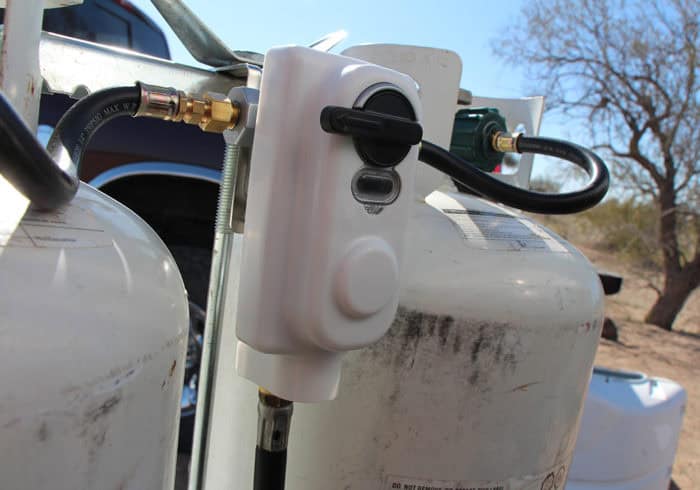
Some larger RVs have automatic changeover regulators for dual tanks. These switch from the empty tank to the full one automatically, so you don’t lose gas supply.
Where Is The Regulator Located?
You’ll usually find the regulator mounted near the propane tanks, often on the tongue of a travel trailer or in a dedicated compartment on motorhomes. It’s connected to the tanks by a short high-pressure hose and to the RV by a lower-pressure line.
Common Signs Of Propane Regulator Problems
Spotting symptoms early can prevent dangerous situations and expensive repairs. Here’s what to watch for:
1. Weak Or Flickering Flames
If your stove burners, oven, or water heater produce small, yellow, or uneven flames, the regulator may not be maintaining proper pressure.
2. Soot Or Black Smoke
Excessive soot on burners or exhaust vents means propane isn’t burning cleanly—often due to low pressure from a failing regulator.
3. Hissing Or Popping Sounds
Unusual noises near the regulator or appliances can mean excess pressure or a faulty diaphragm inside the regulator.
4. Smell Of Propane
Propane has a strong, “rotten egg” odor. If you smell gas near the regulator, shut off the supply immediately and check for leaks.
5. Appliances Not Igniting
If your furnace or fridge won’t light, or the water heater fails, the regulator might not be supplying enough gas.
6. Ice Or Frost On The Regulator
Moisture can freeze on the outside of a failing regulator, especially in cold weather or if the internal diaphragm is leaking.
7. Sudden Drop In Gas Supply
If everything stops working at once, especially with dual tanks, the automatic changeover feature may have failed.
Non-obvious insight: Sometimes, only one appliance shows issues (e.g., stove works, but fridge doesn’t). This can still point to a regulator problem, especially if the affected appliance is more sensitive to pressure changes.
How The Propane Regulator Works
Knowing what happens inside your regulator helps with troubleshooting.
Regulator Components
- Diaphragm: A flexible rubber membrane that moves with pressure changes, opening or closing the gas valve.
- Vent: Small hole or screened opening to allow air movement behind the diaphragm.
- Adjustment screw (rare on RV models): Some regulators allow fine-tuning of pressure, but most are factory-set.
- Changeover lever/indicator: On dual-tank systems, this shows which tank is active.
Pressure Reduction Process
- High-pressure gas enters from the tank.
- First stage (in two-stage models) drops pressure.
- Second stage further reduces and regulates pressure for appliances.
If debris, oil, or moisture enters the system, the diaphragm can stick or fail. Regulators also wear out over time, usually after 5-10 years.
Non-obvious insight: Never block or cover the vent opening. If insects, dust, or water enter here, the regulator can malfunction and create unsafe pressure.
Step-by-step Rv Propane Regulator Troubleshooting
Before starting, always work in a well-ventilated area, keep flames away, and have a soapy water solution ready to check for leaks.
Step 1: Visual Inspection
- Check for dents, rust, or physical damage to the regulator and hoses.
- Look for frost, oil residue, or moisture on the regulator’s body.
- Ensure the vent is clear (use a small brush to remove cobwebs or dirt).
Step 2: Listen And Smell
- With the gas turned on, listen for hissing near the regulator or connections.
- Smell for propane. If detected, shut off the supply and do not relight appliances until you find the source.
Step 3: Leak Test
- Mix water with dish soap and brush or spray on all connections and the regulator body.
- Bubbles indicate a leak—tighten fittings, then retest.
- If bubbles appear on the regulator body itself, internal failure is likely.
Step 4: Check Flame Quality
- Light a stove burner. Observe the flame: Strong and blue is good; weak, yellow, or sputtering suggests low pressure.
- Try other appliances if safe and possible.
Step 5: Test With Multiple Appliances
- Turn on two or more propane appliances at the same time (e.g., water heater and stove).
- If both fail, the regulator is a likely issue.
- If only one appliance struggles, the problem may be further down the line (e.g., a clogged orifice).
Step 6: Inspect The Changeover Regulator (if Equipped)
- On dual-tank models, move the changeover lever to the full tank.
- If gas doesn’t flow, the automatic switch may be stuck or broken.
Step 7: Check The Regulator Age
- Most regulators have a date stamp. If yours is over 10 years old, replacement is wise—even if it seems to work.
Step 8: Pressure Test (advanced)
- Use a manometer (pressure gauge) to check outlet pressure.
- It should read about 11 inches water column with appliances running.
- If pressure is too high or low, the regulator is faulty.
When To Call A Professional
If you detect a major leak, find internal regulator damage, or can’t restore normal function, contact a certified RV technician. Never try to repair a regulator internally—it’s not designed for user service.
Comparison: Signs Of Regulator Vs. Appliance Problems
Many RVers confuse appliance issues with regulator failure. Here’s a quick comparison to help you narrow it down:
| Symptom | Likely Regulator Problem | Likely Appliance Problem |
|---|---|---|
| All appliances weak/fail | Yes | No |
| Only one appliance fails | No | Yes |
| Hissing at regulator | Yes | No |
| Soot at appliance | Sometimes | Yes |
| Smell of gas at regulator | Yes | No |
How To Replace An Rv Propane Regulator
If troubleshooting points to a failed regulator, replacement is usually straightforward. Here’s how to do it safely.
Tools Needed
- Adjustable wrench
- Soapy water spray
- New compatible regulator (match the BTU rating and connection type)
- Thread sealant (rated for propane)
- Gloves and safety glasses
Steps
- Shut off all propane tanks and appliances.
- Remove the regulator from the hoses/fittings. Support the piping to avoid stress or cracks.
- Clean the threads and inspect hoses for wear or cracks.
- Apply thread sealant (if needed) to new regulator fittings.
- Attach the new regulator, tightening connections snug but not over-tight.
- Turn on propane slowly. Use soapy water to check all connections for leaks.
- Light appliances and check for proper flame and operation.
Tip: Regulators are not universal—always match the BTU rating of your RV’s appliances for safe operation.
Preventive Maintenance For Rv Propane Regulators
Routine care can extend your regulator’s life and reduce the risk of dangerous failures.
Annual Checklist
- Inspect for rust, dents, and loose fittings.
- Clean vent openings (never block or cover them).
- Check the date code; replace if past 10 years.
- Test for leaks with soapy water at least once per year.
Storage Tips
- When storing your RV, cover the regulator with a breathable cover to keep out water and dust.
- Avoid plastic bags or tape, which can trap moisture.
Tank Management
- Always turn off tank valves when not in use.
- Don’t switch tanks until one is truly empty—partial opening can confuse automatic regulators.
Signs Of Wear To Watch For
- Stiff or broken changeover lever
- Cracked or brittle hoses
- Discoloration or corrosion on fittings
Practical example: A family noticed their RV fridge stopped cooling after a heavy rain. A quick check showed water had entered the regulator’s vent, freezing the diaphragm. Drying and covering the vent (with a mesh screen, not tape) solved the problem.
Key Factors When Buying A Replacement Regulator
When choosing a new regulator, don’t just pick the cheapest option. Here’s what matters most:
1. Btu Rating
Your regulator must handle the combined BTU demand of all appliances running at once. Most RVs need at least 160,000 BTUs.
2. Connection Type
Check hose connections—most use 3/8” or 1/4” NPT fittings. Dual-tank models require an automatic changeover regulator.
3. Certification
Look for UL-listed or CSA-certified regulators. These meet safety standards.
4. Warranty
A good regulator should come with at least a 2-year warranty.
5. Replacement Interval
Plan to replace every 5-10 years, even if it seems fine.
Comparing Popular Rv Propane Regulators
To help you choose, here’s a look at three common models:
| Model | BTU Capacity | Connection | Changeover | Warranty |
|---|---|---|---|---|
| Marshall Excelsior MEGR-253 | 225,000 | 3/8” NPT | Automatic | 5 years |
| Camco 59333 | 160,000 | 1/4” NPT | Manual | 1 year |
| Fairview GR-9984 | 262,500 | 3/8” NPT | Automatic | 2 years |
Note: Always verify compatibility with your RV model before buying.
Safety Tips For Working With Propane Regulators
Propane is safe if handled with respect, but mistakes can be deadly. Here’s how to protect yourself and your RV:
- Always work in an open area; never in a closed garage or shed.
- Never use open flames (matches, lighters) to check for leaks.
- If you smell propane inside your RV, evacuate immediately and shut off the tank from outside.
- Don’t modify or attempt to repair a regulator—replace instead.
- Store propane tanks upright and secure during travel.
Insight: Regulators can fail without warning, especially if exposed to road salt, rain, or impact. Regular inspection is your best defense.
Advanced Troubleshooting: Diagnosing Pressure Issues
Sometimes, you need to go beyond basic checks. Here’s how to measure pressure if you suspect a subtle regulator fault.
Using A Manometer
A manometer is a simple gauge that reads gas pressure.
- Connect the manometer to a test port or, if none exists, between the regulator and appliance (using a T-fitting).
- Open a burner to allow gas flow.
- Read the pressure: It should be 11 inches water column for most RVs.
- If pressure is much higher or lower, the regulator is faulty.
Common Pressure Problems
- Too high: May cause roaring flames, soot, or risk of leaks.
- Too low: Appliances won’t light or run weakly.
What Causes Pressure Loss?
- Internal diaphragm failure (age, oil contamination)
- Blocked vent (insects, debris)
- Ice in the regulator (moisture in propane)
- Partial tank valve opening (not fully open)
Advanced tip: If you find oily residue in the regulator or hoses, your propane supplier may have delivered contaminated fuel. This requires full cleaning or replacement of hoses and regulator.
Weather Effects On Propane Regulators
Temperature and humidity can affect how your regulator works.
Cold Weather Issues
- Propane pressure drops in cold weather, making appliances less powerful.
- Moisture can freeze inside the regulator, blocking flow.
- Frost on the regulator is a warning sign—keep it dry and consider a vent cover.
Hot Weather Effects
- High heat can increase pressure, stressing the regulator.
- Check for leaks more often in summer.
Example: In winter camping, it’s common for the regulator to freeze if tanks are nearly empty or have water contamination. Switching to a full tank and using a vented cover can help.
Real-world Rv Propane Regulator Failures
Learning from others’ experiences can help you avoid mistakes.
Case 1: Stove Flame Drop On Mountain Trip
A couple noticed their stove flames shrinking as they climbed in altitude. The culprit: their 12-year-old regulator couldn’t adjust to pressure changes at elevation. Replacing it restored normal function.
Case 2: Smell Of Gas But No Visible Leak
An RVer smelled propane near the tank but found no leaks at fittings. A soapy water test revealed tiny bubbles on the regulator seam—internal failure. Replacing the regulator stopped the leak.
Case 3: Automatic Changeover Not Switching
A family’s dual-tank system ran dry, but the second tank didn’t supply gas. The automatic changeover lever was stuck due to corrosion. Cleaning and lubricating the lever fixed the issue.
Lesson: Regulators are often out of sight but should never be out of mind. Regular checks and prompt replacement are key.
Troubleshooting Checklist For Rv Propane Regulators
Here’s a quick-reference checklist for on-the-road diagnostics:
- Smell for gas near the regulator.
- Listen for hissing or popping sounds.
- Check appliance flames (should be blue and steady).
- Inspect regulator for frost, oil, or damage.
- Test all appliances; if all fail, suspect the regulator.
- Try switching tanks on dual systems.
- Use soapy water on all connections.
- Check regulator age; replace if over 10 years.
- If in doubt, call a professional.

Rv Propane Regulator Troubleshooting: Quick Reference Table
For fast decision-making, use this table:
| Symptom | Possible Cause | Action |
|---|---|---|
| Weak flame, all appliances | Low pressure, faulty regulator | Check/replace regulator |
| Hissing at regulator | Leak or diaphragm failure | Turn off gas, replace regulator |
| Ice on regulator | Moisture, freezing, vent blockage | Dry and clear vent |
| Strong gas smell | Major leak or rupture | Evacuate, call professional |
| Automatic changeover not working | Stuck lever, internal failure | Lubricate/replace regulator |
When To Upgrade Or Replace Your Rv Propane Regulator
Even if your regulator still works, consider upgrading if:
- You install new or larger appliances (increased BTU demand)
- You switch to a dual-tank setup (need automatic changeover)
- Your current regulator is over 10 years old
- You notice any signs of wear, oil, or inconsistent performance
Higher-quality regulators can offer better durability, more stable pressure, and improved safety. For more on propane safety standards, visit the National Fire Protection Association.
Frequently Asked Questions
How Often Should I Replace My Rv Propane Regulator?
Most experts recommend replacing the regulator every 5-10 years, even if it appears to be working. If you see signs of failure or have a leak, replace immediately.
What Size Regulator Do I Need For My Rv?
Your regulator must match or exceed the total BTU demand of all your appliances running at once. Most RVs need a 160,000-250,000 BTU capacity. Check your appliance manuals for exact requirements.
Can I Adjust The Pressure On My Rv Propane Regulator?
Most modern RV regulators are factory-set and not adjustable. Some older models have an adjustment screw, but changes should only be made by a professional with the right tools.
Why Does My Regulator Freeze Up In Cold Weather?
Moisture in the propane or air can freeze in the regulator, blocking gas flow. Keep the vent dry, use a screened cover, and always use clean, dry propane.
Is It Safe To Replace A Propane Regulator Myself?
If you’re comfortable with basic tools and follow safety steps (no flames, check for leaks), it’s usually safe. But if you’re unsure, or if the system is complex, always call a certified technician.
conclusion
A reliable propane regulator is essential for safe, comfortable RV living. With this guide, you can spot problems early, troubleshoot with confidence, and know when to call for help. Regular checks, smart upgrades, and a little preventive care will keep your adventures rolling—no matter where the road takes you.